Normandy: D-Day Beaches, Mont Saint-Michel & the Cider Route
Plan your trip
Normandy is a region of accumulated weight — the Norman conquest of England (1066), the Hundred Years War, and the Allied landing of June 6, 1944 all happened in this stretch of coastline and hinterland. The landscape absorbs the history without theatrical display: the D-Day beaches look like ordinary beaches, Omaha still has sand and sea grass, and the German gun emplacements are just concrete lumps in a field. The weight comes from knowing what happened and reading the names.
It is also a region of exceptional food — cream, butter, cheese (Camembert, Livarot, Pont-l’Évêque), apple orchards, cider and calvados, seafood from the Channel coast — and one of the most extraordinary single buildings in Europe: Mont Saint-Michel.
The D-Day Beaches
The Normandy beaches stretch 80 km from Utah (westernmost, American sector) to Sword (easternmost, British sector). The five landing beaches, the German fortifications of the Atlantic Wall, the American Cemetery at Colleville-sur-Mer, and the Mémorial de Caen constitute the most significant WWII landscape in Western Europe.
Omaha Beach: The bloodiest of the five landings (2,000+ American casualties on June 6 alone). The beach is wide and ordinary-looking; the positions from which German machine guns fired down are still visible on the bluffs. The American Cemetery (172 acres, 9,387 graves in white Lasa marble crosses and Stars of David) is on the bluff above the beach — one of the most affecting cemeteries in the world.
Pointe du Hoc: Between Omaha and Utah — a headland where US Army Rangers scaled 30-meter cliffs under fire to destroy German coastal guns. The craters from Allied naval bombardment are still visible; the German bunkers are accessible.
The Mémorial de Caen: The best WWII museum in France — comprehensive coverage of the war, occupation, resistance, and the liberation. Full day. Located in Caen, 15 km from the beaches.
Getting around: A car is essential. The beaches and memorials are spread over 80 km. Alternatively, guided bus tours from Bayeux (the most convenient base, 10 km from Omaha) cover the main sites in a day.
Mont Saint-Michel
An island abbey on a tidal mount 1 km off the Norman coast — at high tide, the sea surrounds it completely; at low tide, the bay is exposed sand flats. The Benedictine abbey has been continuously occupied since 966 CE and is one of the most visited sites in France (3.5 million visitors per year).
Visiting: Arrive at low tide and walk across the causeway. The village on the mount (the single street, the souvenir shops, the restaurants) is not the reason to come — the abbey itself, at the summit, is the reason. The Gothic cloister, the refectory, and the views from the ramparts over the bay.
High tide timing: The tidal range at Mont Saint-Michel is the largest in continental Europe — up to 15 meters. The “sea at the wall” experience requires arriving at specific times; check the official Mont Saint-Michel tide calendar (marée.info). Spring tides in September bring the highest water.
Giverny: Monet’s Garden
Claude Monet lived at Giverny (80 km east of Bayeux, 1.5 hours from Paris) from 1883 until his death in 1926, creating the water garden that he painted obsessively in the last 30 years of his life. The Japanese bridge, the wisteria, and the water lilies are exactly as painted — the garden is maintained by the Fondation Claude Monet to match the paintings.
The two-hectare garden is best in May–June (tulips and wisteria) and September (dahlias and nasturtiums). Summer weekends are crowded; weekday morning entry gives the closest experience to seeing it before the tour groups. Book online at fondation-monet.com.
The Cider Route (Route du Cidre)
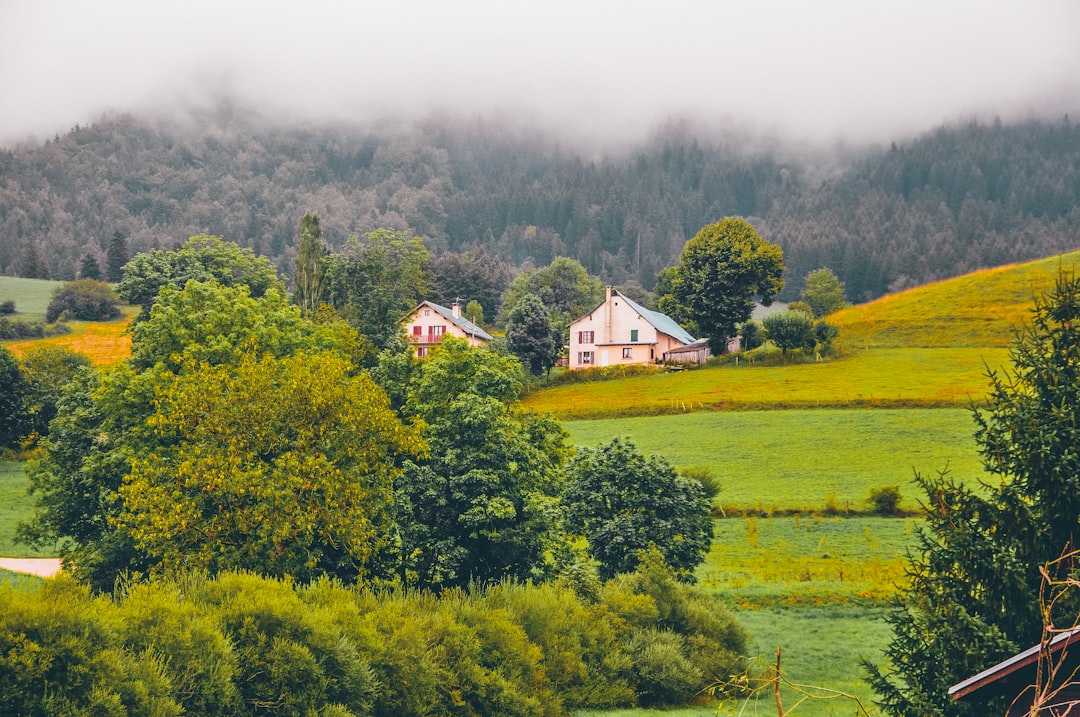
The Pays d’Auge, south of Deauville, is the apple orchard country of Normandy — the same region that produces Camembert cheese (the village of Camembert is here) and the best calvados (apple brandy). The Route du Cidre connects 20 cider farms (cidreries) and calvados distilleries for tastings and direct sales.
The circuit: Cambremer → Beuvron-en-Auge (one of the Plus Beaux Villages de France) → Bonnebosq → Cambremer. 40 km by car; 1–2 days for a thorough visit with multiple tastings.
At a cidrerie: The Norman apple press (pressoir) operates September–November during harvest; visits outside harvest season see the aging cellars and barrel rooms. Calvados aged in oak barrels for 10–20 years is a different drink from commercial brandy.
Practical Notes
- Base: Bayeux — medieval town with the Bayeux Tapestry (the 70-meter embroidered account of the 1066 conquest), good hotels, and 10 km from Omaha Beach. Caen for the memorial museum
- Distance from Paris: 3 hours by car; 2 hours by TGV to Caen
- Best time: May–September. June 6 has memorial ceremonies; July–August is the peak tourist season
Plan your trip