3 Days in Paris: The Perfect Long Weekend Guide
Plan your trip
Paris is one of the most written-about cities in the world, and yet it still surprises. The beauty of the Haussmann boulevards at dusk, a perfect croissant at 8am, the scale of the Louvre — none of it quite prepares you. Three days gives you the iconic anchors plus enough time to discover the Paris that belongs to the people who actually live here.
Day 1 – The Left Bank & The Icons
Morning: Start at the Eiffel Tower — buy summit tickets online well in advance (ideally 6–8 weeks ahead). The tower is best early in the morning before the crowds arrive. The view from the summit at 276m, looking out over the Seine, Montmartre, and the Sacré-Cœur, is one of Europe’s finest urban panoramas.
Walk east along the Trocadéro gardens and across the Pont d’Iéna for the most photographed angle of the tower, then walk east along the Seine past the Musée du quai Branly (non-European art in a living green-wall building) to the Musée d’Orsay. The Orsay is the world’s finest collection of Impressionist art — Monet, Renoir, Degas, Seurat, Van Gogh — housed in a converted 1900 railway station. Allow 2–3 hours.
Afternoon: Cross the river to Saint-Germain-des-Prés — the intellectual left bank. The cafés on Boulevard Saint-Germain (Café de Flore, Les Deux Magots) are expensive and touristy but historically significant. Walk south into the Luxembourg Gardens for a sit-down, then explore the streets around Rue Mouffetard (one of Paris’s oldest market streets) and the Panthéon (France’s secular mausoleum — Voltaire, Rousseau, Marie Curie, Simone Veil are entombed here).
Evening: Back in Saint-Germain for dinner. Allard, Le Comptoir du Relais, or Polidor (open since 1845) for classic French bistro cooking.
Day 2 – The Louvre, Le Marais & Versailles
Morning: The Louvre is the world’s largest art museum — arrive at opening (9am) with tickets pre-purchased online. The three anchors: the Mona Lisa (Room 711), Venus de Milo (Room 345), and Winged Victory of Samothrace (at the top of the Daru staircase, and genuinely breathtaking). Beyond these, the Mesopotamian antiquities, the Netherlandish paintings, and the French royal apartments are extraordinary. Plan 3–4 hours.
Walk through the Tuileries Garden to the Place de la Concorde (where Louis XVI and Marie Antoinette were guillotined) and up the Champs-Élysées to the Arc de Triomphe. Climb to the top for the view (free for under-26 EU residents).
Afternoon: Take the RER C to Versailles (45 min, €7.50 transport + entry). Pre-book timed entry online. The Hall of Mirrors is Paris’s most spectacular room — 73 metres of arched windows and gilded mirrors reflecting the gardens. The formal gardens stretch 800 metres toward the horizon.
Evening: Return to Paris and explore Le Marais at night — the Rue de Bretagne area, the bars around Rue Oberkampf, or the sophisticated cocktail bars of Rue de Bretagne. The Marais is Paris’s most vibrant neighbourhood after dark.
Day 3 – Montmartre & Hidden Paris
Morning: Walk up to Montmartre — the hilltop village that remains improbably intact above the city. Start at Sacré-Cœur (the white-domed basilica visible from all over Paris) and walk the steep, narrow streets below — Rue Lepic, the Place du Tertre (artists, yes, but atmospheric), and the stretch of cafés and boulangeries on Rue des Abbesses. Breakfast here — croissant and café au lait at a pavement table is Paris at its most essential.
The area around Montmartre is also home to the Moulin Rouge (the windmill-topped cabaret) and, just east, the edgy and very local Barbès neighbourhood.
Afternoon: Choose your adventure — the Musée Rodin (sculptures including The Thinker in a beautiful garden), Sainte-Chapelle (the most extraordinary medieval stained glass, in a Gothic chapel on the Île de la Cité), or the Canal Saint-Martin (a tree-lined urban canal with iron footbridges and boat traffic, surrounded by hip coffee shops and boutiques).
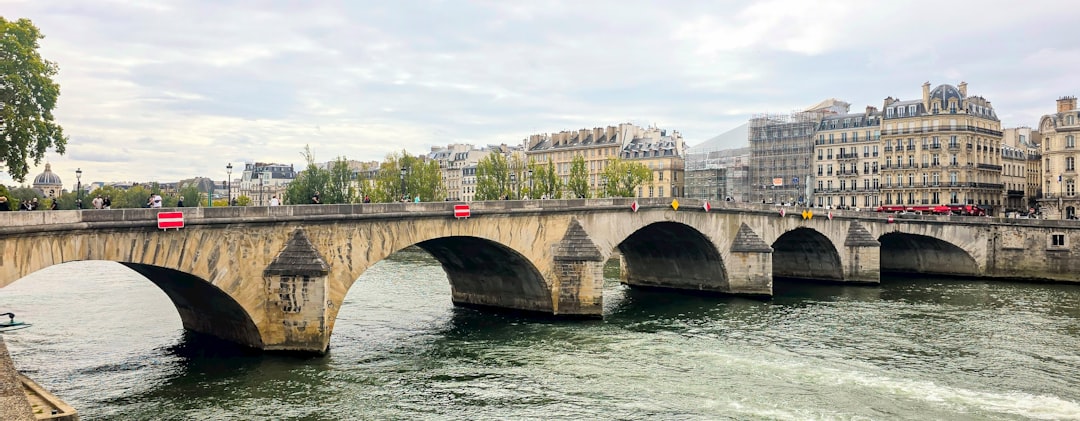
Evening: Walk along the Seine at dusk — the light on the stone bridges and Haussmann buildings is extraordinary. For a final Parisian dinner: Septime (book weeks ahead — one of the city’s best modern bistros), Frenchie (same level of acclaim), or simply a picnic from a good boulangerie and fromagerie on the banks of the Seine — which is exactly what Parisians do on summer evenings.
Getting Around Paris
Paris’s Métro is excellent — 16 lines, comprehensive coverage, simple to use. A Navigo Easy card (€2 + €14.90 per zone for a week pass) covers unlimited metro, bus, and RER in Paris. Individual tickets are €2.15. The RER connects to Versailles (line C) and the airports.
Walking is often the best option within central Paris — most key sights are within 2–3km of each other.
Essential Tips
- Book Eiffel Tower summit tickets 6–8 weeks ahead in summer — they genuinely sell out
- Louvre is free for under-26 EU citizens and on the first Friday evening of each month
- Don’t eat on the Champs-Élysées — it’s the most expensive and worst food in Paris
- Sit at a café terrace and just watch the city — this is a Parisian ritual, not a tourist activity
- Supermarkets, boulangeries, and fromageries have excellent food for much less than restaurants
- The Marché d’Aligre (Tues–Sun) is Paris’s best daily market — fresher, cheaper, and more local than the tourist markets
Plan your trip