Dublin Travel Guide: Guinness, Georgian Streets & Trinity College
Plan your trip
Dublin is a compact, walkable European capital with a literary and musical culture disproportionate to its size — the city of Joyce, Beckett, Wilde, and Behan; the home of traditional Irish music sessions that run in pubs on weekday evenings without performance billing or cover charges; and one of the most sociable cities in Europe, where conversations with strangers begin unremarkably and continue for hours.
It’s also heavily touristed, and the areas most visible to visitors (Temple Bar, the Grafton Street strip) are the least representative of the city. This guide covers both.
The Essentials
Trinity College and the Book of Kells
College Green | Open Monday–Saturday 9:30 AM–5 PM, Sunday 12–5 PM
Ireland’s oldest university (founded 1592) occupies a walled 47-acre campus in the center of Dublin. The main attraction is the Book of Kells — an illuminated manuscript gospel, created by Celtic monks circa 800 AD, displayed in the Old Library alongside the Long Room (a two-story barrel-vaulted library with 200,000 volumes and a collection of Irish harps).
Booking: Essential. Entry queues without pre-booking can exceed 90 minutes. Book at tcd.ie/visitors/book-of-kells. The Long Room alone is worth the visit; the Book of Kells exhibition that precedes it explains the manuscript’s significance and production methods. ~€18 adults.
Time needed: 1.5 hours.
National Museum of Ireland — Archaeology
Kildare Street | Free entry | Open Tuesday–Saturday 10 AM–5 PM, Sunday 2–5 PM
One of the finest archaeological collections in Europe and entirely free. The Bog Bodies — Iron Age humans preserved in the Irish peat bogs for 2,000+ years, their skin, hair, and facial expressions intact — are the most unsettling and historically fascinating exhibits in any Irish museum. The Treasury contains the Ardagh Chalice, the Tara Brooch, and the Cross of Cong — the finest examples of Early Medieval Irish metalwork. Allow 2 hours.
Guinness Storehouse
St James’s Gate, Liberties | Open daily from 9:30 AM
The most visited tourist attraction in Ireland — a self-guided tour of seven floors covering the history and production of Guinness, ending in the Gravity Bar (a circular panoramic bar on the top floor with 360° views over Dublin). The tour includes a complimentary pint. Educational and well-designed, if commercially slick. Worth visiting once; the views from the Gravity Bar genuinely justify the entry.
Entry: ~€26. Book online to avoid queuing at the door.
Kilmainham Gaol
Inchicore Road | Open daily | ~30-min taxi from the center
A 18th-century prison operational until 1924 — the site of the executions of the leaders of the 1916 Easter Rising (the defining moment of Irish independence). The guided tour (the only way to see the prison) covers the 1916 executions in the stone-breaking yard with striking emotional directness. One of the most historically important sites in Ireland.
Booking: Essential — guided tours sell out. Book at kilmainhamgaolmuseum.ie. ~€8.
The Pubs
Dublin’s pub culture is built around the concept of the “local” — a neighborhood pub where regulars drink the same thing at the same time, conversation flows naturally, and traditional music sessions happen without announcement or performance billing.
The tourist trap reality: Temple Bar is the most photographed pub district in Dublin and the most overpriced, overcrowded, and least authentic experience available. A pint of Guinness in Temple Bar costs €7–8; the same pint in a Liberties or Portobello local costs €5.50–6. The atmosphere is entirely different.
The real options:
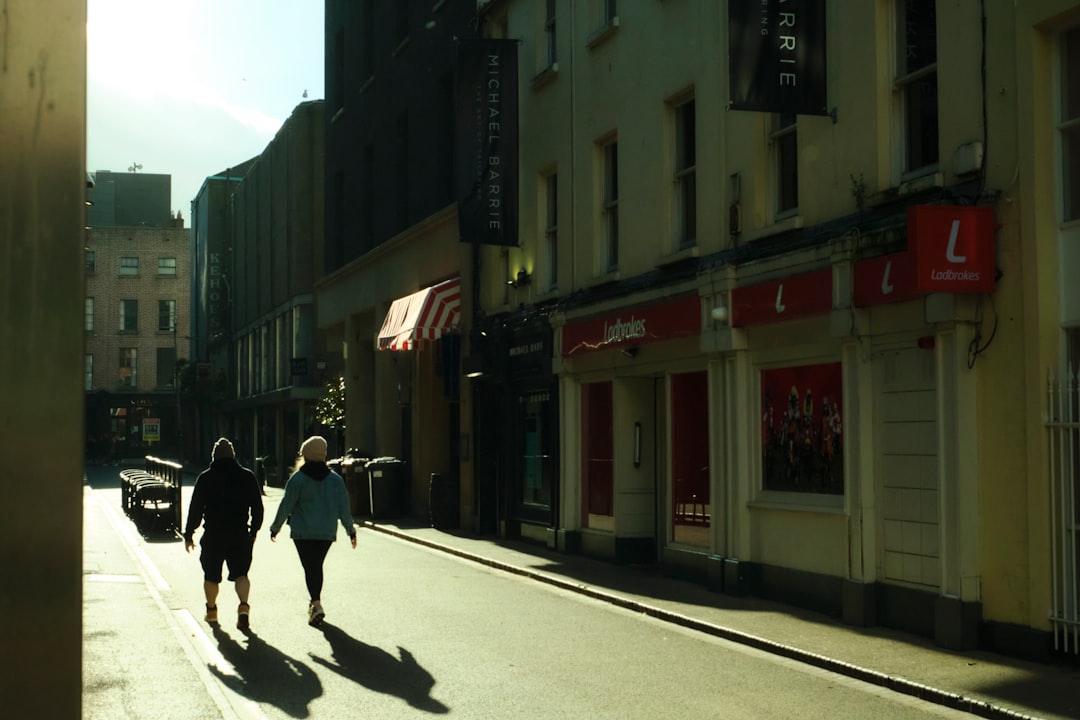
Kehoe’s (South Anne Street): Victorian-era pub preserved in original condition — wooden booths (snugs), frosted glass, and minimal renovation since the 1950s. One of the best preserved traditional pub interiors in Dublin.
Mulligan’s (Poolbeg Street): Established 1782, reputed to serve the best pint of Guinness in Dublin. Minimal decoration, maximum focus on the beer and conversation. Journalists and working-class regulars in roughly equal proportion.
The Long Hall (South Great George’s Street): Victorian pub with extraordinary interior — long mahogany bar, gilded mirrors, grandfather clocks, and Victorian tile work. One of the most beautiful pub interiors in Ireland.
Stag’s Head (Dame Court, off Dame Street): A turn-of-the-century pub with a stunning stained-glass and mahogany interior. Tucked down a side alley; easily missed. The physical beauty of the bar room is the main reason to come.
For trad music: Cobblestone (Smithfield, north of the Liffey) — the most respected traditional music pub in Dublin. Sessions most evenings, no cover, musicians sitting around a table playing for each other as much as the audience. This is the authentic version.
The Georgian City
The 18th century Dublin of the Anglo-Irish Ascendancy — wide Georgian streets of red-brick terraces, ornate door cases with fanlight windows, and the planned squares that form the architectural backbone of Dublin’s south side.
Merrion Square: The finest Georgian square in Dublin — intact 18th-century terraces on three sides, with a public park at the center. Oscar Wilde’s family house is on the north side; a camp, recumbent statue of Wilde lounges on a rock at the park entrance. The National Gallery of Ireland occupies the south terrace.
Fitzwilliam Square: Smaller and more intact than Merrion Square — private central garden, still-residential on all four sides.
Georgian doors: The multicolored front doors of Dublin’s Georgian terraces (each homeowner historically required to differentiate their entrance from their neighbors’) are one of the most-photographed elements of the city.
Practical Notes
Getting there: Dublin Airport (DUB) — the Aircoach express (€10) or Dublin Bus 747 (€7) to the city center, ~45 minutes. Dart (suburban rail) and LUAS (tram) for getting around the wider city.
The Leap Card: A contactless transit card covering all Dublin Bus, LUAS, and DART services. Available at newsagents and the airport. Single fares without a Leap Card are more expensive.
When to visit: May–June and September–October for the best weather/crowd balance. St Patrick’s Day (March 17) brings extraordinary celebration but also the busiest tourism week of the year.
Budget: Dublin is one of the more expensive European capitals. A pint: €6–7 in non-tourist pubs. A pub lunch: €12–18. Mid-range dinner: €30–50 per person with wine.
Plan your trip