One Week in Italy: The Perfect 7-Day Itinerary
Plan your trip
Italy is one of the world’s great travel destinations, and the classic north-south route — Rome, Florence, Venice — remains one of the most rewarding travel experiences on earth. Seven days gives you three cities and a lifetime of memories.
Days 1–2 – Rome
Day 1 – Ancient Rome: Start at the Colosseum — the largest amphitheatre ever built, opened in 80 AD and still standing. Book tickets online to avoid queues (they can be 1–2 hours long in peak season). The combined ticket includes the Roman Forum and Palatine Hill, which you should walk through — the heart of the ancient Roman world.
In the afternoon, cross the city to Vatican City. The Vatican Museums contain 7km of galleries (including the Sistine Chapel — book tickets well in advance), and St Peter’s Basilica is free entry. Climb to the top of the dome for extraordinary Rome views (no lift — 551 steps).
Evening: wander through the Trastevere neighbourhood — cobblestone streets, ivy-covered buildings, outdoor restaurants, and local energy far removed from the tourist centre.
Day 2 – Baroque Rome: The Pantheon (free entry) has been in continuous use for 2,000 years — the best-preserved ancient building in Rome. From here, walk the beautiful 10-minute route to the Trevi Fountain (throw your coin) and onwards to the Spanish Steps.
The Piazza Navona is one of Rome’s finest baroque squares. The Castel Sant’Angelo on the Tiber (once Hadrian’s mausoleum, now a fascinating fortress-museum) is worth a visit.
Evening: dinner in the neighbourhood around Campo de’ Fiori — the square has a daily market and the surrounding streets have Rome’s best aperitivo bars.
Day 3 – Florence
Take the Frecciarossa high-speed train from Rome Termini to Florence Santa Maria Novella (1.5 hours, €25–60). Florence is the cradle of the Renaissance and an open-air museum.
The Uffizi Gallery contains the greatest collection of Italian Renaissance art in the world: Botticelli’s Birth of Venus and Primavera, Michelangelo, Leonardo da Vinci, Raphael, Caravaggio. Book tickets well in advance — the queue without pre-booking can be 3–4 hours in summer.
Wander the Ponte Vecchio (lined with jewellers’ shops since the 14th century), cross to the Oltrarno neighbourhood for aperitivo, and climb to the Piazzale Michelangelo at sunset for the definitive Florence panorama.
Day 4 – Florence: Michelangelo & Brunelleschi
Accademia Gallery for Michelangelo’s David — the 5.17-metre marble masterpiece is even more overwhelming in person than in photographs. Book timed entry online.
Santa Maria del Fiore (the Duomo) and Brunelleschi’s dome — the engineering achievement of the 15th century. The dome climb (463 steps, no lift) is one of the most rewarding in Italy. The Baptistery opposite has Ghiberti’s Gates of Paradise, which Michelangelo called worthy of heaven’s gates. Book all entries online.
Afternoon: the Mercato Centrale for lunch, then wander the San Niccolò neighbourhood for local cafes and artisan shops that have nothing to do with tourism.
Day 5 – Travel to Venice
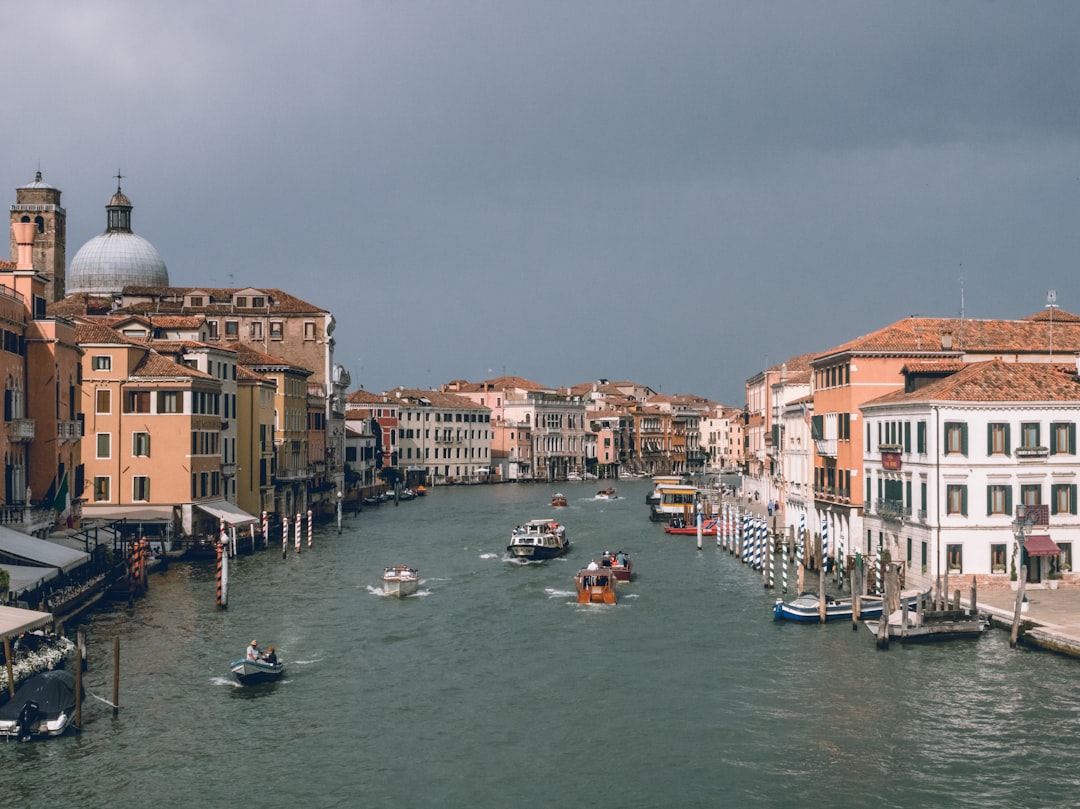
High-speed train from Florence to Venice Santa Lucia (2 hours, €25–70). Venice is, of course, impossible — a city of 118 islands connected by 400+ bridges and 177 canals, with no cars and no roads. It shouldn’t exist, and it’s the most beautiful city in the world.
Walk from the station to the Rialto Bridge — the oldest and most famous of Venice’s bridges — and the extraordinary Rialto Market alongside the Grand Canal (fish market in the morning, produce all day). Take a vaporetto (water bus) down the Grand Canal to Piazza San Marco.
Evening: book a table at a bacaro (traditional Venetian wine bar) serving cicchetti (small snacks on bread) — this is how Venetians actually eat and drink, and it’s excellent value.
Day 6 – Venice: St Mark’s, Dorsoduro & Islands
Basilica di San Marco is free but queue long — book a reserved entry time online (€3) to walk straight in. The golden Byzantine mosaics inside are extraordinary. Climb the Campanile (bell tower) for views over Venice and the lagoon.
The Doge’s Palace next door was Venice’s seat of government for centuries — the Bridge of Sighs, through which condemned prisoners walked to the prison, is viewable from inside. Book online.
Dorsoduro — the quietest and most local sestiere (district) — has the Peggy Guggenheim Collection (one of the best modern art museums in Europe, in her former palazzo on the Grand Canal) and the beautiful church of Santa Maria della Salute.
Optional: take a vaporetto to Burano (pastel-painted houses, lacemaking tradition) and Murano (glass-blowing since the 13th century).
Day 7 – Venice: Getting Lost
Venice’s greatest pleasure is not following a plan. Spend your final morning getting genuinely lost in the Cannaregio or Castello sestieri — the residential districts where Venetians actually live, shop, and go about their day. The tourist crowds thin dramatically two streets from the main route.
Cross to San Giorgio Maggiore island by vaporetto for the best view of Venice from its campanile. Head to the airport (Venice Marco Polo, connected by boat or bus) for departure.
Practical Notes
Trains: Frecciarossa and Italo high-speed trains are excellent. Book on Trenitalia.com or Italotreno.it at least 2 weeks ahead.
Vatican Museum: Book online — weeks in advance in summer. Early morning entry (first slot) is far less crowded.
Venice water taxi vs vaporetto: Vaporetto (€9.50/day unlimited) for most transport. Water taxis are expensive (€80–100 for airport transfer) but romantic.
Heat: June–August in Rome and Florence can be brutal (35–40°C). Pack sunscreen and hydrate obsessively.
Plan your trip