Tequila Region and Jalisco Day Trip Guide for World Cup 2026
Plan your trip
The tequila denomination of origin includes primarily the state of Jalisco and parts of four neighboring states. The town of Tequila is 60 km northwest of Guadalajara — the blue agave (Weber) that produces tequila grows in the volcanic fields between the town and the Tequila volcano. For World Cup visitors with a free day, an excursion to the tequila region from Guadalajara is the most specifically Jaliscan experience available.
Tequila: What to Know
Tequila is a distillate of blue tequilana Weber agave — specifically this variety and produced only in the denomination of origin region. The process:
- Blue agave takes 7–12 years to mature
- The jimador (specialized worker) cuts the piñas (the agave’s heart) with a tool called a coa
- The piñas are steamed or baked in adobe ovens to convert carbohydrates into fermentable sugars
- The juice is fermented and distilled twice
- The result is classified by aging:
- Blanco (Silver): No aging; the purest agave flavor
- Reposado: Aged 2–12 months in oak barrels; smoother
- Añejo: 1–3 years in barrel; vanilla and caramel notes
- Extra añejo: More than 3 years; the most complex and expensive
The difference from mezcal: Mezcal can be produced from any agave variety (not just blue); it is roasted in an earth oven giving the smoky character. Tequila is legally a subcategory of mezcal (mezcal produced from blue agave in the designated region).
The Expreso Tequila (José Cuervo Express)
The tourist train that runs from Guadalajara to the town of Tequila on weekends and some weekdays. It’s the most organized and popular experience for visiting the region.
Itinerary: Departs from the Guadalajara train station. The train journey (60–75 minutes) includes live mariachi, breakfast, and tequila shots. In the town of Tequila, passengers visit La Rojeña distillery (the oldest continuously operating distillery in Mexico, founded in 1795, owned by Jose Cuervo) with a production tour, tasting, and free time.
Included: Transport, breakfast, distillery tour, and tequila tastings.
Price: 1,500–2,500 MXN per person, depending on the package.
Reservations: Required in advance. For the World Cup period, book weeks ahead. www.tequilaexpress.mx
Independent Visit to the Town of Tequila
How to get there: Bus from Guadalajara’s Nueva Central de Autobuses (CAEN) with Autocamiones de la Comarca line. 1 hour, 120 MXN. Buses also depart from the old Central.
The town of Tequila: A colonial town of 40,000 with distilleries as the main industry. The center has the Parroquia de la Purísima Concepción (18th century), the main plaza, and the Museo Nacional del Tequila (MUNAT) which explains the drink’s history.
Distilleries open without prior reservation:
- Herradura (Destilería Herradura, San José del Refugio): One of Mexico’s most respected distilleries. Daily tours with tasting. 350–500 MXN.
- Sauza (José Cuervo 22): The world’s second largest distillery by volume. More industrial tour but accessible. 200–300 MXN.
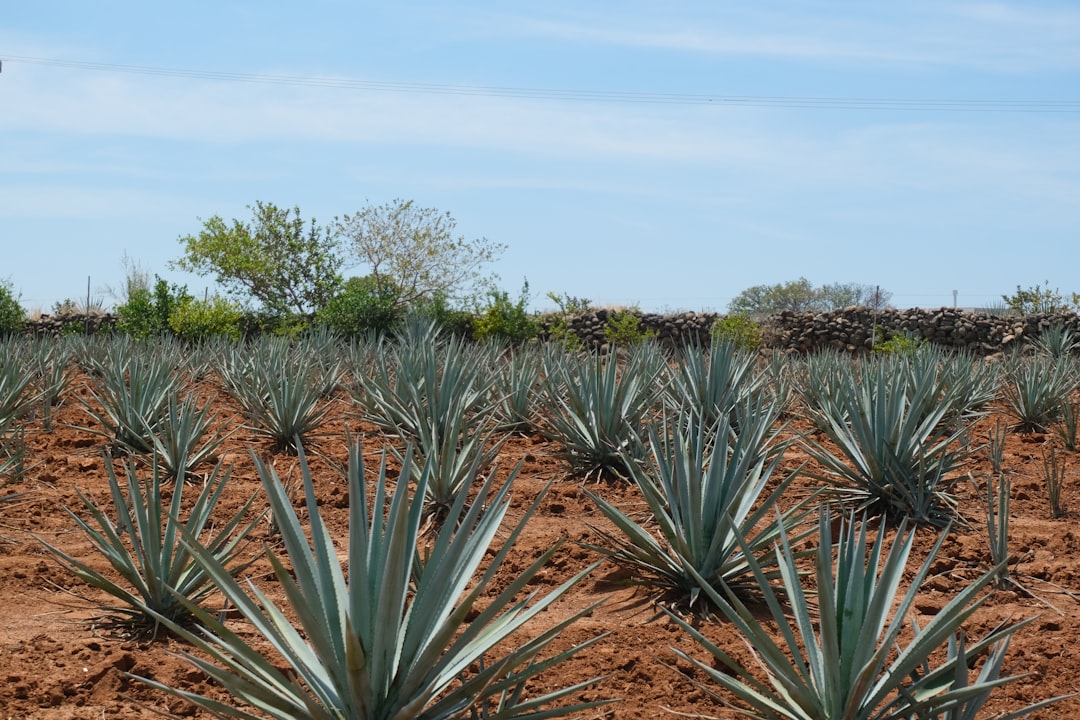
The agave fields: The road between Guadalajara and Tequila passes through blue agave fields — rows of blue-gray spiky plants that take 7–12 years to grow. The landscape of the Altos and Valles de Jalisco with agave is globally recognizable and was declared a UNESCO World Heritage Site (the Agave Landscape and Ancient Industrial Facilities of Tequila, 2006).
Tequila Tasting in Guadalajara
Without leaving the city, Guadalajara has some of the world’s best tequila bars.
La Destilería (Av. México 2916, Circunvalación Country): The most complete tequila destination in the city — more than 500 labels, including extra-aged and limited edition tequilas. Staff can guide a comparative tasting. 150–400 MXN per glass depending on category.
Cantina La Fuente (Pino Suárez 78, Centro): Guadalajara’s oldest cantina (since 1921) — tequila in a caballito glass with sangrita (traditional Jaliscan blend of tomato, orange, and chile) alongside. The correct way to drink tequila in Jalisco. 80–120 MXN.
El Parián de Tlaquepaque: The cantina-bar complex in Tlaquepaque’s plaza where mariachis play live. Tequila and mariachi simultaneously — the tourist experience that is also authentic.
Sangrita
Sangrita is the traditional tequila accompaniment in Jalisco — a blend of orange juice, tomato, chile de árbol, and salt. It’s not a mixer to combine with the tequila; it’s an accompaniment drunk in small sips alternating with the tequila.
The industrial sangrita (bottled) sold in some stores is not the same as cantina-made sangrita with fresh ingredients. The house-made sangrita at La Fuente or the Historic Center cantinas is the authentic version.
Mezcal in Guadalajara
Although Guadalajara is the tequila capital, the city has an active mezcal scene with specialized bars:
Pare de Sufrir (Av. Chapultepec 89-B): Mezcal bar focused on artisanal producers from Oaxaca, Guerrero, and Puebla — the counterpoint to industrial tequila.
Artisanal mezcal from wild agave (especially tobalá, madrecuixe, and tepeztate) is significantly different in flavor and production process from tequila — a comparative tasting is one of the most educational activities available in Guadalajara.
Plan your trip