Whale Watching in Greenland: Humpbacks, Narwhals & Arctic Seas
Plan your trip
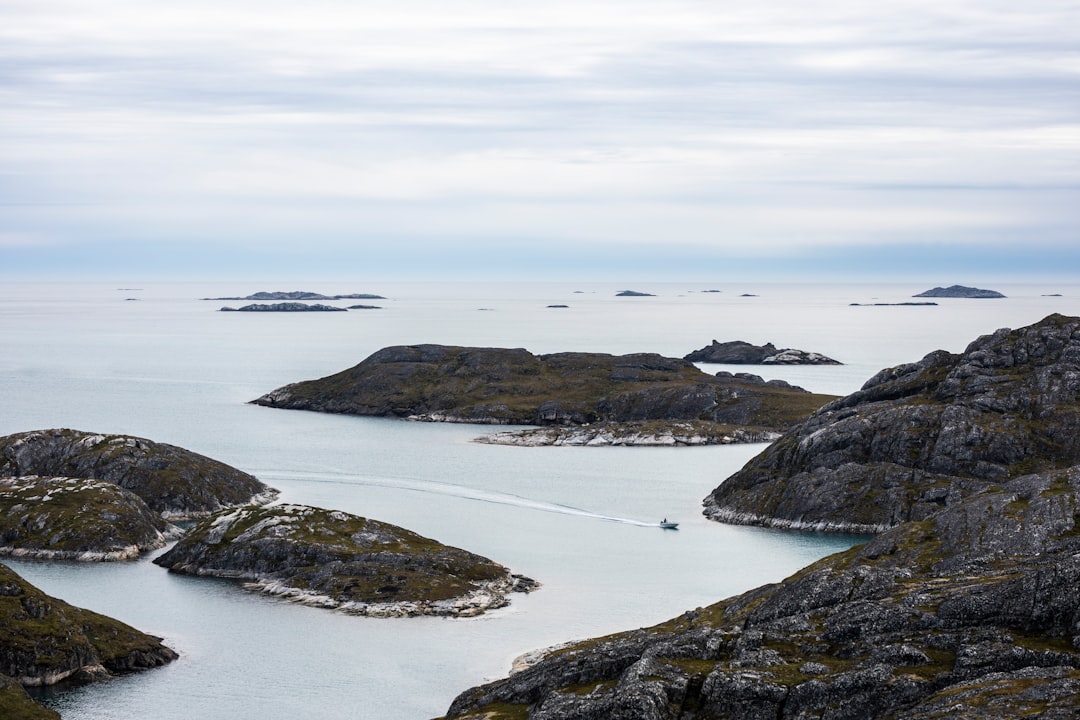
Greenland’s waters are among the most productive whale habitats in the North Atlantic — the cold, nutrient-rich Arctic seas support dense populations of humpback whales, minke whales, fin whales, beluga whales, and the narwhal, the tusked whale with no near relative anywhere in the world. The combination of abundant marine life and the visual backdrop of icebergs, sea cliffs, and the Greenland coast produces whale watching of a quality and scale rarely matched elsewhere.
The most accessible whale watching centers on Disko Bay, on the west coast — Ilulissat, the largest town in the bay, is the logistical center, but the smaller island of Qeqertarsuaq (Disko Island) offers more remote and often more productive conditions.
The Species
Humpback Whale (Megaptera novaeangliae)
The most commonly seen whale in Disko Bay — present from late May through early October as the population migrates north from Caribbean breeding grounds. Humpbacks feed intensively in Arctic waters during the summer, building up fat reserves for the winter migration.
Behavior: Humpbacks are among the most active whales for above-surface behavior — breaching (full body launch out of water), pectoral fin slapping, and fluking (raising the tail before a dive) are common. The individual fluke pattern identifies each whale; researchers in Disko Bay have identified hundreds of individual animals.
Feeding: Humpbacks in Disko Bay feed primarily on Arctic capelin using bubble-net feeding — a cooperative technique where a group circles prey, blowing bubbles to corral the fish, then lunges through the surface in a coordinated explosion. Witnessing bubble-net feeding is one of the more extraordinary wildlife events anywhere.
Narwhal (Monodon monoceros)
The “unicorn whale” — a medium-sized toothed whale with a spiral tusk (elongated left canine tooth, reaching 2.5–3m in males) that has no confirmed function, though social signaling and sensory detection are current hypotheses.
When and where: Narwhals are present in Baffin Bay and the fjords of northwest Greenland year-round, but spring (April–June) is the primary sighting window in the west coast area, when sea ice concentration is highest and narwhals move near the ice edge.
Difficulty: Narwhals are more elusive than humpbacks — less surface-active, more shy, and more dependent on specific ice conditions. Sightings from the Ilulissat area are occasional; the most reliable narwhal watching requires travel to smaller, more northerly communities (Qaanaaq, Savissivik) accessible only by small plane.
Beluga Whale (Delphinapterus leucas)
Smaller, entirely white, and extremely vocal — beluga are present in Disko Bay in summer. Their characteristic high-pitched calls (audible above water near a pod) have earned them the name “sea canaries.” Smaller pods than humpbacks; less dramatic above-water behavior but distinctive in appearance.
Minke Whale (Balaenoptera acutorostrata)
The most common baleen whale in Greenland waters — smaller than humpback or fin whale, relatively quick. Present throughout summer in Disko Bay; less impressive for whale watching than humpbacks but reliable.
Fin Whale (Balaenoptera physalus)
The second-largest animal on Earth after the blue whale. Present offshore in Disko Bay; occasionally seen on the boat tours. The blow (the column of water vapor exhaled) is distinctive from a distance — tall and vertical.
Disko Bay: Where to Go
From Ilulissat
The most accessible launch point — multiple boat tour operators offer 3–4 hour whale watching excursions from the Ilulissat harbor, combining whale watching with iceberg proximity.
Season: Late June through September for humpback whale sightings. August–September tends to have the densest whale feeding activity as fish aggregate.
Tour options: World of Greenland, Arctic Umiaq Line, and local operators offer tours. Cost: approximately DKK 500–800/person (3–4 hours). The icefjord boat tour and whale watching tour can be combined on some operators.
Qeqertarsuaq (Disko Island)
A 1.5-hour ferry or speedboat from Ilulissat — a volcanic island with a more remote character and whale populations less disturbed by heavy boat traffic. The harbor town of Qeqertarsuaq has local guides offering small-boat whale watching. The channel between Disko Island and the mainland is particularly productive for humpback whales in July–August.
Boat Size Matters
Small boats (6–12 passengers) allow more flexibility, quieter approach, and better wildlife behavior (whales surface more readily near quiet vessels). Large tourist vessels have lower per-person cost but less proximity. For whale watching specifically, smaller boats produce better experiences.
The Greenlandic Context
Greenland still practices subsistence whaling under a quota system administered by the IWC (International Whaling Commission) and the Greenlandic government. Minke, fin, and humpback whales are hunted in small numbers by licensed hunters for local consumption. This is distinct from commercial whaling — the quota is based on nutritional subsistence needs of the local population, not commercial export.
The whale watching and subsistence hunting communities are largely separate — whale watching operators focus on tourist boats; the hunting activities are coastal and not visible from standard tourist contexts. However, the cultural context of whales as a traditional food source is present in any conversations with local Greenlandic hunters and is worth understanding before forming opinions on your visit.
Practical Notes
Best time: July–September for humpback whales. May–June for spring ice conditions (narwhal possibility, dramatic ice scenery). August is peak whale activity in Disko Bay.
Weather: Arctic weather changes rapidly. Tours are cancelled in rough conditions; book with a flexible itinerary. A 3–4 day stay in Ilulissat increases the probability of catching a good weather window.
Clothing: Even in August, an open boat in Disko Bay is cold. Full waterproof outer layers, fleece mid-layer, and warm gloves are essential regardless of how warm the shore temperature feels.
Photography: A 300–400mm telephoto lens is the minimum useful focal length for whale photography from a moving boat. Camera stabilization (optical or electronic) is more important than megapixels in boat conditions.
Plan your trip