Tokyo vs Seoul: The Food Capital Showdown
Plan your trip
Tokyo has three times more Michelin stars than any other city on earth. Seoul has a food culture so intensely referential — arguing about the best kimchi jjigae, the right texture of tteok, the precise ratio of gochugaru — that eating feels like a civic act.
Both cities are legitimately among the top five food destinations in the world. The question is what kind of eating you’re there for.
The Philosophy Gap
This is the real difference, and it explains everything downstream.
Tokyo organizes food around mastery per category. There are restaurants in Tokyo that have served one dish for 40 years and gotten better every decade. The pursuit is vertical — depth within a form, not range across forms. A tonkotsu ramen shop in Shibuya is not trying to be anything other than the best tonkotsu ramen shop in Shibuya. That’s the entire project.
Seoul organizes food around communality and intensity. Korean food is designed to share, to accompany, to stack. Banchan — the small plates that arrive automatically before your meal — are not sides. They’re the architecture of the meal. The flavor profile is big: fermented, spicy, sweet, umami-deep. Restraint is not the goal. Satisfaction is.
Neither is better. But they’re feeding different hungers.
Tokyo: What You’re Actually Eating
Ramen is the obsession entry point. But Tokyo ramen is different from Fukuoka’s tonkotsu, Sapporo’s miso, or Kyoto’s chicken broth — the Tokyo style is shoyu (soy-based), clear, complex. Fuunji in Shinjuku does the tsukemen (dipping ramen) version. Ichiran lets you eat alone in a booth facing a curtain, which is somehow perfect.
Sushi in Tokyo ranges from conveyor belt (kaitenzushi, absolutely worth doing) to 20-seat counter omakase experiences that cost $400 and take months to book. The middle tier — neighborhood sushi bars at lunch, around $30–60 for a serious set — is where Tokyo earns its reputation without the theater.
Izakaya culture is how Tokyo actually eats most nights. Yakitori, small plates, highballs, long evenings. Yurakucho, under the train tracks, has a strip of izakayas that look unchanged since 1975 and cook chicken skewers over charcoal smoke.
Depachika — department store basement food halls — are the cleanest expression of Tokyo food culture. Every major department store has one. The prepared foods, the pastries, the bento boxes, the regional specialties flown in from across Japan. Isetan in Shinjuku’s basement can occupy a serious food person for hours.
Don’t miss: tamagoyaki at Tsukiji Outer Market (still very much worth visiting), tempura at lunch (half the price of dinner), standing sushi bars in Ginza for $30 omakase, wagyu at a proper yakiniku restaurant.
Seoul: What You’re Actually Eating
Korean barbecue (KBBQ) is the global export, but eating it in Seoul is different from anywhere else. The meat quality ceiling is higher, the banchan are more plentiful, and the right restaurant — Maple Tree House in Itaewon, or any of the griddle-and-charcoal places in Mapo-gu — runs until 2am with soju flowing.
Jjigae (stew) is the backbone of the cuisine. Kimchi jjigae, doenjang jjigae, sundubu jjigae — eaten with rice, in stone pots that keep the base boiling at the table. These are not fancy preparations. They are the foundation, and Seoul makes them better than anywhere.
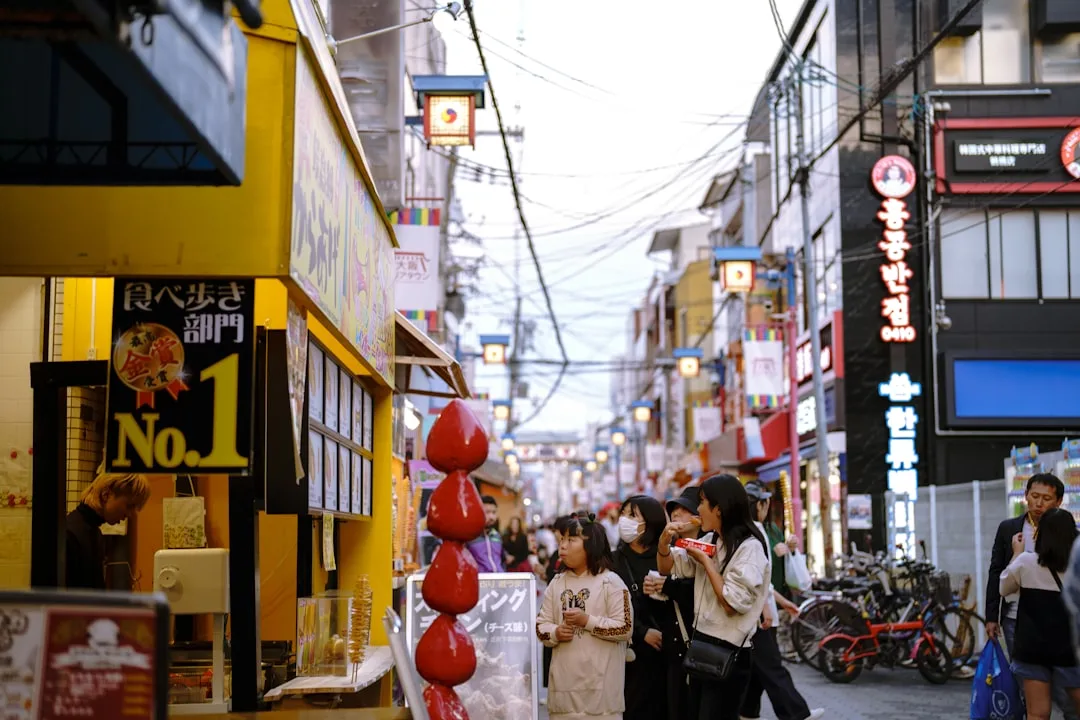
Pojangmacha — the orange-tented street stalls — exist on every major nightlife street. Tteokbokki (spicy rice cakes), odeng (fish cake skewers in broth), hotteok (sweet pancakes). This is the food Seoul runs on after midnight, the food students survive on, the food that anchors everything else.
Naengmyeon — cold buckwheat noodles in chilled broth — is the Seoul summer food, something like a cult object in local food culture. The broth is subtly sweet and sour, the noodles chewy and long, the eating meditative. Woo Lae Oak has been doing it since 1946.
Hongdae and Mapo-gu for the younger food scene: fusion Korean, late-night dakgalbi, craft beer bars serving Korean fried chicken (chimaek). Seoul’s food culture is constantly regenerating itself in a way Tokyo’s doesn’t quite — there are neighborhoods here that didn’t exist as food destinations five years ago.
Don’t miss: samgyeopsal (pork belly) lunch for $10, haejangguk (hangover soup) at 7am in Jongno, bingsu (shaved ice) in summer, hansik at a traditional Korean restaurant in Insadong.
The Cost Comparison
| Category | Tokyo | Seoul |
|---|---|---|
| Convenience store meal (7-Eleven / GS25) | $5–9 | $3–6 |
| Street food / pojangmacha | $3–8 | $2–5 |
| Ramen / jjigae lunch | $10–18 | $7–12 |
| Mid-range restaurant dinner | $25–60 | $15–35 |
| KBBQ / yakiniku (proper) | $40–80/person | $25–50/person |
| High-end / omakase | $150–400 | $80–200 |
Seoul wins at every tier, typically by 30–40%. Tokyo’s premium is real — but so is the quality ceiling.
The Practical Realities
Tokyo:
- Bookings required for serious restaurants. Many online via Tableall, Pocket Concierge, or Omakase.jp
- Queue culture is real. Some ramen shops have 45-minute lines at noon. Worth it.
- English menus less common at neighborhood spots — Google Lens translate works well
- Cash still preferred at many traditional establishments
Seoul:
- Naver Maps > Google Maps for restaurant search (Korean-language version even better)
- Most KBBQ spots and popular restaurants do take reservations; many walk-in friendly
- English signage more prevalent in tourist-heavy areas (Itaewon, Hongdae)
- Delivery culture extraordinary — Coupang Eats operates like a restaurant to your door
Neighborhoods to Eat In
Tokyo:
- Shinjuku: izakayas under the tracks in Yurakucho area, ramen in Kabukicho
- Shibuya/Daikanyama: bistros, bakeries, the more international-leaning scene
- Ginza: high-end lunch sets, standing sushi bars
- Yanaka/Nezu: old Tokyo vibe, traditional sweets, tofu restaurants
Seoul:
- Mapo-gu / Mangwon: neighborhood barbecue, local jjigae joints, excellent coffee
- Itaewon / Hannam: international variety, high-end Korean, KBBQ destination spots
- Jongno / Insadong: traditional hansik, pojangmacha, samgyetang
- Hongdae: young food scene, late night, street food strip
The Honest Verdict
Pick Tokyo if eating is a contemplative act for you — if you want to sit at a counter, watch someone who has dedicated their life to one dish, and experience that dish at its absolute ceiling. Tokyo will give you that more reliably than any city on earth.
Pick Seoul if eating is a social, physical, loud, long act — if you want the table covered with food, the grill smoking between you and your friends, soju in small glasses, and the feeling that the night has no predetermined end. Seoul will give you that better than almost anywhere.
The honest truth: both cities will wreck you for food back home. The only question is what kind of damage you want done.
For first-time visitors: Seoul is the easier, cheaper, more immediately exciting food city. Tokyo rewards longer stays and more research. If you have one week in Asia and food is the priority, Seoul wins on accessibility. If you have two weeks and patience, Tokyo wins on depth.
You will go back to both.
Plan your trip