One Week in Ireland: The Perfect 7-Day Itinerary
Plan your trip
Seven days is just enough time to fall deeply in love with Ireland — the green hills, the ancient castles, the pubs full of music and laughter, and the coastline that feels like the edge of the world. This itinerary balances Dublin’s vibrant city life with the raw beauty of the countryside, hitting the unmissable stops without rushing.
Day 1 – Dublin: Arrival & City Exploration
Land in Dublin and get straight into it. Drop your bags and head to Trinity College to see the Book of Kells, one of the finest medieval manuscripts on earth. The Long Room library alone is worth the admission.
Walk south into the Grafton Street area and wander into the narrow lanes of the Temple Bar district — touristy, yes, but alive with music and energy in the evenings. Grab dinner at one of the gastropubs lining the cobblestone streets.
End the evening with a proper pint of Guinness at The Long Hall or Mulligan’s, two of Dublin’s most atmospheric old pubs.
Day 2 – Dublin: Kilmainham, Guinness & Coast
Start the morning at Kilmainham Gaol, the 18th-century prison where the leaders of the 1916 Rising were executed. It’s a haunting, essential piece of Irish history — book tickets in advance.
Head to the Guinness Storehouse for the full experience: seven floors of history, brewing, and culture, ending with a pint in the Gravity Bar with 360° views over the city.
In the afternoon, take the coastal DART train to Dún Laoghaire or Howth — both offer seaside walks, fresh seafood, and cliffs with views across Dublin Bay.
Day 3 – Wicklow & Glendalough
Drive or take a day tour south into County Wicklow, the “Garden of Ireland.” The rolling hills here are some of the greenest in the country.
The centrepiece is Glendalough, a 6th-century monastic settlement sitting between two dark glacial lakes and forested mountains. Walk the valley loop trail for views of the round tower and the upper lake — genuinely one of Ireland’s most peaceful places.
On the way back, swing through the Sally Gap mountain pass and stop at Glenmacnass Waterfall.
Day 4 – Kilkenny & Cashel
Drive west to Kilkenny, Ireland’s medieval capital. Spend the morning at Kilkenny Castle, which has been restored to its Victorian splendour, and explore the Medieval Mile — a walk linking the castle to St Canice’s Cathedral through streets lined with historic buildings.
After lunch at one of Kilkenny’s excellent craft-beer pubs, continue south to the Rock of Cashel — a dramatic cluster of medieval towers rising from a limestone outcrop. Few sights in Ireland are more striking. Arrive late afternoon when the tour crowds thin out.
Day 5 – Ring of Kerry & Killarney
Drive to Killarney in County Kerry, your base for the next two nights. The town itself is charming, but the real draw is the surrounding national park.
Drive the Ring of Kerry, a 179km scenic loop with ocean views, tiny fishing villages, and mountain passes. Key stops include Moll’s Gap, the colourful village of Sneem, and Ladies’ View, which offers one of the best panoramas in Kerry.
Back in Killarney, the old-town pubs along New Street come alive at night with traditional music sessions — the perfect way to end the day.
Day 6 – Dingle Peninsula
Take a different route today along the Dingle Peninsula, arguably even more beautiful than the Ring of Kerry and far less crowded.
Drive the Slea Head Drive on the western tip — the views here over Blasket Islands from cliff-edge roads are extraordinary. Stop at the Dunbeg Promontory Fort, the Gallarus Oratory (a perfectly preserved 8th-century stone church), and the colourful town of Dingle for fresh seafood chowder and a pint.
Day 7 – Cliffs of Moher & Burren
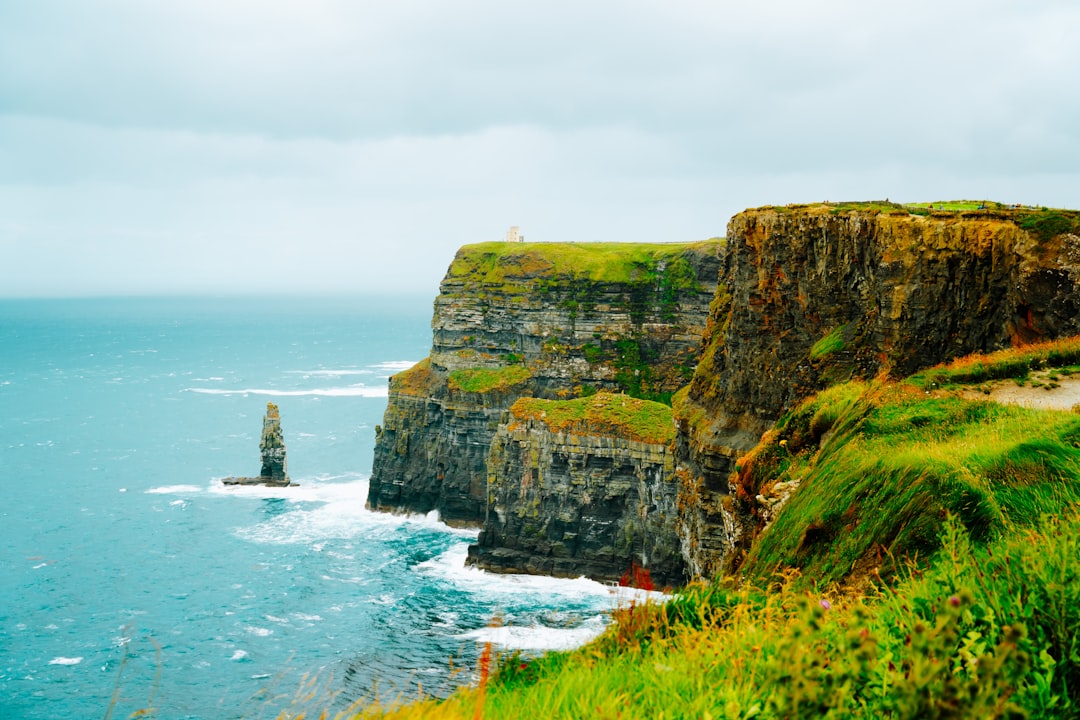
Drive north into County Clare for a final day of dramatic scenery. The Cliffs of Moher rise 214 metres from the Atlantic — they’re busy but genuinely breathtaking, especially if you walk the coastal path away from the main viewing platform.
Just inland lies The Burren, a surreal limestone landscape that feels like the moon covered in wildflowers. Stop at Poulnabrone Dolmen, a 5,000-year-old portal tomb standing alone in the grey karst. Drive back to Dublin (about 2.5 hours) for your flight home.
Practical Notes
Getting around: A rental car is almost essential once you leave Dublin. Roads in rural Ireland are narrow but well-signposted.
Best time: May–June for long days and fewer crowds. July–August for warmest weather. March–April for green landscapes and lower prices.
Budget tip: Book accommodation and the Guinness Storehouse/Kilmainham Gaol well in advance — these sell out fast, especially in summer.
Driving: In Ireland, you drive on the left.
Plan your trip