Kagoshima and Sakurajima: The City Under the Volcano
Plan your trip
Kagoshima is the southernmost major city on Kyushu and the historical capital of the Satsuma domain — one of the most powerful and independent feudal domains in Japan. The Satsuma samurai were central to the Meiji Restoration (1868) that ended the shogunate and modernized Japan; the city produced Saigo Takamori, arguably Japan’s most famous samurai, who led the last significant samurai rebellion in 1877 and lost. His statue watches over the city from a park.
The city’s defining visual is Sakurajima: a 1,117-meter stratovolcano sitting 4 km across the bay, smoking visibly on most days, erupting (usually small explosions from the summit) several hundred times per year. The ash falls on Kagoshima when the wind is from the east. Residents keep small umbrellas for ash, not rain. The city has been next to an active volcano for its entire recorded history and has made accommodations.
Getting There
From Fukuoka: 1 hour 20 minutes by Shinkansen Mizuho to Kagoshima-Chuo Station (¥10,450). JR Pass valid. From Osaka: 3.5 hours by Nozomi/Mizuho Shinkansen (¥22,000). JR Pass valid. From Tokyo: 7 hours by Shinkansen or 2 hours by flight to Kagoshima Airport (30 min from city by bus).
Sakurajima
The volcano is an island connected to the Osumi Peninsula by a lava flow from the massive 1914 eruption — the largest eruption in 20th-century Japan, which in 5 weeks deposited 3 billion cubic meters of lava and joined the island to the mainland. Before 1914, Sakurajima was an island; after, it was a peninsula.
Getting there: Ferry from Kagoshima’s Suikouzan pier — 15 minutes, ¥160, running 24 hours daily every 15 minutes. The ferry is the primary transport link for the 5,000 residents of Sakurajima. Board with commuters and locals.
Yunohira Observatory — the best accessible viewpoint on the volcano (373m altitude), reached by road from the ferry terminal. When the weather is clear and the wind is right, the view of the Minamidate crater from here includes visible fumarole emissions. The observatory is the highest point visitors can reach; the upper crater zones are closed when eruption activity is elevated.
Lava fields (Arimura) — the vast hardened lava flows from the 1914 eruption extend along the eastern shore. Walking through them is free and requires only the trailhead car park as a base. The contrast between the black rock surface, the subtropical vegetation pushing through cracks, and the smoking summit above is the landscape that defines Sakurajima.
Footbath (ashiyu) — a volcanic hot spring footbath beside the road at the northern coast, fed by geothermal water. Free. Sits on the lava field looking toward the mainland. The combination of hot spring water and the visual presence of the volcano above is specific.
Sakurajima radishes (sakurajima daikon): The volcanic soil produces the world’s largest radishes — individual daikon that can weigh 30 kg. Sold along the road on the island, eaten pickled or in nabemono. An agricultural consequence of living next to a volcano with particularly mineral-rich soil.
Eruption watching: The eruptions from Minamidate crater are mostly small (Showa-level, not 1914-level) — plumes of ash and rock that rise 1–3 km before dispersing. They can be observed from the Kagoshima harbor area and from the Sakurajima observatory. The Kagoshima Volcano Observatory provides real-time monitoring data.
Kagoshima City
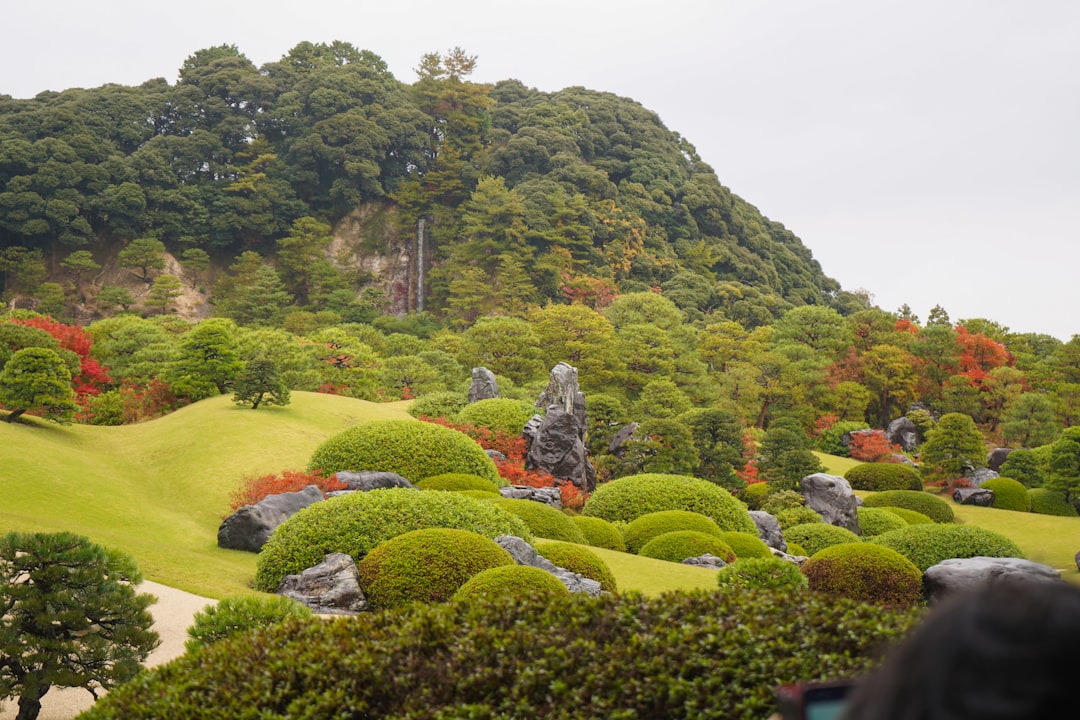
Sengan-en Garden (Iso Garden): The villa garden of the Shimazu clan (daimyo of Satsuma for 700 years), designed in 1658 with Sakurajima as shakkei (borrowed scenery) — the entire composition is arranged so the volcano and the bay appear as the garden’s backdrop. The garden is superb; the volcano-as-borrowed-scenery concept is one of the most successful applications of the principle in Japan.
Adjacent to the garden, the Shoko Shuseikan — the first Western-style industrial complex in Japan, built by the Shimazu clan in 1852 (before the Meiji Restoration) to produce weapons and ships. The factory buildings house a museum covering the Satsuma domain’s modernization program and the 2015 UNESCO Industrial Heritage designation.
Admission (garden + museum): ¥1,000.
Terukuni Shrine: The main shrine of Kagoshima, on the hillside above the city center, housing the spirit of the 28th Shimazu lord. The forested path up to it from the street below is quiet even during busy periods.
Saigo Takamori monuments: The saigo-don (as he is locally known) appears throughout Kagoshima. The large statue at the top of Shiroyama park shows him in Western military dress; the bronze at Kagoshima Station shows him in casual yukata with a dog. He is the city’s main cultural identity figure. The Shiroyama Park observation deck above the statue provides the best city-and-volcano view from the mainland side.
Kagoshima City Museum of Art and Kagoshima Prefectural Museum are both near Shiroyama and worth combining with a park visit.
Ibusuki — Sand Baths
45 minutes south of Kagoshima by JR Ibusuki Nanohana (¥1,020): the coastal town of Ibusuki is known for sunayu — natural sand baths where volcanic geothermal heat warms the beach sand to onsen temperature. You lie in the sand while attendants shovel it over you; the heat penetrates gradually and produces an effect distinct from water onsen.
Saraku sand bath facility: The most established operator on Ibusuki beach. ¥1,400 for the sand bath including yukata rental (you wear the yukata into the sand). The experience lasts 10–15 minutes in the sand followed by a shower and access to the adjacent conventional onsen. The combination of sea view, sand burying, and volcanic heat is one of the more unusual bathing experiences available in Japan.
Kirishima National Park
One hour northeast of Kagoshima by bus or car: the volcanic mountains of Kirishima, with multiple crater lakes, hiking trails, and the Kirishima Jingu shrine — one of the most sacred Shinto sites in southern Kyushu, set in cedar forest with a long history as the shrine of Jimmu (the legendary first emperor of Japan, said to have been born in this region).
Ebino Kogen — the high plateau (1,200m) in the center of the park, with the most accessible crater lake hiking. The Ebino Kogen circuit (4km loop) passes three volcanic lakes in different colors (blue, red-brown, green depending on mineral content) and has views of the Kirishima summits. Takes 2 hours.
Food and Drink
Kurobuta pork: The Kagoshima black pork (kagoshima kurobuta) — a heritage breed raised in the Satsuma region — is considered among the finest pork in Japan. Sold in shabu-shabu, tonkatsu, and BBQ preparations throughout the city. The fat distribution in kurobuta is comparable to the marbling in wagyu beef.
Satsuma-age (fish cake): Freshwater fish paste deep-fried in various shapes — the original version of the fish cake now common throughout Japan. The Kagoshima versions, sold at market stalls, are made fresh and eaten immediately.
Shochu: Kagoshima is Japan’s primary shochu-producing region — the sweet potato (imo shochu) style is specific to Kagoshima and the surrounding Satsuma area. The flavor is earthier and sweeter than barley or rice shochu. Served on the rocks or with hot water; the hot water version (oyuwari) in winter brings out the sweet potato aromatics. The local izakayas have 20+ varieties by the glass.
Practical Notes
Ash: When the wind comes from the east, Kagoshima receives ash falls. Mild inconvenience, occasionally significant. The city sells ash-catching bags and residents keep special umbrellas. Carry a cloth or scarf to cover your face on heavy ash days.
Climate: Subtropical — warmer than northern Kyushu year-round. Summer is hot and humid (35°C+); winter is mild (rarely below 5°C). The subtropical vegetation (palms, bougainvillea, hibiscus) is visible in the city streetscaping.
Kagoshima Chuo Station: The Shinkansen terminus, with most city buses departing from the station concourse. The nearby Amu Plaza shopping complex has decent food options for departure days.
Kagoshima is the city that normalizes something most cities would find impossible — a smoking volcano 4 km away, visible from every north-facing window, erupting several hundred times per year. The residents have calibrated their relationship with it across centuries: they check the ash forecast the way others check rain, they eat vegetables grown in its mineral-rich soil, and they built a garden specifically so the volcano appears in the composition. It is the most Japanese possible response to geological circumstance.
Plan your trip