Changdeokgung Palace and the Secret Garden
Plan your trip
The five Joseon palaces of Seoul each have a different relationship with the city: Gyeongbokgung is the grandest, most-photographed, and most official; Deoksugung is in the business district and has a strange modern surrounding; Gyeonghuigung is largely gone. Changdeokgung — built in 1405 as a secondary palace to Gyeongbokgung — is the one that survives most authentically and occupies the most remarkable setting.
The palace complex itself is substantial, but the primary reason Changdeokgung is UNESCO-listed (designated 1997) is what lies behind it: the Huwon (후원), known to visitors as the Secret Garden (비원, Biwon). This 78-acre forested garden — pavilions, lotus ponds, stone bridges, pavilion terraces, and walking trails under a mature tree canopy — was the private garden of the Korean royal family for 600 years. It was closed to all but royalty and their guests until 1983; even now, access is limited and timed.
Changdeokgung Palace
UNESCO World Heritage Site: Designated in 1997, specifically for the palace’s “outstanding example of Far Eastern palace architecture and garden design” and its adaptation to its natural setting rather than imposing on it.
History: Built in 1405 as an auxiliary palace. After Gyeongbokgung was burned during the Japanese invasion of 1592, Changdeokgung became the main royal residence for the Joseon kings and remained so for 270 years. The buildings visible today are largely 17th–19th century reconstructions following fire and war damage, but the spatial organization follows the original Joseon layout.
Key Buildings
Donhwamun (돈화문): The main gate — the largest wooden palace gate in Korea, built in 1412 and surviving from the original construction.
Injeongjeon (인정전): The throne hall, where royal ceremonies, official meetings, and state events were conducted. The interior is accessible for viewing: the throne dais, the painted ceiling, the decorative screens behind the throne. The courtyard in front is paved with graded stone ranks where officials stood by position during court.
Seonjeongjeon (선정전): The blue-tiled roof hall is one of the most photographed details of the palace — blue-glazed tile roofing was reserved for the most important royal buildings in the Joseon period. The building was used for daily administrative work.
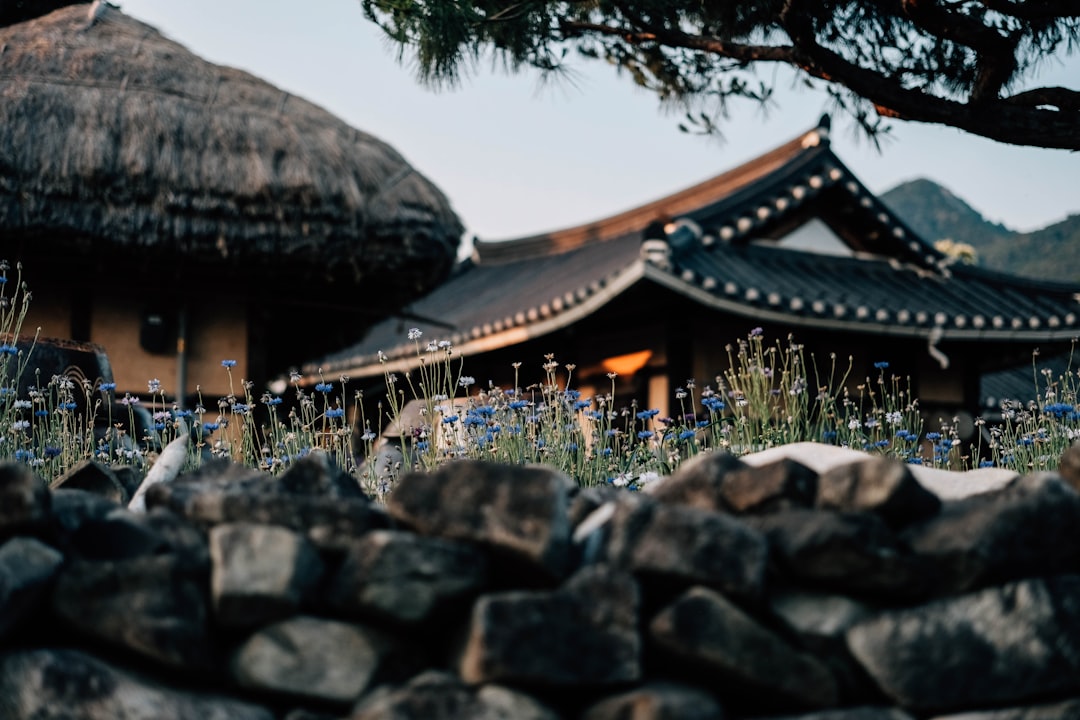
Nakseonjae Complex (낙선재): The eastern section of the palace where the last members of the Korean royal family lived until 1989. The buildings retain their original furnishings and have a lived-in quality absent from the ceremonially restored sections. The last resident, Prince Yi Gu (great-grandson of Emperor Gojong), died in 2005.
The Secret Garden (Huwon / 후원)
The Huwon — literally “rear garden” — covers 78 acres of forested hillside behind the palace buildings. The garden was created in the early 15th century and expanded by successive kings into a complex of approximately 28 pavilions, 13 ponds (some created, some natural), and dozens of stone and wooden structures set within a mixed deciduous-conifer forest.
Visiting the Huwon
Access: The Secret Garden can only be visited as part of a guided tour. Tours depart from the entrance at specific times and are limited in size. Advance reservation is strongly recommended — tours sell out days in advance, especially in spring and autumn.
English-language tours: Specific tour times designated for English (typically 11:30am and 2:30pm on most days; check official schedule at changdeokgung.go.kr). Korean-language tours are more frequent.
Tour duration: Approximately 90 minutes. The tour covers the major pavilion complexes and ponds, with the guide explaining the function and history of each site.
Ticket: Palace admission (¥3,000) plus garden tour (¥8,000). Total ¥11,000 for the full experience. The palace is worth seeing separately even if the garden tour is unavailable.
The Garden Highlights
Buyongji Pond (부용지): The central garden composition — a square lotus pond (square = earth in Joseon cosmology) with a circular island in the center (circle = heaven), framed by the Buyongjeong pavilion on the water’s edge and the Juhamnu library hall above. The reflection of the library in the still water, framed by old trees, is one of Korea’s iconic images and the most photographed spot in the Huwon.
Juhamnu (주합루): The two-story royal library built by King Jeongjo in 1776, positioned above the Buyongji pond on a hillside terrace. The upper story was a reading room; the lower housed the royal book collection.
Aeryeonji Pond (애련지): A smaller lotus pond to the east of Buyongji, with a simple pavilion (Aeryeonjeong) — the name means “pond of beloved lotus.” The simplicity of the composition after the larger Buyongji creates a quiet contrast.
Yeongyeongdang (연경당): A compound of private living halls built by King Sunjo in 1828 in the style of an aristocratic commoner’s home — not a palace building, but a residential compound in yangban domestic architecture, built by a king who wanted to know what non-palace life felt like. The complex has courtyard walls, ondol-heated rooms, and garden spaces calibrated for domestic rather than ceremonial use.
Ongnyucheon Stream (옥류천): The upper section of the garden, reached by a walking path through forest, has a small waterfall over a carved rock face (the inscription dates from King Injo’s reign in 1636), a curved stream, and several small rustic pavilions. The most secluded part of the garden.
Seasonal Garden Character
The Huwon is different in every season, and the tour is worth planning around:
Spring (April–May): Cherry and plum blossom in the lower garden; the fresh green canopy over the ponds.
Summer (June–August): Lotus in full bloom at Buyongji and Aeryeonji — peak lotus is late July. The canopy provides shade; the garden is denser and more enclosed.
Autumn (October–November): The most celebrated season. The mixed forest turns gold, red, and orange; the reflection of the autumn canopy in the Buyongji pond is the signature image of Korean palace gardens.
Winter (December–February): Snow on the pavilion roofs and frozen pond surfaces. Special winter tours are offered on limited dates; the stark composition of bare trees and tile roofs is arguably the most beautiful season.
Getting There
Anguk Station (Line 3), Exit 3 — 10-minute walk to the main palace entrance. This is the same station for Gyeongbokgung Palace and the Bukchon Hanok Village, making the area logical for a combined visit.
Opening hours: 9am–6pm (9am–5pm in winter, November–January). Closed Mondays.
Combined ticket: A combined palace ticket covers Gyeongbokgung, Changdeokgung (palace only, not garden), Deoksugung, and Gyeonghuigung: ¥10,000. For the Secret Garden, the separate tour ticket is required regardless.
Combining with Bukchon
Changdeokgung is on the east side of the Bukchon Hanok Village — the traditional neighborhood of preserved tiled-roof houses. The walk from the palace gate into Bukchon’s main alleys takes 5 minutes; the combination of Changdeokgung and a Bukchon walk is the standard Jongno half-day. Add Gyeongbokgung (20 minutes west on foot) for a full palace-and-neighborhood day.
Plan your trip