Seoul: The Complete Travel Guide
Plan your trip
Seoul is not a city that eases you in. You land at Incheon, take the AREX train into the center, and within 20 minutes the scale is visible — the Han River running east to west, the mountains that ring the city, the apartment towers stacked in every direction, and the older neighborhoods pressed between them that look nothing like what surrounds them. The city holds the present and the past in close proximity, and the contrast is not uncomfortable. It is the point.
The city was almost entirely destroyed during the Korean War (1950–53) and rebuilt from the early 1960s onward at a pace that transformed a largely agrarian country into one of the world’s largest economies within one generation. That compression is in the architecture, the food, the street life, and the way people move through public space. Seoul is a city that knows what it did to get here.
Four days minimum to cover the major areas. Six if you want the neighborhoods and the surrounding mountains.
How to Think About Seoul
The Han River divides the city into two distinct personalities:
North of the Han (Gangbuk) — the historical city. The five Joseon palaces, the old neighborhoods, the mountains, Hongdae and Sinchon’s university culture, the traditional markets. This is where most of the cultural sightseeing concentrates.
South of the Han (Gangnam) — the modern city built after the 1960s. Wealthier, more corporate, the COEX underground mall, Apgujeong luxury boutiques, Cheongdam’s restaurants. “Gangnam Style” is a real geographic reference to an actual social attitude: new money, design-conscious, aspirational.
Most visitors spend most of their time north of the river and are right to do so. But Gangnam deserves a day, and the Han River park itself is worth an evening.
Where to Stay
Jongno / Insadong — the historical center, walking distance to Gyeongbokgung Palace, Bukchon Hanok Village, and Insadong’s traditional craft street. The right base for anyone prioritizing cultural sightseeing. Midrange accommodation options.
Hongdae — the university neighborhood, more youthful and lively at night. Good transport connections. Accommodation is cheaper than Jongno. Right for people who want nightlife and café culture alongside the sightseeing.
Myeongdong — the tourist center. Convenient, expensive, surrounded by the things tourists do. Not the most interesting base but the most frictionless. Department stores, shopping streets, accessible to everywhere by metro.
Itaewon — the international neighborhood, historically popular with expats and visiting foreigners. More English-language infrastructure than anywhere else in the city. Neighborhood character has shifted over the years; Haebangchon and Gyeongnidan-gil (the neighborhoods climbing the hill above Itaewon station) are the more interesting parts of the same area now.
The Palaces
Seoul has five Joseon-era palaces (1392–1897). You do not need to visit all five — two is correct.
Gyeongbokgung
The main palace, built in 1395, destroyed during the Japanese occupation and largely reconstructed from the 1990s onward. The scale is the first thing: the main gate (Gwanghwamun), the enormous Geunjeongjeon throne hall, and the Gyeonghoeru pavilion sitting on an island in a reflective pond all convey what the Joseon court was trying to communicate about power and order.
Changing of the Guard ceremony at Gwanghwamun gate: daily at 10am and 2pm (approximately 20 minutes). The guards in Joseon-era ceremonial uniforms perform the ritual with exact choreography. Worth watching once.
National Folk Museum — inside the palace grounds, covering Korean daily life from the Joseon period to the 20th century. Good companion to the palace itself. Admission included with palace ticket.
National Palace Museum of Korea — adjacent to Gyeongbokgung, covering the royal artifacts of the Joseon dynasty. The collection of celadon pottery, royal documents, and court objects is serious. Free admission.
Admission: ¥3,000 KRW. Open 9am–6pm (winter 5pm), closed Tuesdays. Arrive at opening — by 10:30am the main courtyard is dense with tour groups.
Changdeokgung and the Secret Garden
The second most-visited palace and, for many people, the more beautiful one. Designated a UNESCO World Heritage Site. The main palace buildings are less restored than Gyeongbokgung and feel more genuinely old.
Huwon (Secret Garden) — the rear garden of Changdeokgung: 78 acres of forest, ponds, pavilions, and winding paths that were the private retreat of the royal family. Access is by guided tour only (Korean or English), included in the palace admission (₩8,000). The English tour runs at 11:30am and 2:30pm. The garden is different in every season: in spring the cherry and plum blossoms; in autumn the maple and ginkgo; in winter the bare branches over still water.
Bukchon Hanok Village is a 10-minute walk from Changdeokgung — natural to combine them in a morning.
Bukchon Hanok Village
The hillside neighborhood between Gyeongbokgung and Changdeokgung: about 900 traditional Korean wooden houses (hanok) built mainly in the 1930s during the Japanese colonial period, when Korean residents built in traditional style as a cultural statement.
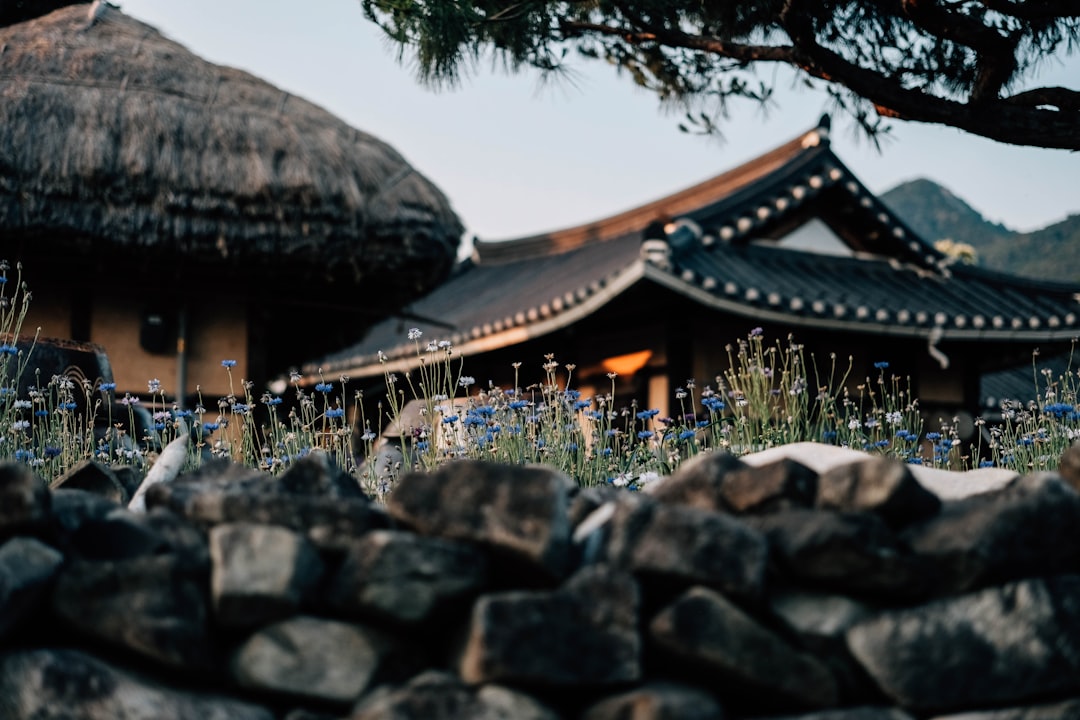
The neighborhood is still residential. People live in these houses. The most photographed lanes (particularly Gahoe-ro 11-gil) are genuinely beautiful — tile roofs, wooden gates, narrow stone-paved alleys — and genuinely crowded from 10am onward on weekends. Signs in English and Korean ask visitors to be quiet and to not photograph into private courtyards.
The correct approach: arrive before 9am. Walk north from Anguk station. The neighborhood unfolds across several parallel ridges; the main lanes get the crowds, the side alleys above them do not. At 8am on a weekday, with the mist still on the rooftops, Bukchon is one of the quieter and more beautiful things you will see in Korea.
Several hanok have been converted into guesthouses (hanok stays). Staying in one changes the relationship with the neighborhood significantly; prices ₩80,000–200,000/night.
Insadong
The traditional craft and art street running north-south between Anguk and Jongno 3-ga stations. The main street is now heavily touristic — souvenir shops, tourist-oriented cafés, overpriced hanji (traditional paper) products. Three blocks either side of Insadong-gil, the original antique dealers, gallery spaces, and traditional tea houses survive.
Ssamziegil — a courtyard complex off Insadong-gil with independent designers, craft shops, and a bookstore. The architecture (spiraling ramp around an open courtyard) is interesting. Less crowded than the main street.
Tongin Market — 15 minutes walk from Insadong, in the Tongin neighborhood behind Gyeongbokgung. A covered traditional market where you can buy wooden coins, use them to select small dishes from different vendors, and eat a mix-and-match lunch. The system is unusual and the food (tteok, jeon, bindaetteok, fishcake) is good. Opens at 10am.
Gwangjang Market
One of Korea’s oldest traditional markets (1905), running under a covered arcade in Jongno. Unlike the tourist markets, Gwangjang is primarily wholesale fabric and clothing on the upper floors, with a famous food hall at street level.
The food hall: bindaetteok (mung bean pancakes), mayak gimbap (tiny rice rolls in sesame and soy), yukhoe (raw beef tartare with pear and egg yolk), and nokdu jeon (mung bean fritters). The vendors are older women who have often been in the same spot for decades. Order at the counter, eat standing or on the provided stools.
Gwangjang is at its best for lunch and into the afternoon. Evening brings a different, more tourist-facing crowd.
Namsan and N Seoul Tower
Namsan is the 262-meter mountain in the center of Seoul, covered in walking paths and connected to the rest of the city by cable car (₩13,000 round trip) or on foot (40-minute walk from Itaewon or Myeongdong).
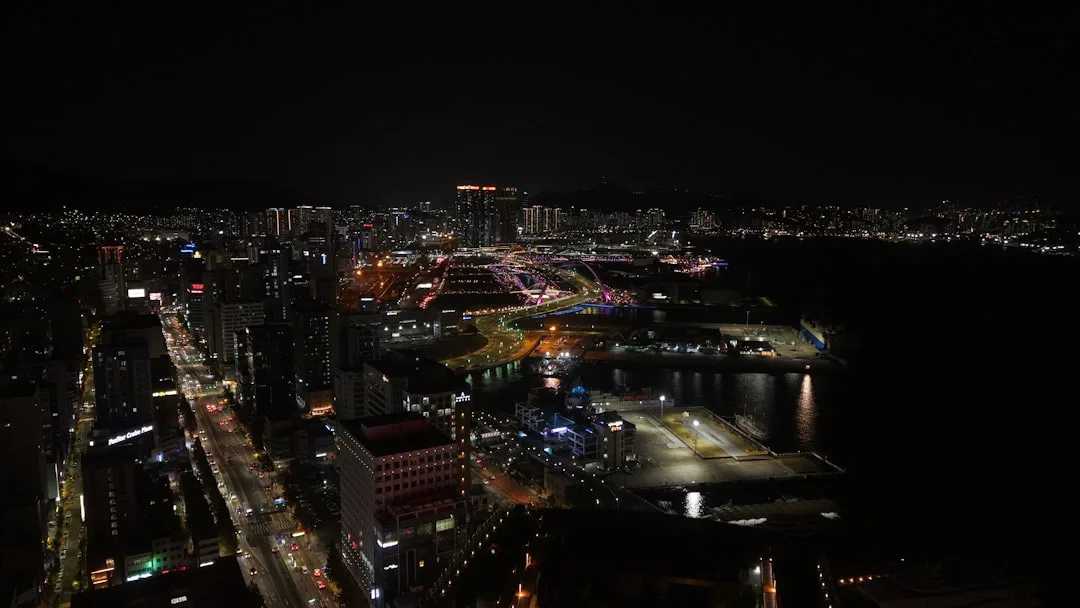
N Seoul Tower — the communications tower at the summit with an observation deck (₩21,000) and 360-degree views over the city, the Han River, and the surrounding mountains. The view at night — Seoul’s density lit in every direction — is the most useful way to understand the city’s scale.
Namsan Circuit Walk — the 5km path around the mountain’s base passes through forested sections, the Seoul city walls (partial Joseon-era fortifications), and several traditional archery ranges. A good morning walk if you are staying in Itaewon or Myeongdong.
Locks Bridge — the walkway near the tower is covered in padlocks left by couples. This was a genuine local tradition before it became an Instagram destination; the sheer density of locks on every available surface is its own visual spectacle at this point.
Hongdae
The neighborhood around Hongik University: street art, independent music venues, café culture, nightlife, and the specific energy of a university area that has been curating its own identity since the 1990s.
Hongdae Free Market (Saturday afternoons, weather permitting) — independent artists and designers selling work directly in the park near Exit 9. More interesting than the standard Korean souvenir markets.
Sangsang Madang — the arts complex on the main drag with an independent cinema, gallery, design shop, and music stage. Anchors the cultural side of the neighborhood.
The alleys north of Hongdae station (particularly toward Yeonnam-dong) — coffee shops in renovated houses, bookstores, plant nurseries, small restaurants. Yeonnam-dong is the quieter, more residential version of Hongdae and worth the 15-minute walk from the main strip.
Nightlife: The main club street (Club Street or Club Alley) runs parallel to the main road. Clubs open at 11pm, peak around 2am, close at dawn. The music orientation is electronic; Club NB2 and Cocoon are the longer-running institutions.
Myeongdong
Seoul’s main shopping and tourist district. The pedestrian shopping street is dense with Korean cosmetics brands (Innisfree, Etude House, Olive Young), international fashion, and street food vendors from 5pm onward.
Street food in Myeongdong (evening only) — the stalls along the main pedestrian street sell: tornado potato (spiral-cut potato on a stick), tteokbokki (spicy rice cakes), odeng (fishcake skewers in broth), corn dogs with various coatings, and hotteok (sweet filled pancakes). The density of options in a short stretch is overwhelming; the correct approach is to walk the street once, identify what you want, then buy.
Namdaemun Market — 5 minutes walk from Myeongdong, one of Korea’s largest traditional markets. Wholesale clothing, kitchenware, food ingredients. Not a souvenir market — it’s where restaurants and small businesses buy stock. The food section (galchi jorim, galguksu) is the practical reason to visit.
Lotte Department Store and Lotte World Tower — the 555-meter tower in Jamsil (south of the Han) has the highest observation deck in Korea (Seoul Sky, ₩29,000). More significant as an engineering fact than as a view destination — the N Seoul Tower view tells you more about the city’s structure.
Dongdaemun
The fashion district: Dongdaemun Design Plaza (DDP), the wholesale fashion markets, and the surrounding streets where Korean fashion is produced, sold wholesale, and then retailed.
DDP (Dongdaemun Design Plaza) — designed by Zaha Hadid (2014), a flowing white building with no straight lines or right angles. One of the more striking buildings in Seoul. Hosts design exhibitions, pop-up markets, and the Dongdaemun History & Culture Park around it. Free to walk through; paid exhibitions within.
Wholesale fashion markets — the cluster of Doota Mall, Migliore, and APM buildings open from 7pm to 5am, catering to wholesale buyers from across Asia. If you want to buy Korean fashion at retail, you want Myeongdong or Hongdae. If you want to understand the scale of Korean fashion production, walk through these markets at midnight.
Bukhansan National Park
The mountain national park that begins at the northern edge of Seoul. Three main peaks (Baegundae at 836 meters is the highest) with hiking trails ranging from 2-hour walks to 6-hour ridge traversals.
Baegundae Summit Trail — the classic route: 3.5 hours round trip from Ui-dong or Dobongsan stations, climbing through granite formations to a summit with 360-degree views over Seoul and the mountains north toward the DMZ. The final section involves metal handrails bolted into the rock.
Inwangsan — the smaller peak closest to central Seoul (338 meters), accessible from Dongnimmun station in 1.5 hours round trip. The trail passes the Shamanist shrine complex of Guksadang, which has been in active use for centuries, and the Inwang Shamanist Village below it. A very different experience from the bigger northern peaks.
The park is heavily used by Korean hikers — the standard gear is full hiking kit, bright colors, and technical poles regardless of trail difficulty. Trailhead restaurants serve doenjang jjigae (fermented soybean paste stew) and makgeolli (rice wine) before and after hiking.
Gangnam and South Seoul
Apgujeong Rodeo Street — the upscale shopping street where Korean luxury consumption is most visible. Plastic surgery clinics are clustered here in a density that reflects Korea’s status as the world’s highest per-capita plastic surgery country. Boutiques for Chanel, Gucci, and the Korean luxury brands alongside them.
Garosugil (Sinsadong) — the tree-lined street in Sinsa-dong: independent boutiques, design-forward cafés, architecture-conscious restaurants. More interesting than the main Apgujeong retail strip for walking and eating.
COEX Mall — the enormous underground mall at Samsung station: bookstore (Starfield COEX Library, a large open-atrium space with floor-to-ceiling bookshelves that has been photographed extensively), aquarium, cinema, and hundreds of food options. Useful on a rainy day.
Han River Parks — several riverside parks along the Han are popular in evenings and weekends: Banpo Hangang Park (with the Banpo Bridge Rainbow Fountain), Yeouido Hangang Park (cherry blossom in April), and Mangwon Hangang Park (more local, less tourist-facing). In summer, families and young people sit on the grass, eat delivery food and convenience store snacks, and watch the bridges light up. A low-key evening.
What to Eat
Korean BBQ — the format: raw marinated meat (galbi/short ribs, samgyeopsal/pork belly, bulgogi/thinly sliced beef) cooked on a table grill, wrapped in lettuce leaves with garlic, gochujang, and banchan (small side dishes). The Mapo-gu neighborhood (near Mapo station) is known for galbi restaurants; Mapo Galmaegi (seagull cut pork) is specific to this area.
Jjigae (stew) — the essential Korean daily food: kimchi jjigae (fermented cabbage), doenjang jjigae (fermented soybean paste), sundubu jjigae (soft tofu). All served boiling in stone bowls with rice. ₩8,000–12,000 at any neighborhood restaurant.
Bibimbap — mixed rice bowl with vegetables, egg, and gochujang. Jeonju (3 hours from Seoul by KTX) is the origin city; in Seoul, the stone bowl version (dolsot bibimbap) at Gogung near Insadong is standard.
Tteokbokki — spicy rice cakes in gochujang sauce, with fishcake and boiled eggs. The definitive Korean street food. Gwangjang Market and the pojangmacha (street stall tents) near Dongdaemun are where to eat it seriously.
Naengmyeon — cold buckwheat noodles in icy beef broth (mul naengmyeon) or with spicy sauce (bibim naengmyeon). A summer specialty, but served year-round. Eulji Myeonok near City Hall has been serving it since 1954.
Chimaek — fried chicken (chikin) and beer (maekju). The Korean fried chicken tradition produces double-fried birds with various sauces (garlic butter, soy garlic, yangnyeom sweet chili) that are texturally different from other fried chicken traditions. Delivery is available everywhere; the neighborhoods around Hongdae have dense sit-down chimaek options.
Banchan culture — in any Korean restaurant, side dishes (banchan) arrive automatically with the meal and are refilled for free. Kimchi in several varieties, namul (seasoned vegetables), pickles, and small protein dishes. The number and quality of banchan is a signal of the restaurant’s seriousness.
Practical Notes
Seoul Metro — one of the world’s most extensive subway systems, covering the entire city and satellite cities. IC card (T-money or Cashbee, ₩2,500 deposit at any station) covers metro, buses, and taxis. Base fare ₩1,400. The app Kakao Metro shows real-time arrivals in English.
Language: Seoul has significantly less English signage outside tourist areas than Tokyo. Papago (Naver’s translation app, free) is more accurate than Google Translate for Korean. Restaurant menu photos cover most situations.
Tipping: Not practiced. Returning a tip is common. Don’t tip.
Kimchi: Korea produces around 1.5 million tons per year. It will appear at every meal, multiple varieties, refilled automatically. It is fine to leave it if you don’t like it; it is not a good idea to say you don’t like it.
Café culture: Seoul may have more cafés per capita than any city in the world. Theme cafés (cats, dogs, plants, books, anything), specialty coffee, traditional tea houses — the café is a serious social institution. Budget time for sitting in them.
Jjimjilbang (찜질방) — Korean public bathhouse and sauna, open 24 hours. Admission ₩10,000–15,000 covers the bath areas, dry saunas, sleeping rooms (bring your own outfit or rent the provided shorts and t-shirt), and the common areas. Often used as accommodation by domestic travelers. Itaewon Dragon Hill Spa is the most famous; local alternatives in any neighborhood are cheaper and less tourist-facing.
Multi-Day Structure
3 days: Day 1 — Gyeongbokgung (morning), Bukchon, Insadong. Day 2 — Changdeokgung + Secret Garden (book in advance), Gwangjang Market lunch, Dongdaemun evening. Day 3 — Hongdae afternoon, Namsan at night.
5 days: Add Bukhansan hiking and a day in Gangnam (Garosugil, Han River evening). Replace Dongdaemun with Myeongdong if shopping is a priority.
7 days: Add a day trip to Gyeongju (2.5 hours by KTX) for the ancient Silla kingdom capital, or the DMZ tour (half day, organized through most hotels).
Seoul does not require a plan so much as a direction. Pick a neighborhood, go into it, eat something you can’t identify, find a café that looks interesting, follow the hill. The city is large enough that you will not run out of things to encounter, and small enough on foot within any given area that getting lost is genuinely pleasant. Start early, stay out late. Seoul rewards both.
Plan your trip