Gangnam: Modern Seoul's Other Side
Plan your trip
“Gangnam” — literally “south of the river” — refers to the districts south of the Han River that were developed primarily in the 1970s and 80s as Seoul’s population expanded and urban planners created a new commercial and residential center with wider roads and more modern infrastructure than the tangled streets north of the river. The result is a different Seoul: broader avenues, taller buildings, more wealth, more visible luxury, and a consumer culture pitched several registers above the tourist-facing neighborhoods to the north.
Psy’s 2012 song made the word globally recognizable as a signifier of a specific Korean wealthy lifestyle — and the signification was accurate. Gangnam and its adjacent neighborhoods (Apgujeong, Cheongdam, Sinchon) are where Seoul’s most expensive restaurants, the highest concentration of plastic surgery clinics, the flagship stores of Korean luxury brands, and the nightlife that expensive cities produce in their wealthiest districts all coexist.
Getting to Gangnam
Gangnam Station (Line 2 and Sinbundang Line) is one of Seoul’s busiest stations, directly under the main commercial area.
Apgujeong Rodeo Station (Bundang Line): For the luxury shopping and café corridor in Apgujeong.
Cheongdam is accessible from Apgujeong Rodeo or Sinnonhyeon station (Line 9). It’s the neighborhood Korean celebrities and the ultra-wealthy actually inhabit and shop in — a step above even Apgujeong.
From northern Seoul (Insadong, Myeongdong): 20-25 minutes by subway.
Gangnam Station Area
The immediate area around Gangnam Station is less interesting aesthetically than its foot traffic suggests — dense commercial retail, chains, and the underground shopping complex that connects the station exits. But several specific things make it worth knowing:
Starfield COEX Mall (15 minutes east by subway to Bongeunsa station): One of Asia’s largest underground shopping malls beneath the COEX convention center. Notable specifically for the COEX Library — an enormous public library with towering bookshelves that has become Seoul’s most photographed interior since its 2017 Instagram saturation. The books are real; you can actually read here.
Bongeunsa Temple: Immediately adjacent to COEX, a functioning 10th-century Buddhist temple sitting incongruously in the middle of Gangnam’s commercial density. The contrast is the point — ancient stone lanterns and monks in grey robes visible between the glass towers of the International Business District. The lantern festival in spring (around Buddha’s Birthday, late April or May) lights the temple grounds with thousands of paper lanterns.
Apgujeong and Cheongdam
Apgujeong Rodeo Street
The main shopping corridor in Apgujeong runs roughly east-west and was Korea’s first luxury shopping district. International fashion houses, Korean designer labels, and the independent boutiques that Korean celebrities use as their retail context are distributed along the length. Less overtly commercial than Myeongdong; the shopping here is for people who know what they want.
Garosu-gil (literally “tree-lined street”) is a pleasant shopping and café street in the adjacent Sinsa-dong neighborhood — the right scale of independent stores, coffee shops, and restaurants for a slow afternoon walk. Less explicitly luxury than Cheongdam, more curated than Hongdae.
Cheongdam-dong
The uppermost register of Seoul retail — international luxury flagship stores (Chanel, Dior, Louis Vuitton, but with Korean-specific editions), the restaurants that chaebol entertainment companies and their artists actually use, and the plastic surgery clinics concentrated in what’s sometimes called “Medical Tourism Zone.” Cheongdam is where Korean celebrity culture has its physical infrastructure.
The Hyundai Seoul (Yeouido, technically a separate district but worth noting): The department store that opened in 2021 with the most ambitious retail-as-experience design in Korea — indoor gardens, a sustainable food hall, and a level of visual and architectural investment that represents Korean retail culture at its highest aspiration.
Korean BBQ in Gangnam
The concentration of high-quality Korean BBQ restaurants in Gangnam — specifically in the area around Nonhyeon and Sinnonhyeon stations — is the best reason to spend an evening south of the river.
Mapo Galmaegi (multiple locations, including Gangnam): The best galmaegi-sal (pork neck cutlets) in Seoul at reasonable prices for the quality.
Palsaik Samgyeopsal (eight-flavor pork belly): The Gangnam branch of this small chain marinates pork belly in eight different flavors (ginseng, red wine, curry, herb, garlic, sesame, and others) and serves them simultaneously, allowing you to compare across the grill.
Hanwoo specialist restaurants: Gangnam has the highest concentration of hanwoo (native Korean beef) specialist restaurants, the Korean equivalent of Wagyu in the premium beef category. Expect ₩50,000–100,000 per person for a proper hanwoo dinner; the quality justifies it once.
Nightlife
Gangnam’s nightlife runs older and more expensive than Hongdae. The clubs around Club District (Nonhyeon area) attract a dressed-up crowd rather than the art-school energy north of the river.
Club Arena: One of Seoul’s largest clubs, consistently ranking internationally, in the Nonhyeon area. Electronic music, mainstream programming, expensive cover, large capacity.
Club Answer and Cakeshop (technically in Itaewon, but part of the same Seoul club circuit): The more underground electronic music options if Arena is too mainstream.
The hotel bars in Gangnam’s luxury hotels — Le Méridien Pangyo, Park Hyatt Seoul, Grand Intercontinental Seoul Parnas — serve the city’s cocktail culture at the right price for the setting. The rooftop bar at the Seven Luck Casino (technically for non-Korean nationals) is one of the better views of the city from the south.
Lotte World
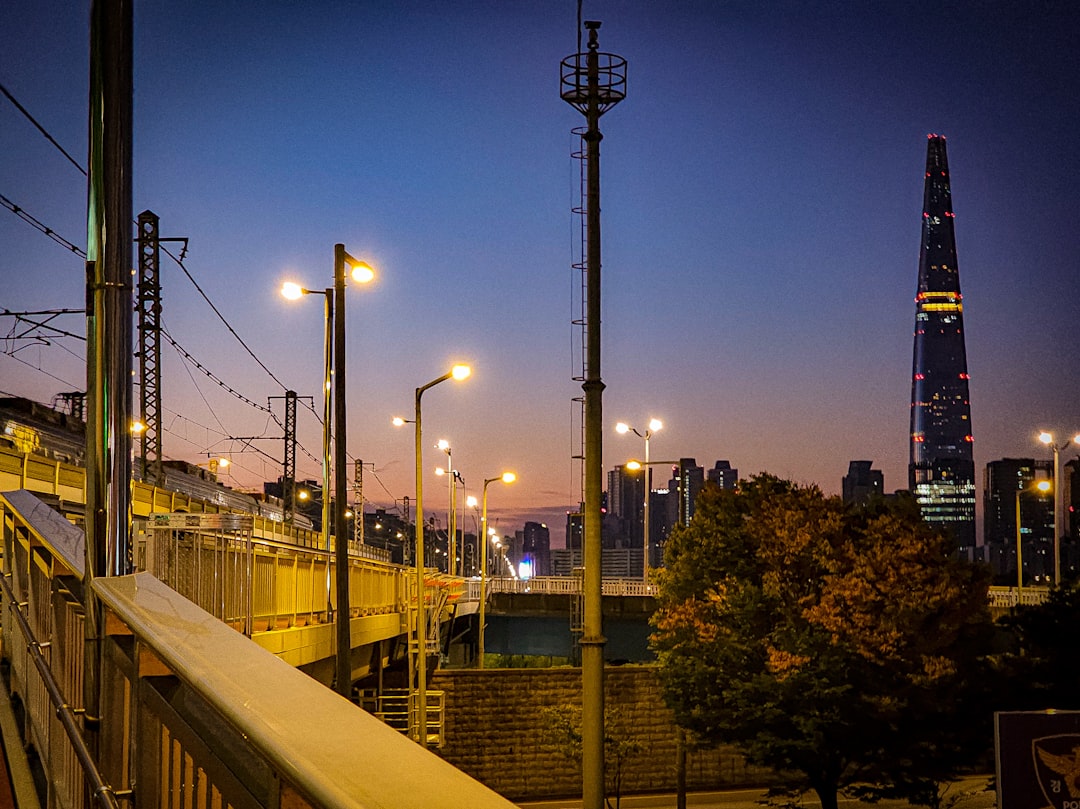
Lotte World — an indoor/outdoor theme park in Jamsil (Line 2 to Jamsil station) — is the largest indoor theme park in the world by some measurements. The indoor section operates year-round regardless of weather; the outdoor section is seasonal. Rides range from beginner to genuine roller coasters. The attached Lotte World Tower (555 meters, the world’s fifth-tallest building) has observation decks at the top including a glass-floor section that requires nerve.
Lotte World is not a subtle or culturally specific attraction — it is a large and well-maintained theme park. But it’s the right activity for a day when you want to do something high-energy with children or a group with varied interests.
Olympic Park
The Olympic Park built for the 1988 Seoul Olympics in Jamsil is one of the city’s most pleasant large parks — open green space, the KSPO Dome for concerts, several art museums, and 200+ sculptures scattered through the grounds. The Rose Festival in May is one of Seoul’s most attended seasonal events. World Peace Gate at the park’s entrance is a monumental Korean-traditional design worth seeing.
Practical Notes
Gangnam operates on a different pace from northern Seoul. The streets are wider and the walking distances between points of interest are longer. Taxis (Kakao Taxi, accessible without Korean phone number via the international app) are practical for moving between Apgujeong, Cheongdam, and Gangnam station rather than walking.
Dress code exists in some Cheongdam restaurants and all major clubs. Seoul’s nightlife culture has a style consciousness that isn’t formal exactly — think fashion-forward rather than suit-and-tie.
Budget: Gangnam is the most expensive part of Seoul. Expect to spend 30-50% more than equivalent experiences in Hongdae or northern Seoul.
Plan your trip