Insadong & Bukchon: Traditional Seoul
Plan your trip
Two of Seoul’s most photographed areas sit within walking distance of each other north of the city center. Insadong is a commercial street of galleries, teahouses, and craft vendors — the curated version of traditional Korean material culture. Bukchon Hanok Village is a residential neighborhood of preserved hanok (traditional Korean houses) on the hill between Gyeongbokgung and Changdeokgung palaces, where people actually live and where the view of tile roofs against the city skyline is the standard image of Seoul.
They are logically combined with Gyeongbokgung Palace for a full day circuit of northern Seoul.
Insadong
What it is
Insadong-gil, the main street, runs roughly north-south through the district and contains the highest concentration of traditional craft shops, independent galleries, and Korean tea houses in Seoul. The side streets and small alleys radiating off the main road — particularly Ssamziegil, an outdoor courtyard complex, and the narrow Insadong 11-gil — have independent stores that reward exploration.
The commercial version of Insadong is aimed at tourists: ceramics, Buddhist beads, printed silk, hanji (Korean handmade paper) products, and souvenir adaptations of traditional items. The quality varies significantly. The shops worth spending money in are:
Cha Masidneun Teul (and similar traditional tea houses): Korean tea houses serving loose-leaf teas in low-table settings are one of Insadong’s specific pleasures. Order barley tea (boricha), chrysanthemum tea (gukhwacha), or the traditional sikhye (sweet rice drink). Budget 45 minutes; it’s not a place to rush.
Hanji shops: Korean handmade paper is a serious craft object — used for calligraphy, bookbinding, and decorative objects. Several shops sell hanji at various quality levels; the artisan paper can be folded or painted on site.
Tongin Market (15-minute walk northwest): Not strictly Insadong but the neighborhood’s best food market — a traditional covered market operating since the Japanese colonial era. Famous for the yeopjeon dosirak (coin lunch box) system: customers receive old yeopjeon coins and use them to purchase small portions from different vendors, assembling their own lunch box.
Ssamziegil
A spiral-ramp courtyard complex that opened in 2004 and houses independent design studios, cafes, and performance spaces. The building wraps around an open central plaza used for small concerts and exhibitions. The model is explicitly anti-chain — the tenants are individual artists and small businesses. Quality varies by tenant but the space itself is architecturally interesting as a deliberate alternative to the surrounding commercial street.
Bukchon Hanok Village
The Architecture
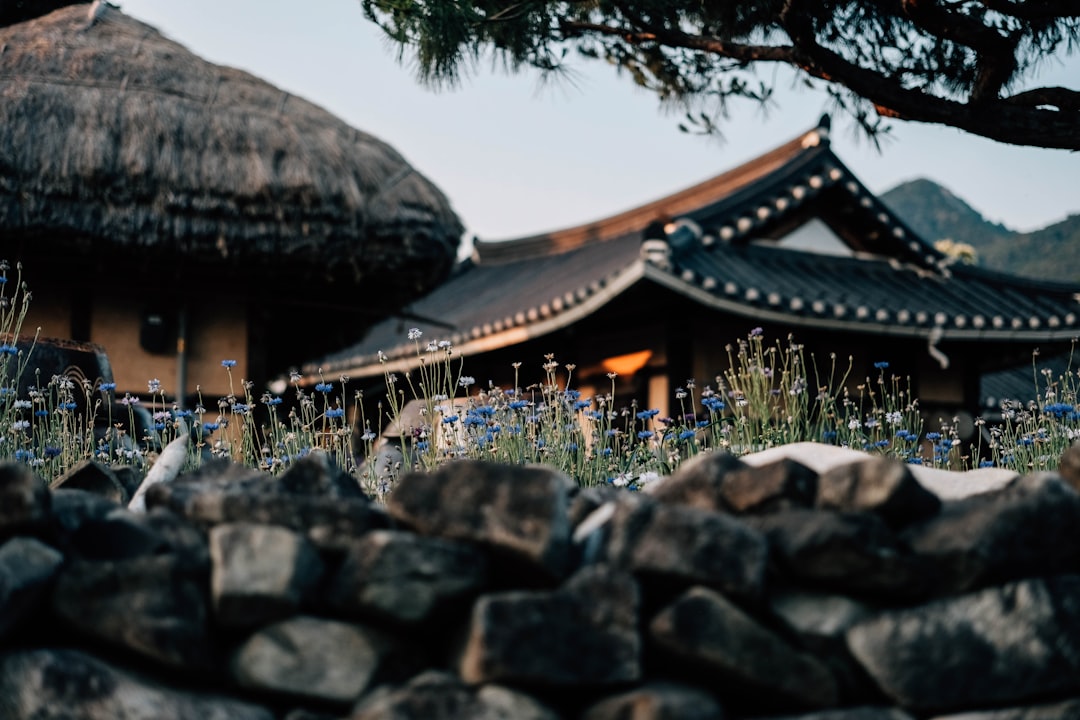
Hanok are traditional Korean houses built around a central courtyard (madang) with tile roofs that curve slightly upward at the corners — the characteristic shape that appears in every aerial photo of the neighborhood. The roof tiles are giwa, fired clay in a grey-blue color that ages to a silvery-brown.
Bukchon’s approximately 900 remaining hanok were built primarily during the early 20th century (Joseon-era originals were largely replaced then) and represent the form of middle-class urban hanok rather than the grander rural yangban estates. They are small, dense, and designed for city living on steep hillside lots.
The neighborhood has been a preservation area since the 1970s; many of the hanok are now home to small guesthouses, galleries, restaurants, and traditional craft workshops.
The View
The canonical Bukchon photograph is from Bukchon 8-gyun — a single section of lane on the hill where the tile roofs descend toward the modern city skyline, with N Seoul Tower visible in the background. The composition is reproducible; the crowd competing to reproduce it on weekends is also real. Weekday morning before 9am is the only time this spot is manageable.
Walking the Village
The Bukchon route is roughly divided into six viewpoints (gyun) numbered by the Korea Tourism Organization. The complete circuit takes 1-2 hours depending on pace. The steeper sections north of the main street are quieter and more residential; the residents have posted signs asking for quieter behavior from visitors after years of being photographed outside their own homes.
Practical note: Bukchon is a functioning neighborhood. People live here. Walking quietly, not blocking lanes, and not photographing through windows are basic requirements. The number of visitors on peak weekends has stressed the community significantly; the city has implemented visitor management on some streets.
Samcheongdong
The street running downhill from Bukchon toward Anguk station — Samcheong-dong-gil — is the best retail and café street in northern Seoul. Independent galleries, small restaurants, and design shops occupy the converted hanok buildings along the lane. Less crowded than Insadong, more deliberately curated, and with a specific Seoul aesthetic that combines traditional materials and contemporary design.
The Day Circuit
This combination works as a coherent northern Seoul day:
9am: Gyeongbokgung Palace (opens 9am; see the separate guide for the palace circuit). Allow 1.5-2 hours.
11am: Walk north to Bukchon 8-gyun before the midday crowds arrive. 15-minute walk from the palace’s east gate.
Noon: Walk the hanok lanes heading toward Samcheongdong. Lunch at one of the restaurants in the lower section of Samcheong-dong-gil — the tteokgalbi (grilled beef patties) or doenjang jjigae (fermented soybean paste stew) places are the correct lunch options.
2pm: Walk south toward Insadong (20 minutes) for the afternoon. Tea at a traditional teahouse; browse the craft shops; Ssamziegil if time allows.
5pm: Continue south to Cheonggyecheon Stream (the restored urban stream through the center of the city) for the early evening walk, or take the subway from Anguk station for wherever the evening takes you.
Practical Notes
Hanbok rental: Both Insadong and Bukchon have hanbok rental shops where you can dress in traditional Korean clothing for 2-4 hours (¥20,000–40,000). Wearing hanbok in the palace grounds grants free admission — worth knowing if you’re planning the full day. The rental process includes dressing assistance; hairstyling is often included.
Anguk station (Line 3) is the central access point for the entire circuit — the palace, Bukchon, and Insadong are all within 15 minutes’ walk.
Gyeongbokgung hours: Tuesday closed; otherwise 9am–6pm (until 6:30pm March-September). Admission ¥3,000.
Plan your trip