Monterrey Culture and Attractions Guide for World Cup 2026
Plan your trip
Monterrey’s cultural identity is shaped by two forces in tension: the industrial heritage of Mexico’s steel and glass capital, and the colonial Spanish history of Nuevo León. The city’s most significant cultural projects — the Parque Fundidora conversion and the MARCO museum — are both responses to this tension: a steel mill turned into a park, a Macroplaza hosting a world-class contemporary art institution. Understanding this duality is understanding Monterrey.
Parque Fundidora and Horno 3
Fundidora Park, Colonia Industrial | Free park entry | Horno 3: 100–150 MXN
The Fundadora de Fierro y Acero de Monterrey was the first integrated steel mill in Latin America, operating from 1900 to 1986. After closure, 140 hectares of the industrial site were converted into the largest urban park in northern Mexico — with the blast furnaces, cooling towers, and steel infrastructure preserved as monuments.
Horno 3 (Furnace 3): The preserved blast furnace at the center of the park is now a steel industry museum. Visitors can walk through the furnace chambers, see the industrial machinery, and take a glass elevator to the top of the structure for panoramic views of the city and Cerro de la Silla. The museum is one of the best industrial heritage sites in Latin America — the scale of the furnace and the quality of the interpretation make it worth 90 minutes.
The park itself: Free to enter, always open. A lake, running paths, concert venues (the Foro Internacional Alicia Treviño holds major festivals), craft beer bars, and food stalls occupy the former industrial grounds. The contrast between the green park and the preserved blast furnaces is visually striking.
Distance from Centro: 3 km east along the Santa Catarina riverbed. Walkable from the Centro; bikeable along the riverbed trail; Uber: 30–50 MXN.
MARCO — Museo de Arte Contemporáneo
Zuazua 525, Macroplaza, Centro | Tuesday–Sunday, 10:00–18:00 | 100 MXN
MARCO (Museo de Arte Contemporáneo de Monterrey) opened in 1991 and has been one of the most important contemporary art museums in Latin America since. The permanent collection focuses on Mexican and Latin American artists from the 20th century onward; the temporary exhibition program brings international retrospectives.
The building: Designed by Ricardo Legorreta — the geometric, color-saturated style associated with Mexican modernism. The central courtyard with Juan Soriano’s “La Paloma” sculpture is one of the most photogenic spaces in the city.
What to expect: 2–3 hours to see the permanent collection and current temporary shows. The bookshop has the best selection of contemporary art publications in northern Mexico.
Macroplaza
Downtown Centro | Free
At approximately 40 hectares, the Macroplaza is one of the largest civic plazas in the world — a continuous open space connecting the Metropolitan Cathedral, MARCO, the Government Palace, the Faro del Comercio, and the city’s formal institutions.
The Faro del Comercio: The 70-meter orange concrete tower designed by Luis Barragán (Mexico’s only Pritzker Architecture Prize winner) at the east end of the Macroplaza. At night, a green laser rotates from the top of the tower — a beacon visible across the city.
The Cathedral: The Metropolitan Cathedral of Monterrey, begun in 1626 and completed in multiple phases through the 20th century. The pink sandstone exterior is the visual anchor of the Macroplaza.
El Obispado
Padre Mier 89, Colonia Centro (on the Obispado hill) | 50 MXN
The Bishop’s Palace (Palacio del Obispado) was built in the late 18th century as a residence for the bishop of Linares and served as a military hospital and fort in subsequent conflicts (the Mexican-American War, the French Intervention). It’s now a regional history museum — the colonial artifacts are secondary to the view.
The view: The Obispado hill is the highest point accessible by walking in central Monterrey. From the terrace, the panorama of the city’s valley basin, Cerro de la Silla, and the Sierra Madre range is the most complete available without leaving the city.
Barrio Antiguo
Between Constitución, Padre Mier, Zuazua, and Cuauhtémoc, Centro
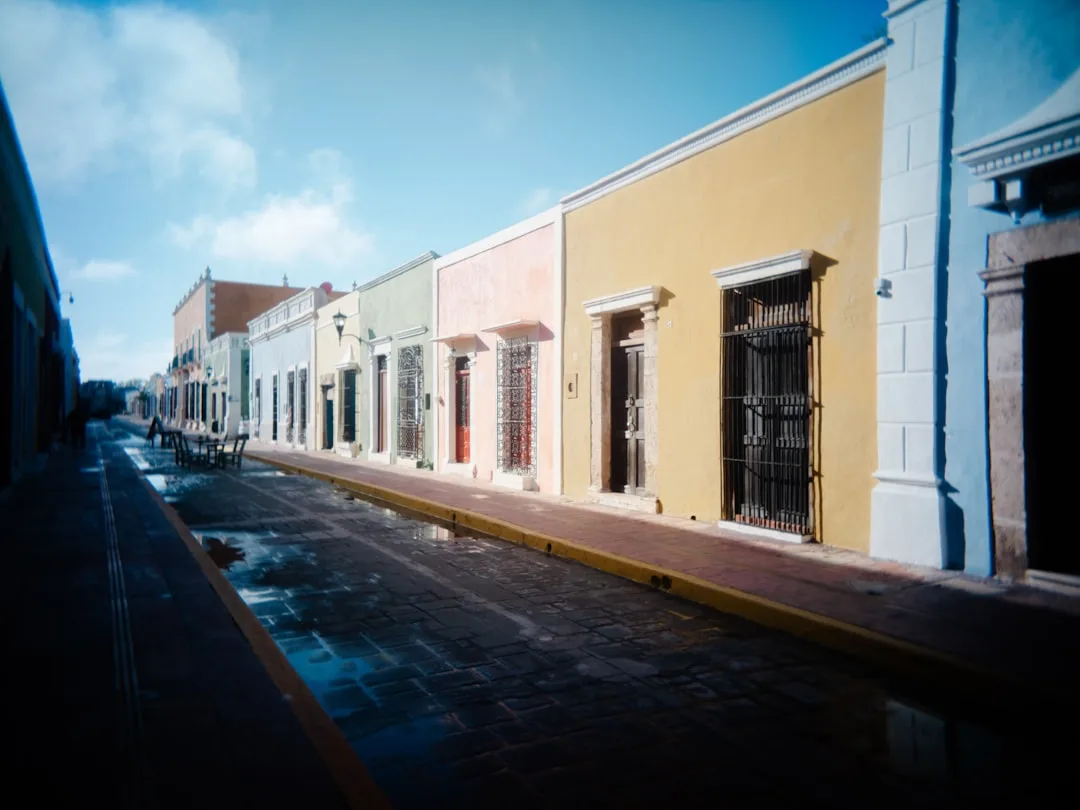
The oldest neighborhood in Monterrey — colonial 18th and 19th century buildings along cobblestone streets, repurposed as galleries, independent restaurants, bars, and cultural spaces. Barrio Antiguo is the concentrated point of Monterrey’s arts and cultural life outside of the major institutions.
Marte R. Gómez Street (the pedestrian art corridor): Galleries, small museums, and cultural events on weekends. The Museo de Historia Mexicana is one block away on Dr. Coss — an introduction to Mexican history from pre-Hispanic to modern times (50 MXN).
Norteño Music
Monterrey is the origin city of norteño music — the accordion-driven genre that became the soundtrack of northern Mexico and the Mexican immigrant community in the United States. The accordion arrived with German and Czech settlers in the 19th century; the combination with Mexican rhythms (polka, waltz, corrido) created norteño and its subcategory, the narcocorrido.
Live norteño music is heard at cantinas in Barrio Antiguo and at popular venues in Guadalupe. For visitors unfamiliar with the genre, seeing a norteño ensemble live is a specifically regio cultural experience not available anywhere else.
Plan your trip