Arenal & La Fortuna Guide: Volcano, Hot Springs & Jungle Adventure
Plan your trip
The Arenal Volcano (1,670m) erupted continuously from 1968 to 2010 — a 42-year period during which it was one of the most active volcanoes on earth, producing regular lava flows and ash columns visible for miles. Since 2010 it has been quiet but seismically active, its perfectly conical shape now accessible via trails through cooling lava fields. The town of La Fortuna, 8 km from the volcano’s base, has built an entire industry around the mountain: hot springs fed by geothermal heat, adventure tours, wildlife watching, and access to the surrounding lake and river system.
This is the most visited inland destination in Costa Rica, and for good reason — it concentrates more activities per square kilometer than anywhere else in the country.
The Volcano and Lava Fields
Arenal National Park
Entry: $18/person | Open 8 AM–4 PM | Closed at times due to volcanic activity
The park covers the volcano’s lower slopes and the lava fields from the 1968 eruption (and subsequent flows). The main activity is a guided hike through the solidified lava — an eerie landscape of black and grey rock with pioneer plants colonizing the fissures, backed by the cone rising into cloud.
Trail options:
- Los Heliconias Trail (1.8 km, 45 min): Flat path through secondary forest recovering over former lava. Good wildlife sightings — sloths, howler monkeys, toucans.
- Los Tucanes Trail (1.6 km loop, 1 hour): Into the 1968 lava field, with the best volcano views from a designated viewpoint. The most dramatic trail in the park.
- La Peninsula Trail (2 km, 1 hour): Along the Lake Arenal shore. Crocodiles, birds, and lake views.
Guides: Required only for certain trails; highly recommended for wildlife sightings throughout. Local guides identify wildlife (sloths are visible as brown lumps to the untrained eye; guides spot them instantly).
Important: The volcano’s summit is almost always in cloud. Clear views of the cone typically occur early morning (7–9 AM) or briefly in late afternoon. Book morning tours if views matter.
Hot Springs
The geothermal heat under Arenal produces hot springs emerging throughout the area — from luxury resort pools to free roadside bathing.
Tabacón Grand Spa & Thermal Resort
The premium option — an elaborate complex of cascading thermal pools at different temperatures (30–42°C), jungle vegetation, waterfall showers, and a restaurant. Beautiful, well-maintained, and expensive (~$95–120 entry). The evening session (after 5 PM) is more atmospheric but the same price.
Baldi Hot Springs
More affordable and more crowded — a large complex with multiple pools, slides, and a bar in the thermal pool ($50–60 entry). The party atmosphere is intentional and differs from Tabacón’s quieter luxury.
Eco Termales
Smaller, more intimate, limited capacity (~100 people at a time, advance booking required). No children under 18. Six pools at different temperatures in a forest setting. ~$45–55. The most tranquil of the formal hot spring options.
Free Hot Springs
The Tabacón River downstream from the resort has natural hot spring points where the thermal water mixes with the river — the water is warm in places without paying resort prices. The access points change seasonally; ask locally. Not a polished experience but genuinely free.
Río Celeste and Tenorio Volcano
75 km north of La Fortuna | 1.5 hours by car
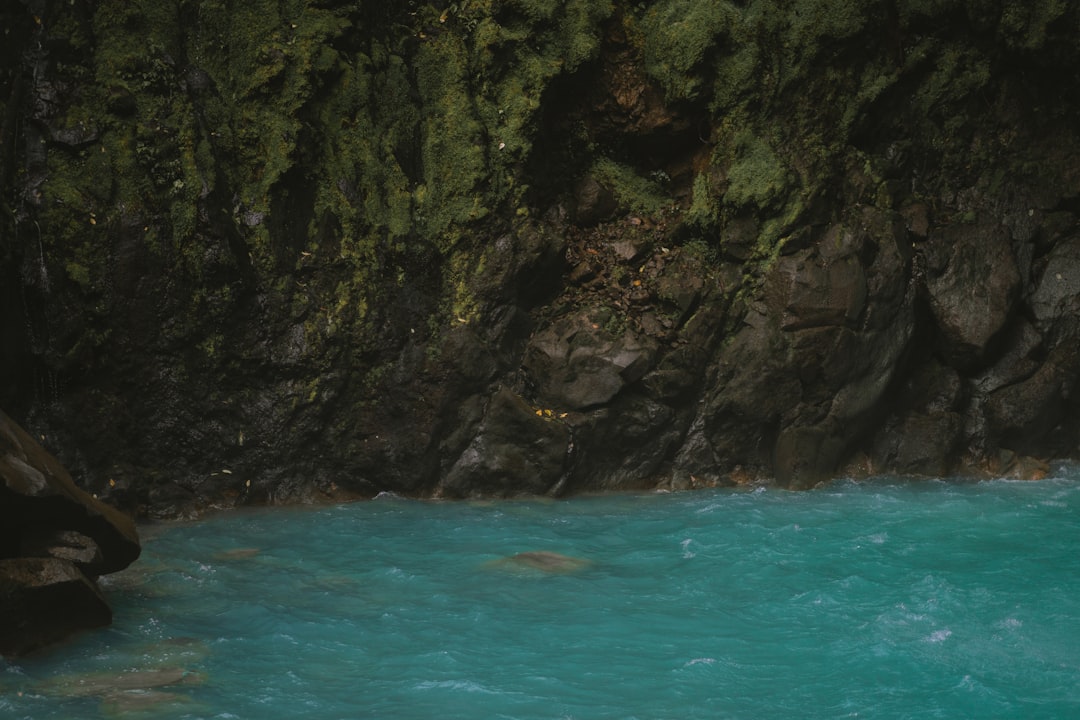
Río Celeste (Celestial River) is one of the most striking natural phenomena in Central America — a river that runs brilliant turquoise-blue through Tenorio Volcano National Park. The color is produced at the Teñidero mixing point, where two colorless streams combine and silica particles scatter light to produce the turquoise effect.
The trail: 8 km round trip (3–4 hours). Passes a turquoise waterfall (the most photographed spot), the Teñidero mixing point, hot springs, and blue lagoon pools.
Important: Entering or touching the water is prohibited anywhere in the national park (to protect the ecosystem and, pragmatically, because the high silica concentration would damage your skin).
Entry: $18/person. Guides recommended ($30–50 additional) — the wildlife on the trail to Río Celeste is excellent (toucan, sloth, tapir tracks visible), and guides increase sighting rates dramatically.
Lake Arenal
The 88 km² artificial lake created by the Arenal dam (1979) produces 70% of Costa Rica’s electricity. The lakeside road west from La Fortuna towards Tilarán has several adventure options:
Kayaking: Half and full-day paddles on the lake with mountain backdrop. Calm water, bird-rich shoreline. Multiple operators in La Fortuna offer guided trips ($60–90/person).
Windsurfing and kitesurfing: The lake’s western end near Tilarán has consistent trade winds from December to April, making it one of Central America’s best windsurfing sites.
Fishing: Rainbow bass (guapote) fishing on Lake Arenal is popular. Charter operators in La Fortuna arrange half-day and full-day trips.
White-Water Rafting
Río Sarapiquí: Class III–IV rapids through jungle canyon. 2–3 hours of paddling, suitable for confident beginners. The most popular rafting trip from La Fortuna (~$80–95/person including transport and lunch).
Río Toro: Class IV–V for experienced rafters seeking more technical water. Not suitable for beginners.
Multiple operators in La Fortuna offer both rivers; Desafío Adventure and Aguas Bravas are among the more established.
Wildlife Watching
The La Fortuna area is exceptional for accessible wildlife:
Sloth sightings: Look in the cecropia trees (large-leaved, often standing alone) along any roadside or trail. Three-toed sloths move slowly enough to spot once you know what you’re looking for.
Cano Negro Wildlife Refuge: 100 km north of La Fortuna — a wetland system with dense concentrations of aquatic birds (roseate spoonbills, anhingas, various herons), crocodiles, caiman, and howler monkeys. Day trips from La Fortuna by boat: ~$70–90/person.
Night tours: Several operators offer guided night walks near La Fortuna — revealing tree frogs, tarantulas, sleeping birds, and nocturnal mammals invisible during the day. 2-hour guided tour: ~$35–45/person.
Practical Notes
Getting there: 3–3.5 hours from San José by shuttle (Interbus, Grayline: ~$55) or public bus ($4, longer). Most visitors rent a 4WD and drive the circuit.
Where to stay: La Fortuna town has budget to mid-range hotels. The volcano-view lodges on the road between La Fortuna and the park entrance (Místico Arenal, Arenal Kioro, Lost Iguana) have the best views at higher prices. Reserve early in dry season.
Best time: December–April (dry season) for clearer volcano views and more reliable outdoor activities. May–November has more rainfall (usually afternoons only) but greener landscape and lower prices.
Two-day itinerary: Day 1 — Arenal National Park morning hike, afternoon hot springs, sunset volcano view from the park viewpoint. Day 2 — Río Celeste full day (early start to beat afternoon crowds). Three days: add white-water rafting or Cano Negro.
Plan your trip