Cairo Travel Guide: Everything You Need to Know
Plan your trip
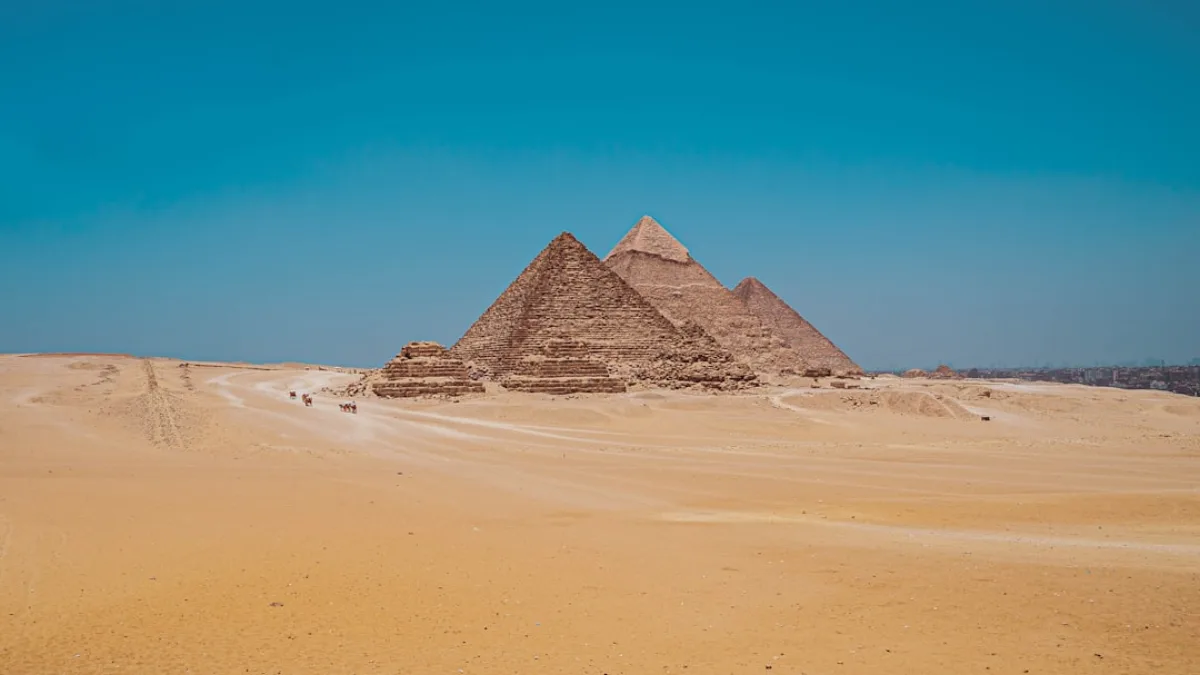
Cairo is one of the world’s great cities — a metropolis of 23 million people built on both banks of the Nile, where medieval Islamic architecture, ancient Pharaonic monuments, and a chaotic, vital modern city exist in immediate proximity. The Pyramids of Giza are visible from suburban rooftops. The Khan el-Khalili bazaar, founded in 1382, is still the neighborhood market. The Grand Egyptian Museum, opened in 2023, is the largest museum dedicated to a single civilization on earth.
It is loud, overwhelming, deeply atmospheric, and completely unlike anywhere else.
Why Cairo in 2026
The opening of the Grand Egyptian Museum (GEM) near the Giza Plateau in 2023 created a genuine shift in what Cairo offers visitors. For the first time in history, all 5,398 artifacts from Tutankhamun’s tomb are displayed together — including the famous golden mask, thrones, chariots, and jewelry that have never previously been shown in a single exhibition. Combined with the ancient Pyramids a short drive away, the GEM makes Cairo arguably the single most important destination for anyone interested in ancient history.
At a Glance
- Country: Egypt
- Population: ~23 million (Greater Cairo) — one of Africa’s largest cities
- Nicknames: “City of a Thousand Minarets,” “Mother of the World” (Umm al-Dunya)
- Language: Arabic. English is widely spoken in tourist areas and hotels.
- Currency: Egyptian Pound (EGP / LE). ~50 EGP per USD (verify current rate).
- Time zone: UTC+2 (no daylight saving)
- Airport: Cairo International Airport (CAI), Heliopolis — 20–40 min from downtown
Best Time to Visit
October–April is the optimal window — temperatures of 15–22°C in the peak winter months (November–February), manageable heat in the shoulder periods. This is when Cairo is most pleasant for outdoor sites.
Avoid June–August: temperatures reach 35–42°C regularly, occasionally higher. The Pyramids and outdoor sites become genuinely difficult in this heat.
Ramadan (dates shift yearly): A unique cultural experience — the city transforms at night with iftar gatherings, night markets, and festive atmosphere. Some sites have reduced hours during daylight. Worth experiencing if your travel dates allow, but plan accordingly.
The Five Cairo Experiences
Every Cairo visit organizes around five experiences that can’t be skipped:
- The Pyramids of Giza and Sphinx: The only surviving wonder of the ancient world — nothing prepares you for the scale.
- The Grand Egyptian Museum: The complete Tutankhamun collection plus 100,000 additional artifacts in a world-class building.
- Islamic Cairo: Walking Al-Muizz Street, visiting the Sultan Hassan Mosque, and drinking tea in a medieval caravanserai.
- Khan el-Khalili: The oldest continuously operating bazaar in the Middle East.
- Coptic Cairo: The Hanging Church, the Ben Ezra Synagogue, and the intersection of Christianity, Judaism, and Islam in a single neighborhood.
A five-day visit covers all five comfortably. Three days covers them in compressed form.
Getting There
Cairo International Airport (CAI) is a major international hub with direct connections to most European capitals, Middle Eastern hubs (Dubai, Doha, Istanbul), and African cities.
From the airport to the city: Uber or Careem — 30–50 minutes to central Cairo, 150–250 EGP ($3–5). The Cairo Metro’s new Airport Line connects to the city center for 20 EGP, though with luggage, Uber is more practical.
Getting Around
Uber/Careem: The practical solution for tourists — transparent pricing, app payment, no negotiation. A 30-minute ride costs ~$2–3 USD. Reliable throughout the city.
Cairo Metro: 3 lines covering the city center, Tahrir Square, and Ramses Station. Fares 8–20 EGP depending on distance. Fast and air-conditioned — useful for the Tahrir Square–Egyptian Museum corridor and cross-city trips.
Taxis: Negotiation required. White taxis should use the meter but often don’t. Uber is simpler.
Practical Notes
Visa: Available on arrival at Cairo Airport — $30 USD (single entry), $60 (multiple entry). Purchase at the bank kiosk before the immigration desk. E-Visa also available online at evisa.eeaa.gov.eg (apply 5–7 days ahead).
Cash: Essential for markets, street food, and small shops (~90% of vendors cash-only). ATMs are widely available. Bring USD to exchange — the rate at exchange offices in Zamalek and Downtown is favorable. Always pay in EGP rather than USD at shops.
Dress code: Cover shoulders and knees in public. At mosques, women cover hair (scarves often provided at entrances). The practical solution: lightweight linen trousers and a loose long-sleeved shirt work everywhere.
Safety: Cairo is generally safe for tourists. Main risks are persistent touts at the Pyramids and pickpocketing in crowded markets — standard big-city vigilance. Use Uber rather than street taxis. Avoid political demonstrations.
Tipping (baksheesh): Customary for almost all services. EGP 20–50 for small services; EGP 100–200 for guides.
Plan your trip