Best Time to Visit Greenland: Month-by-Month Guide
Plan your trip
Greenland has two completely different travel seasons — summer (midnight sun, hiking, boat tours) and winter (northern lights, dog sledding, extreme Arctic). Both are extraordinary for completely different reasons.
The Short Answer
Best for hiking and boat tours: June–August (midnight sun season)
Best for northern lights: September–March
Best for dog sledding: February–April
Best for whale watching: July–September
Avoid flying: September–October (unstable Arctic weather, frequent cancellations)
Summer vs. Winter
Summer (June–August): The Midnight Sun Season
What you get: 24-hour daylight (May–July in the north), hiking on completely accessible trails, boat tours through icebergs and whale-watching, kayaking, and the most spectacular iceberg displays as the winter’s calving ice drifts south.
What you don’t get: Northern lights (too bright), dog sledding (no snow on most of the west coast), and the profound silence of the winter Arctic.
Temperatures: 5–15°C on the west coast; warmer in some fjord systems. Can feel cold in wind.
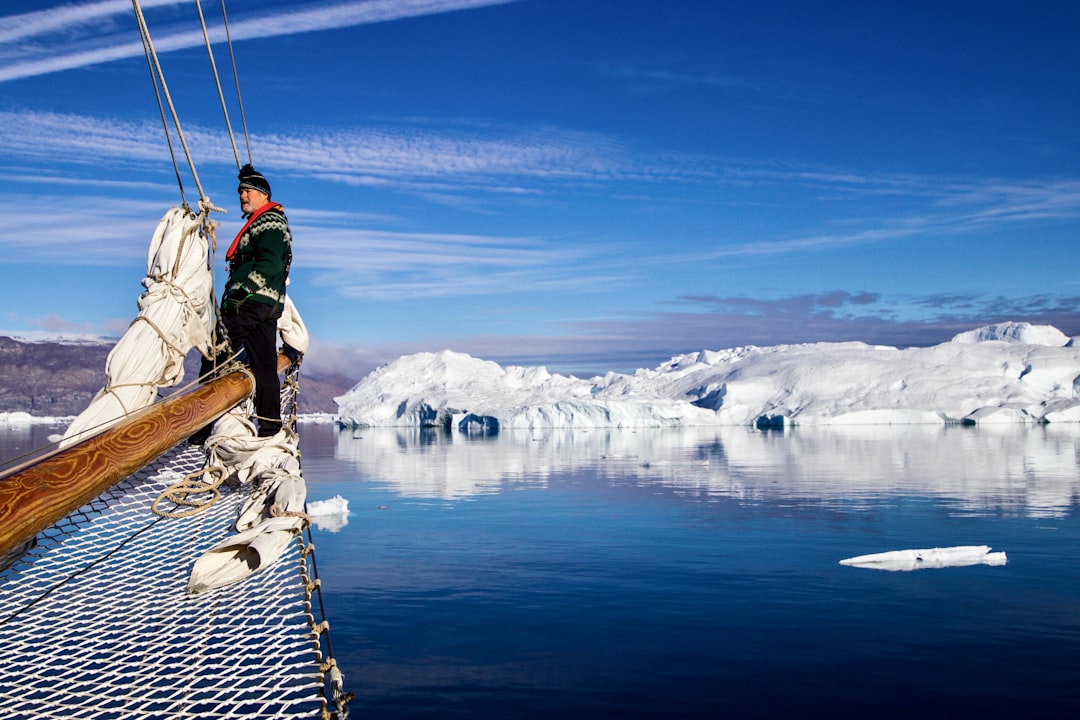
Icebergs: Present year-round but most dramatic June–September when the previous winter’s calved ice drifts through Disko Bay.
Winter (October–May): The Dark Season
What you get: Northern lights (astronomical darkness from September), dog sledding on sea ice (February–April), the profound silence of a frozen Arctic, and a completely different relationship with the landscape.
What you don’t get: Extended hiking, green tundra, boat tours (sea ice blocks some fjords), or whale spotting.
Temperatures: West coast: -15 to -5°C in midwinter; East coast colder. Wind chill factor is significant — dress for it.
Northern lights: Greenland’s clear, dark Arctic sky is one of the world’s finest locations for aurora viewing, particularly September–April.
Month-by-Month
January ⭐ (winter experience)
Deep winter. Dog sled season in full operation (January–April). Northern lights at their most visible. Very cold (-15 to -20°C). Few tourists. Some operators run Arctic survival courses and extended sled expeditions.
February ⭐ (dog sled peak)
Best month for dog sledding — the sea ice has built up sufficiently for extended expeditions. Still dark enough for northern lights. Extremely cold but stable.
March ⭐ (dog sled + light returning)
Dog sled still excellent. Light returning — spectacular long golden hours at dawn and dusk. By late March, the days are noticeably longer. The sea ice and snow are at maximum extent.
April ⭐ (transition)
Sea ice beginning to break up. Last reliable dog sled conditions. The ice sheet hike season opening. Days long (18+ hours of light). Fewer tourists than summer; some summer activities beginning.
May ⭐ (midnight sun approaching)
Midnight sun arrives in Ilulissat (north) around May 25. Nuuk still has a brief night. Hiking trails increasingly accessible. Boat tours beginning. Icebergs from the winter calving season impressive.
June ⭐⭐ (best summer month)
Midnight sun in full effect across the west coast. All activities operational. Wildflowers beginning on the tundra. Icebergs at their most spectacular. Least crowded of the summer months.
July ⭐⭐ (peak season)
Busiest month. All activities running. Whale watching begins. Warmest temperatures (10–15°C on the coast). Midnight sun. Book everything months in advance.
August ⭐ (whales + late summer)
Excellent whale watching (humpbacks, minke, narwhal in the north). The first hints of autumn colour on the tundra. Midnight sun ends in Nuuk around August 15. Good month for hiking.
September ⭐ (northern lights return)
Astronomical darkness returns. First northern lights of the season visible from late September. Some summer activities still running. Weather beginning to be unstable — flight cancellations possible. Worth the risk for the aurora.
October
Northern lights season proper. Sea ice beginning to form in the north. Weather very unstable — the most likely month for significant weather-related disruptions.
November–December
Dark and cold. Northern lights visible on clear nights. Some extreme winter tour operators active. Not recommended for first-time visitors.
Key Events
| Date | Event |
|---|---|
| January 6 | Epiphany (major celebration in Greenlandic culture) |
| February | Greenland’s National Day preparation |
| June 21 | National Day (Ulloriarsuaq) — Greenland’s national holiday |
| Around August | Nuuk Nordic Culture Festival |
| Late August | Last midnight sun in Ilulissat |
| September–October | Northern lights season begins |
Plan your trip