Ginkakuji and the Philosopher's Path: Kyoto's Eastern Hills Walk
Plan your trip
Ginkakuji (Jishoji, Shrine of Mercy Temple) was built in 1482 by Ashikaga Yoshimasa — the eighth Ashikaga shogun — as his retirement villa, intentionally modeled on Kinkakuji (his grandfather Yoshimitsu’s Golden Pavilion). Where Kinkakuji announced power through gold, Ginkakuji expressed the aesthetics of wabi — refined rusticity, the beauty found in incompleteness and age. The pavilion was never covered in silver. The plans may have existed; the money ran out during the Onin War; or the aesthetic changed, preferring the aged cedar to any applied surface. The “Silver Pavilion” name came later.
The result is the more interesting building — grey wood, green moss, and the specific quality of mono no aware (the pathos of impermanence) visible in a structure that is beautiful precisely because it is what it is.
The Garden
The garden of Ginkakuji is a masterwork of Muromachi-period design attributed to Soami — a combination of a dry sand garden (karesansui) in the front area and a stroll garden (kaiyushiki) ascending the forested hillside behind.
Kogetsudai (Moon Viewing Platform): The large truncated cone of white sand in the front garden, approximately 2 meters tall, precisely formed. Its function — whether it reflects moonlight, serves as a viewing stand, or is purely sculptural — is uncertain and debated. Its presence is extraordinary: a cone of perfectly maintained sand in the formal garden, with no obvious precedent in Japanese garden design.
Ginshadan (Sea of Silver Sand): The raked sand surface extending from the Kogetsudai toward the pavilion — when moonlight falls across the raked ridges, the effect was (in pre-electricity Kyoto) of a silver sea. The design of a raked sand garden anticipating moonlight rather than daylight is the Ginkakuji design sensibility in concentrated form.
The hillside garden: The path ascends through the forested hill behind the front garden to a viewpoint over the Kogetsudai, pavilion, and the Kyoto basin beyond. The moss-covered ground, the stone paths, the trees filtered light, and the garden as seen from above rather than from within are the upper garden’s rewards.
The pavilion: Visitors do not enter the pavilion; it is viewed from the garden path. The ground floor (Shinkuden, Zen style) has sliding screens; the upper floor is the observation room facing the garden.
The Philosopher’s Path (Tetsugaku no Michi)
The 2-kilometer stone path following the canal between Ginkakuji at the north end and Nanzenji at the south end is the finest walking route in Kyoto. Named for the philosopher Nishida Kitaro, who walked it daily in contemplation in the early 20th century.
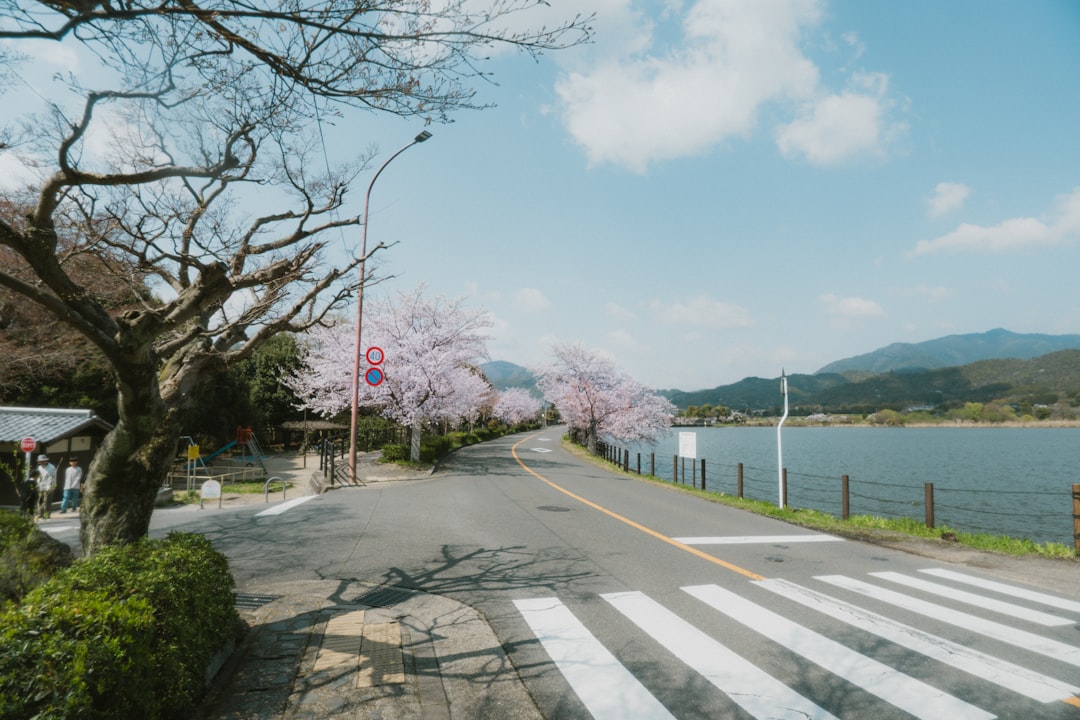
Cherry blossoms: The canal is lined with somei yoshino cherry trees that form an unbroken tunnel of pink in late March to early April. The combination of water reflections, stone path, and blossoming canopy makes this one of the most beautiful spring walks in Japan. Crowds are significant during peak bloom; early morning (before 8am) is the only time to walk it without dense company.
What’s along the path:
- Anrakuji (small temple with thatched gate, significant in the history of Japanese Buddhism)
- Honen-in (temple at the end of a moss-covered path, with two raked sand mounds at the gate — one of the most quietly beautiful small temples in Kyoto; open limited hours)
- Small coffee shops and galleries in converted machiya buildings along the canal — the path has a light commercial character of cafés and craft shops
- Eikan-do (Zenrin-ji): The major temple on the east side of the path — known for the famous statue of Amida looking back over his shoulder (mikaeri Amida), and for the most spectacular autumn foliage in eastern Kyoto. The pond garden and the mountainside stairways are excellent October–November.
The walk structure: Most visitors walk north to south (Ginkakuji to Nanzenji), with Ginkakuji as the destination and Nanzenji as the transition point to the Higashiyama neighborhood or to the subway back to central Kyoto. The reverse is equally possible.
Nanzenji
The southern anchor of the Philosopher’s Path: a major Rinzai Zen temple complex with large scale sanmon (gate), the aqueduct (Meiji-era brick water channel running across the garden, an incongruous piece of industrial infrastructure absorbed into the landscape), and several sub-temples with excellent gardens open separately. See the Nanzenji dedicated guide for detail.
Heian Shrine and Okazaki
5 minutes’ walk south of Nanzenji (or the Philosopher’s Path southern end): the large orange and white Heian Shrine (Heian Jingu) built in 1895 to commemorate the 1,100th anniversary of Kyoto’s founding — a scaled model of the original Heian palace in the Chinese architectural style. The surrounding jingu garden (¥600 admission) is a large stroll garden with a pond, irises (June), and cherry trees.
The Okazaki area between the Heian Shrine and the Museum of Modern Art has the highest concentration of museums in Kyoto — the Kyoto National Museum of Modern Art (MOMAK), the Municipal Museum of Art, and the Hosomi Museum, all within a 10-minute radius.
Practical Notes
Getting there: Bus 5 or 17 from Kyoto Station to Ginkakuji-michi stop (30–35 minutes). Or subway to Keage Station (Tozai Line), then 20-minute walk north.
Ginkakuji hours and admission: 8:30am–5pm (winter), 8:30am–6pm (summer). Admission ¥500.
The full route: Ginkakuji (1 hour) → Philosopher’s Path walk (30–45 minutes) → Eikan-do in autumn or Honen-in any season → Nanzenji (1 hour) → Okazaki/Heian Shrine (optional, 1 hour). Total: half to full day.
The Philosopher’s Path is the walk you take on the last morning of a Kyoto visit, when you want the city at its most quietly beautiful. The canal, the cherry trees or autumn maples, the small temples appearing in the gaps between buildings, and the particular quality of morning light in the eastern hills — these are what Kyoto keeps for the people who walk it without rush.
Plan your trip