Kiyomizudera: The Hillside Temple Above Kyoto
Plan your trip
Kiyomizudera (Pure Water Temple) was founded in 778, making it one of the oldest surviving temple complexes in Kyoto — predating the city itself, which was established as the capital in 794. The name refers to the Otowa waterfall that runs from the cliff face below the main hall: the pure water of the spring is the reason the site was chosen and the theological center of the temple’s function.
The current buildings date primarily from 1633 (rebuilt by the third Tokugawa shogun); the main hall stage (butai), the most famous element, is constructed from hundreds of keyaki (Japanese zelkova) wooden pillars fitted together without nails using traditional Japanese joinery.
The Approach: Higashiyama
The standard approach to Kiyomizudera from the Kiyomizumichi bus stop follows the two historic streets — Sannenzaka and Ninenzaka — that form the most complete preserved traditional commercial streetscape in Kyoto.
Ninenzaka (Second Year Slope): The lower slope, paved with stone, lined with machiya (traditional wooden townhouses) converted to shops selling Kyoto crafts, matcha products, ceramics, and lacquerware. There is a superstition that falling on Ninenzaka brings two years of bad luck; on Sannenzaka, three years.
Sannenzaka (Third Year Slope): Steeper, slightly narrower, with a bamboo grove section and the transition from the more tourist-facing shops below to the genuinely old buildings near the top.
What to look for on the approach: The machiya architecture — the narrow frontages, the koshi latticed windows, the second-floor overhangs — is the best example of Edo-period merchant architecture in Kyoto. The buildings are still occupied and functioning as shops; the preservation is active, not a reconstruction.
The Temple Complex
The main gate (Niomon): The large two-storey gate with guardian figures (nio) flanking the entrance — the formal boundary of the temple precinct.
The three-storey pagoda: To the right of the main approach — the red and green pagoda with the Kyoto cityscape below. The pagoda is one of the most photographed elements of the temple because of its elevated position and the view behind it.
The main hall veranda (Butai): The butai — stage — projects 13 meters over the hillside on 139 wooden pillars, 12 meters above the ground below. “To jump from the Kiyomizudera stage” is a Japanese expression equivalent to taking a leap of faith. (The actual practice of jumping was apparently common in the Edo period as a form of prayer or test; of 234 recorded jumps in the 17th–18th centuries, 85% survived due to the dense undergrowth below. The practice is no longer permitted.)
The view from the veranda over the Kyoto basin — the city spreading to the north and west, the hills of Arashiyama visible in the distance — is the best in central Kyoto from a publicly accessible non-tower viewpoint.
Inside the main hall: The interior houses the Juichimen Senju Kannon — the eleven-headed, thousand-armed Kannon (the bodhisattva of compassion). The statue is normally not displayed; a replica stands in its place. The ritual of circumambulating the inner sanctuary in complete darkness (tainai meguri, womb pilgrimage) is available for ¥200 — visitors feel their way through a pitch-black corridor beneath the main hall as a meditation on spiritual rebirth. The only light is the okotsutsubo, an illuminated stone representing the essence of Kannon at the exit.
Otowa Waterfall
At the base of the main hall, accessible by stairs from the veranda: three channels of spring water falling into a pool, where visitors scoop water with long-handled cups and drink from one of the three streams. Each stream has a different blessing:
- Left: longevity (nagaiki)
- Center: success in school or study (gakugyō jōjū)
- Right: success in love (en-musubi)
You are supposed to drink from only one channel (drinking from all three is considered greedy). The cups are disinfected between uses. The spring water is genuinely clean — the “Kiyomizu” (pure water) for which the temple is named.
Jishu Shrine
Above the main hall: the small Shinto shrine dedicated to the god of matchmaking and love, Okuninushi-no-Mikoto. The shrine’s specific attraction is two “love stones” placed 18 meters apart — if you can walk from one stone to the other with eyes closed without help or correction, your wish in matters of love will be granted. The stones are surrounded by people attempting the crossing and being subtly redirected by their companions.
Seasonal Highlights
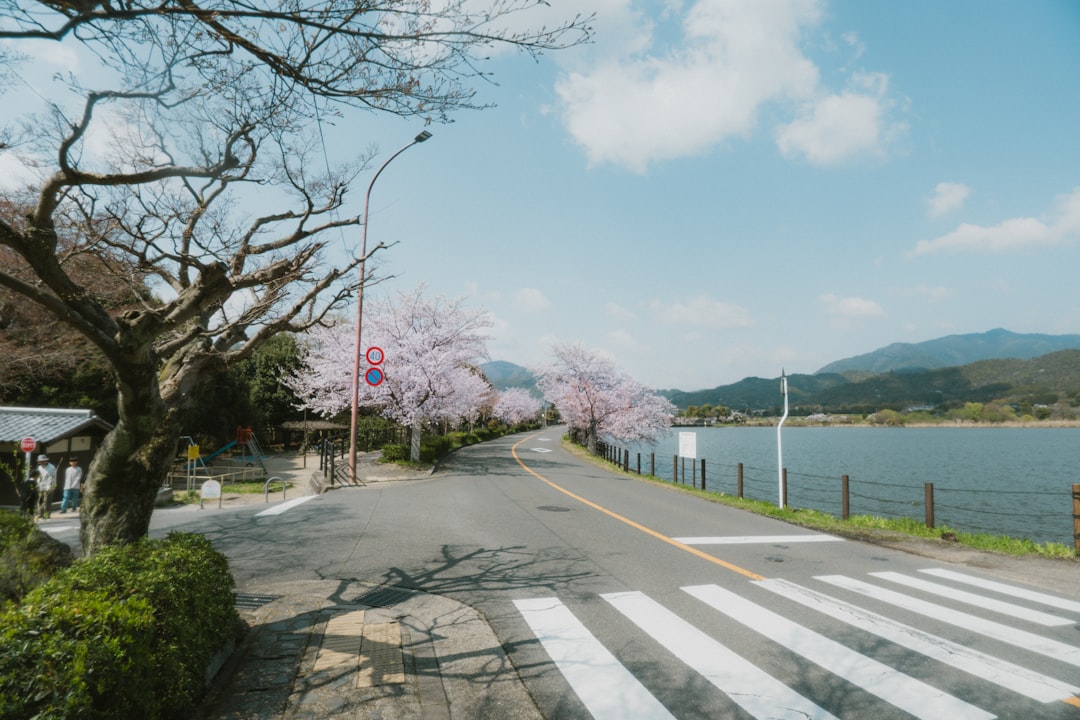
Cherry blossom (late March–early April): The temple complex has excellent cherry trees; the most famous view is the pagoda with blossoms framing it. The Maruyama Park–Higashiyama walk leading to Kiyomizudera is one of the best cherry blossom routes in Kyoto.
Autumn foliage (mid–late November): The hillside forests below the veranda turn orange and red; the view from the stage over the autumn trees is the most dramatic seasonal view in the temple complex.
Evening illuminations (spring and autumn): The temple opens for evening visits during cherry blossom and autumn foliage seasons, with the complex and surrounding trees lit. The illuminated veranda against the dark sky is one of the best night images in Kyoto. Check the temple’s schedule — the evening openings run approximately two weeks per season.
Practical Notes
Getting there: Bus 100 or 206 from Kyoto Station to Kiyomizumichi stop (15–20 minutes), then 15-minute uphill walk through Sannenzaka and Ninenzaka. Taxi is faster but drops you at the Kiyomizuzaka slope, still a 10-minute climb.
Admission: ¥500 (adults). The tainai meguri underground walk is ¥200 extra.
Hours: 6am–6pm (standard); extended to 9pm during seasonal illumination events.
Crowds: The main hall veranda at 11am–2pm on a weekend is extremely dense. Arriving at 7–8am gives access to the veranda views with minimal crowds. The Sannenzaka approach also fills by 10am with tour groups.
Kiyomizudera justifies its popularity — the veranda view, the Otowa waterfall, and the Higashiyama approach together create an experience that is both architecturally impressive and experientially varied. It earns its place as the most visited temple in Kyoto.
Plan your trip