Miyagawacho: Kyoto's Quietest Hanamachi
Plan your trip
Miyagawacho (宮川町) runs for approximately 400 meters parallel to the Kamo River, south of Shijo-dori, between the Gion district to the east and the Fushimi sake district further south. It is one of Kyoto’s five active hanamachi — districts maintaining the tradition of geiko and maiko entertainment — and the most atmospheric for walking without the tourist density of Gion Kobu.
The Street
The main Miyagawacho street is a narrow lane of preserved wooden machiya, ochaya teahouses, and small restaurants. The character is residential rather than tourist-facing — there are no souvenir shops on the main street and the businesses are predominantly ochaya, small restaurants serving the hanamachi workers and regular customers, and traditional craft shops.
What makes it different from Gion: The Gion districts (Kobu and Higashi) have become partially tourist infrastructure — restaurants with English menus, souvenir sellers, the known photogenic spots. Miyagawacho has none of this. The maiko and geiko who live and work here walk the street for the same reasons as always, not as an attraction.
Photography: The same etiquette as all hanamachi applies — photograph from a respectful distance, do not block paths or pursue subjects. Miyagawacho is quieter and the encounters more unexpected than in Gion, which means the photography rule is more important here, not less.
Best time to walk: 6–8pm, when geiko and maiko are walking between engagements. The short window before dinner ozashiki begins produces the highest frequency of sightings.
Miyako Odori Mibu Performance
Miyagawacho’s annual public performance, formerly called Kyo Odori, was renamed Miyako Odori Mibu in recent years. Held in late April to early May at the Miyagawacho Kaburenjo theater.
The program: 45–50 minutes of classical Japanese dance (nihon buyo) by the hanamachi’s geiko and maiko, performed on stage with traditional shamisen and hayashi accompaniment. The format is similar to the other hanamachi programs — a formal ensemble opening, individual dance pieces by senior performers, and an ensemble finale.
Tickets: ¥4,500 (with tea ceremony) or ¥4,000 (without). Available at the Miyagawacho kenban (hanamachi office) on the main street or through Lawson convenience stores.
The theater: The Miyagawacho Kaburenjo is small — capacity approximately 400 — making this the most intimate of the five hanamachi performances. The proximity to the stage means the detail of costume and makeup is visible in ways that larger theater venues don’t allow.
Eating in Miyagawacho
The restaurants and izakaya on and around the main street serve the local hanamachi population — generally simpler in format than Gion’s high-end kaiseki establishments.
Yardbird (Shijo area adjacent): Not in Miyagawacho proper but the most-discussed yakitori restaurant in the Kamo River vicinity — serious grilled chicken in a small counter setting. Reservations essential.
Riverside kaiseki: Several restaurants along the Kamo River (one block west of Miyagawacho) open their riverside terraces (kawadoko) from May to September — elevated platforms above the river where you eat with the sound of the water below. The Miyagawacho side of the river has the same seasonal kawadoko tradition as Pontocho across the water; reservations required, ¥8,000–20,000 per person.
The Kamo River Connection
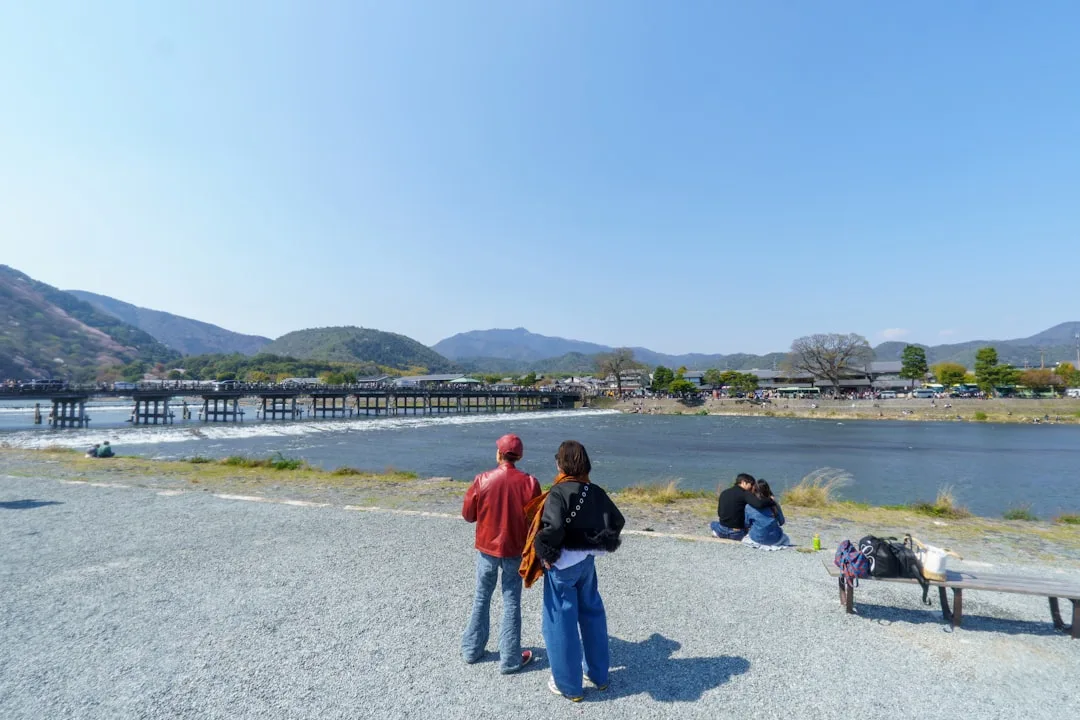
Miyagawacho’s western boundary is effectively the Kamo River embankment at Shijo. The riverbank path along this stretch is one of Kyoto’s most pleasant evening walks — particularly in summer when couples sit along the embankment by informal protocol (maintaining exactly 5-meter intervals, an organic spacing convention that has become an urban legend).
Looking east from the Shijo Bridge, you see Miyagawacho’s street from the river perspective — the end of the machiya visible through the alley gap.
Access and Navigation
Getting there:
- Keihan or Hankyu to Gion-Shijo Station, 5-minute walk south along the Kamo River, then turn right (east)
- The main street entrance is at the intersection with Shijo-dori; walk south from there
Orientation: The Miyagawacho Kaburenjo theater marks the southern end of the main street — if you reach it, you’ve walked the full length. The theater faces the river.
Combine with: Gion Shijo area (5-minute walk north) → Miyagawacho walk south → Fushimi Inari (30 minutes by Keihan south). The Miyagawacho walk fits between any combination of Gion and Higashiyama sightseeing without requiring a separate trip.
Plan your trip