Mount Fuji: The Complete Guide to Climbing and Visiting
Plan your trip
Mount Fuji is 3,776 meters of near-perfect volcanic symmetry that has defined Japanese aesthetics for a thousand years — in woodblock prints, in poetry, in the background of a thousand photographs where it appears over the rooftops of Shinjuku or reflected in a lake at dawn. It is also a real mountain that 200,000 people climb every year, many of them in a single overnight push from the 5th Station, and a place that is simultaneously sacred, tourist infrastructure, and genuine wilderness above the treeline.
The Basics
Summit elevation: 3,776m (12,389 ft) — the highest point in Japan
Official climbing season: Early July to early September (exact dates vary by trail and year)
Average summit temperature in July: 5–8°C (41–46°F); wind chill frequently below 0°C
Trails: Four main trails — Yoshida, Subashiri, Gotemba, Fujinomiya
UNESCO listing: World Heritage Site since 2013 (cultural, not natural)
Fuji is not technically difficult. It is a strenuous altitude hike on loose volcanic rock and scree, requiring no technical skills but demanding physical fitness, proper gear, and respect for altitude sickness. Most casualties on the mountain are from exhaustion, hypothermia, or falls on the descent.
Climbing Season
The mountain is officially open from early July to mid-September. Outside this window, the mountain huts are closed, emergency services are unavailable, and the upper trails are often snow-covered. People climb outside season — this is legal and occasionally fatal.
Peak period: Late July and all of August. Crowds are heaviest on weekends; the summit huts and trails can feel dangerously congested. The Yoshida Trail summit push on a Saturday night in August involves climbing in a line of hundreds of headlamps.
Best window: Weekdays in early July or first two weeks of September. The weather is more stable, the crowds are manageable, and the mountain has the same view.
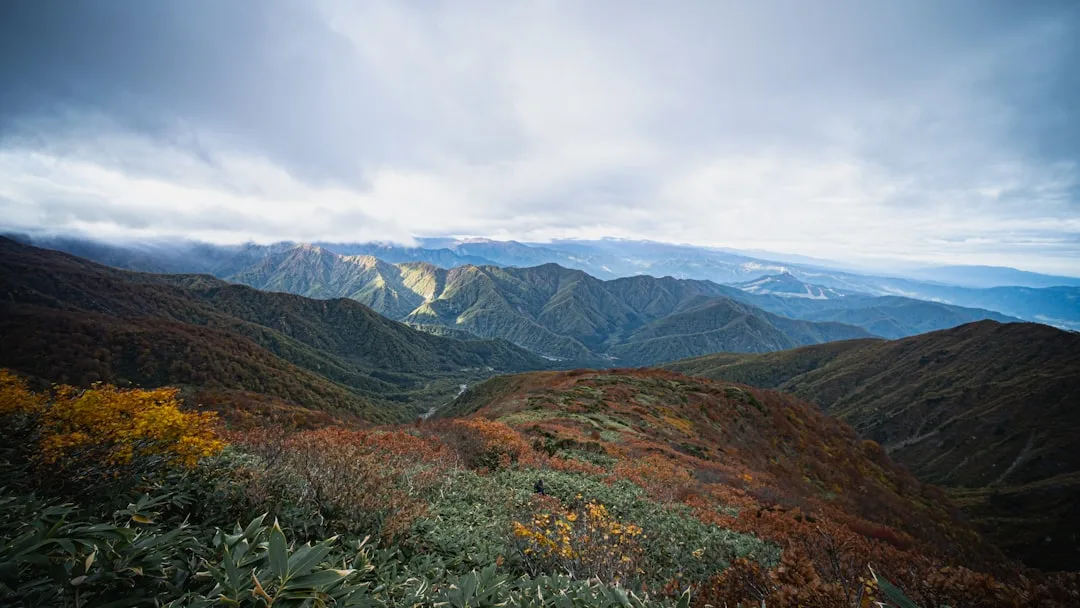
Weather: Fuji creates its own weather. Clear mornings often give way to afternoon cloud. The summit can go from visible to obscured in minutes. The climbing season exists because this is when the mountain is most reliably passable — it is not reliably pleasant.
The Four Trails
Yoshida Trail (北口本宮冨士浅間神社 → 吉田口)
Starting point: Fuji-Subaru Line 5th Station (2,305m)
Distance: ~14km round trip
Ascent time: 5–7 hours
Descent time: 3–4 hours
Mountain huts: Most of any trail — open July–September
The most popular trail by a significant margin — approximately 60% of all climbers use it. The 5th Station is accessible by bus from Shinjuku, Kawaguchiko, and Fujisan stations. The trail is well-marked, heavily supported with mountain huts for rest and supplies, and has emergency services available throughout the season.
The Yoshida 5th Station has a visitor center, restaurants, and souvenir shops that serve as orientation before the climb. The trail becomes serious above the 7th Station, where altitude effects begin for some climbers.
Descent variation: Yoshida has a separate descent path (Oshuzan) below the 8th Station, allowing circular routing and reducing the wear from people sharing the same loose scree path.
Subashiri Trail
Starting point: Subashiri 5th Station (1,970m)
Distance: ~18km round trip
Ascent time: 6–8 hours
Descent time: 3–4 hours
Begins lower than Yoshida and passes through actual forest before reaching the alpine zone, giving the early stages a more varied character. Merges with the Yoshida Trail above the 8th Station. The descent has excellent loose-scree sections that allow fast, controlled sliding steps.
Significantly fewer climbers than Yoshida. Good option for those wanting the experience with reduced congestion on the lower half.
Gotemba Trail
Starting point: Gotemba 5th Station (1,440m)
Distance: ~25km round trip
Ascent time: 7–10 hours
Descent time: 3–4 hours
The longest, lowest-starting, and least-used trail. The lower 5th Station means additional altitude gain and a full extra hour of walking. The trail passes through sparse vegetation and offers the most solitary experience on the mountain — you can go hours without passing another party.
The Gotemba descent’s Osunabashiri (the “great sand run”) is a specific pleasure: a wide gully of deep volcanic sand that allows rapid controlled descent by digging your heels in and sliding. Budget extra time to enjoy it.
For fit, experienced hikers who prefer genuine solitude to mountain infrastructure.
Fujinomiya Trail
Starting point: Fujinomiya 5th Station (2,400m)
Distance: ~10km round trip
Ascent time: 4–6 hours
Descent time: 2–3 hours
The highest 5th Station, shortest route, and steepest gradient. Popular with day-hikers attempting the summit without an overnight at a hut. Comes up from the south (Shizuoka Prefecture side), which means the 5th Station is accessible from Shin-Fuji bullet train station by bus.
The rocky upper sections are more technical in character than the scree of the other trails, and the shorter route means less time for altitude acclimatization. Altitude sickness is more common here than on the longer trails.
Gear and Preparation
Mountain Fuji is serious alpine terrain regardless of the crowds. The gear requirement is genuine:
Essential:
- Layering system: base layer + mid-layer + waterproof/windproof outer shell
- Warm hat, gloves (the summit is cold even in August)
- Headlamp with spare batteries (for summit push or descent in darkness)
- Trekking poles (dramatically reduce knee strain on descent)
- Hiking boots (not sneakers — the loose scree punishes flat-soled shoes)
- Minimum 2 liters water capacity (water on trail is expensive at ¥500+ per 500ml)
- Snacks: energy dense, easy to eat in wind
Optional but recommended:
- Gaiters (volcanic sand gets into everything on descent)
- Face mask or buff (wind-driven scree can be painful)
- Altitude medication (consult a doctor before; Diamox is available in Japan with prescription)
Weather layer: Temperatures drop roughly 6°C per 1,000m of altitude. The 5th Station may be 25°C when the summit is 5°C with 40km/h wind. Check the summit forecast at tenki.jp before departing.
The Overnight Climb (Goraiko)
Goraiko (御来光) — watching the sunrise from the summit — is the traditional goal and the reason most people attempt the night climb. The strategic approach:
Mountain hut reservation: Book a hut between the 7th and 8th Stations on Yoshida or Subashiri trails. Sleep 3–4 hours (bunks, ear plugs essential). Wake at 1–2am, reach the summit for the 4:30–5:00am sunrise.
Without a hut reservation in peak season, the alternative is: arrive at 5th Station at 10pm, climb through the night, reach the summit at sunrise. This means climbing tired and cold, with no buffer for bad weather or slow pace.
Altitude sickness: The night climb compresses the ascent time and reduces acclimatization opportunity. Symptoms — headache, nausea, dizziness — are more common in climbers who push through without rest. The correct response is descent, not caffeine.
The sunrise at 3,776m, on a clear morning, over a sea of clouds with Fuji’s shadow stretching toward the horizon, is one of the genuinely remarkable experiences available in Japan. The crowds trying to see the same thing make it feel, at its worst, like a poorly managed music festival at altitude.
Crater Rim Circuit (お鉢巡り)
The true summit of Fuji is Kengamine (剣ヶ峰), the highest point of the crater rim — a 20–30 minute walk from where most trail summits arrive. The full crater rim circuit (Ohachimeguri) takes 60–90 minutes and passes the weather station, the summit post office (open July–August), and various Shinto markers. Most climbers do not complete the circuit; those who do typically have the most vivid summit memories.
Viewing Without Climbing
For the majority of visitors — including many Japanese who have never climbed and don’t intend to — Fuji is a landscape subject rather than a climbing objective. The best vantage points:
Kawaguchiko (Lake Kawaguchi)
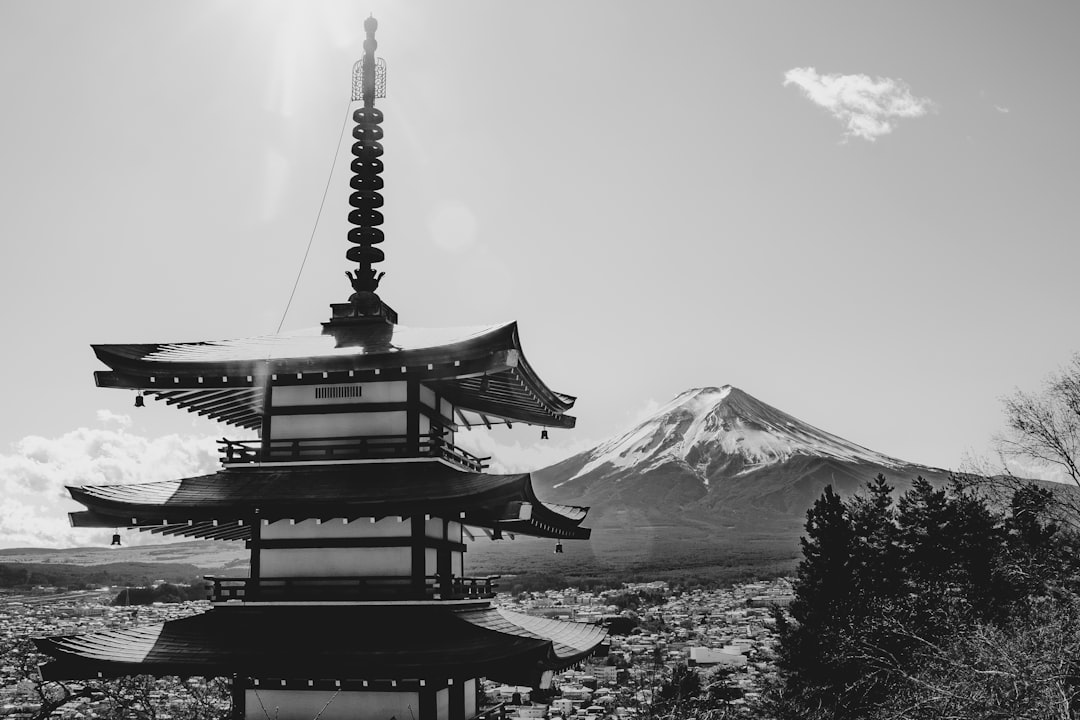
The most accessible of the Fuji Five Lakes, 45 minutes from Kawaguchiko Station (direct bus from Shinjuku). The northern shore in the morning, with the reflection in calm water, is the classic composition. Chureito Pagoda — a five-story pagoda 397 steps above Arakurayama Sengen Park — provides the foreground for the most-reproduced Fuji photograph. Worth the climb.
Hakone
The Owakudani ropeway, the open-air museum grounds, and the Hakone Shrine’s torii gate rising from Lake Ashi all frame Fuji on clear days. Fuji is not visible from Hakone every day — the mountain generates its own cloud cover — but when visible, the view from the lake is exceptional.
Shizuoka (South Side)
The Miho no Matsubara pine grove near Shimizu — a UNESCO cultural site — frames Fuji over Suruga Bay. Less visited than the Five Lakes, more photogenic in afternoon light from the south.
Torii Mor (from the Train)
The Shinkansen between Tokyo and Osaka passes within 50km of Fuji. On a clear day, the Nozomi or Hikari provides a moving view of the mountain at speed, typically visible for 3–4 minutes around Shin-Fuji station. Sit on the left side (window seat, D or E row) traveling from Tokyo toward Osaka.
Access
To Yoshida 5th Station (Fuji-Subaru Line):
- Direct highway bus from Shinjuku Expressway Bus Terminal (2 hours, ¥2,800 one way in season)
- Bus from Kawaguchiko Station (50 minutes)
- Private car access is restricted during peak season — park-and-ride required
To Fujinomiya 5th Station:
- Bus from Shin-Fuji Station (JR Tōkaidō Shinkansen stop) — seasonal service
- Bus from Mishima or Fujinomiya stations
To Gotemba 5th Station:
- Bus from Gotemba Station (JR Gotemba Line) — seasonal service
Driving to the 5th Stations during climbing season requires checking current access restrictions; some roads are closed to private vehicles on weekends.
Practical Notes
Altitude tax (登山保全協力金): ¥2,000 per person on the Yoshida Trail (mandatory since 2024 season). Other trails have voluntary contribution systems. This funds trail maintenance and emergency services.
Overnight gate closure: The Yoshida Trail implemented a barrier gate above the 5th Station from 4pm to 3am on weekdays, 24 hours on weekends and holidays (2024 policy). This is specifically to deter Bullet Climbing — the practice of sprinting from 5th Station to summit and back in a single push without acclimatization or proper gear. Check current policy before planning.
Summit facilities: Vending machines (expensive), ramen available at the summit crater huts, pay toilets. Bring cash.
Leave No Trace: The trail has permanent toilet facilities at most stations (¥200–300 per use). No open waste — everything on the mountain stays on the mountain or gets carried down.
Plan your trip