Enryaku-ji and Mount Hiei
Plan your trip
Enryaku-ji (延暦寺) was founded by the monk Saicho in 788 on the summit of Mount Hiei, the mountain that forms the natural northeastern border of the Kyoto basin. It became the head temple of the Tendai school of Japanese Buddhism, and over the following centuries, the most intellectually significant religious institution in Japan — the alma mater of Japanese Buddhism. Nearly every major Buddhist reformer of the Kamakura period (12th–14th century) who shaped the religion’s subsequent history studied here: Honen (Pure Land Buddhism), Shinran (Jodo Shinshu), Dogen (Soto Zen), Eisai (Rinzai Zen), and Nichiren (Nichiren Buddhism) all began their religious education on Mount Hiei.
The temple complex covers the entire summit ridge of Mount Hiei (848m) across three areas (Todo, Saito, and Yokawa). It is UNESCO World Heritage Site as part of the Historic Monuments of Ancient Kyoto designation.
The Three Areas
Todo (東塔) — The Main Area
The central precinct, most accessible by cable car or ropeway, with the principal buildings:
Konpon Chudo (根本中堂): The main hall, built in 1642, is one of the largest wooden structures in Japan — 96m wide by 23m deep, the size determined by Tendai doctrine. Inside, the fumetsu no hoto (Eternal Light) has burned continuously since Saicho’s time (794 CE) — a sacred flame maintained for 1,230+ years. The hall is currently undergoing restoration until approximately 2026; scaffolding affects the exterior but interior access is maintained.
Dairokuten Maou (大黒天堂): The hall dedicated to Daikokuten (fortune deity) with a notable statue.
Kaidan-in (戒壇院): The ordination hall where generations of Japanese Buddhist monks received their vows. The ordination platform here was the only legitimate Buddhist ordination site in Japan during the Heian period.
Amida-do (阿弥陀堂): The hall of Amitabha, serving as the general prayer hall.
Saito (西塔) — The Middle Area
A 2km walk or shuttle from Todo, the Saito precinct has an older feeling — fewer visitors, the buildings more integrated with the forest.
Jodo-in (浄土院): The mausoleum of Saicho, the founder. A austere, carefully maintained precinct where monks still practice the sennichi kaihogyo — a 1,000-day walking meditation that covers a distance equivalent to circling the Earth on foot, completed over 7 years.
The kaihogyo monks (those who have completed the practice) are considered among the most extraordinary religious practitioners in Japan. The practice involves daily 30–84km walks through the mountain forest, performed in white robes and straw sandals, for 100 consecutive days at a time across 7 years.
Ninai-do (にない堂): Two connected halls (Jogyodo and Hokkedo) joined by a covered corridor — the subject of a famous story about Benkei (the famous warrior-monk) carrying both halls on his shoulders.
Yokawa (横川) — The Northern Area
The most remote of the three areas, accessible by shuttle bus. The atmosphere here is the most monastic — fewer tourists, genuine Tendai religious practice more visible.
Yokawa Chudo (横川中堂): A reconstructed hall (1971) cantilevered over the hillside.
Ganzan Daishi-do: Dedicated to the 3rd Tendai head priest; the fortune-telling tradition that spread across Japan originated here.
Mount Hiei and the View
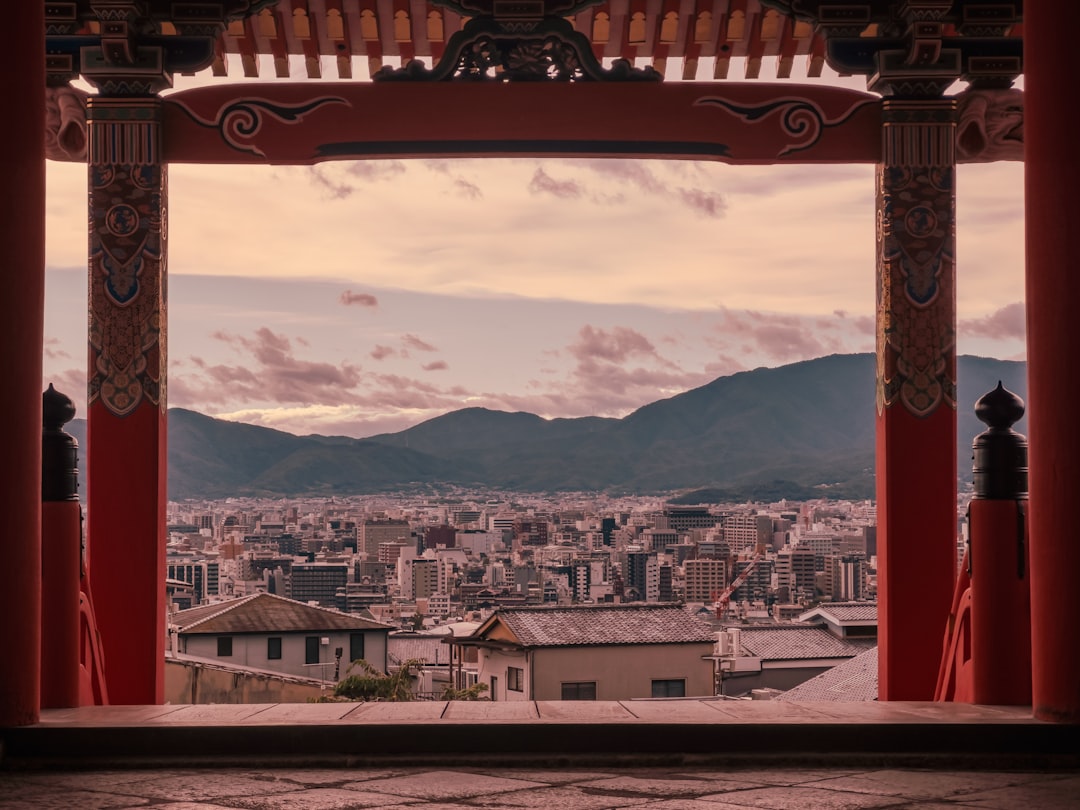
At 848m, Mount Hiei commands views of the Kyoto basin to the west and Lake Biwa (Japan’s largest lake) to the east. From the viewpoints near the cable car summit station, both landscapes are visible simultaneously — the urban bowl of Kyoto and the blue expanse of the lake.
The mountain is wooded in mixed deciduous-evergreen forest; the autumn foliage (October–November) is visible from Kyoto below and from within the temple grounds.
Getting There
Cable Car and Ropeway (Recommended)
Yase Hiezan Station (Eizan Railway from Demachiyanagi, north Kyoto, 18 minutes): Transfer to the Hieizan Driveway Bus to the cable car base, or walk 15 minutes.
Hieizan Cable Car (坂本ケーブル, operated by Keihan): Runs from Sakamoto-Sanmon to Enryakuji Bus Center near Todo. 11 minutes. ¥900 (round trip ¥1,700).
Keihan Combination: From the lake side — Keihan Main Line to Hama-Otsu, then Keihan Ishiyama-Sakamoto Line to Sakamoto-Hieizanguchi, then shuttle to cable car base.
On Foot (Hiking)
Several hiking trails ascend Mount Hiei from Kyoto — the most direct from Yamasina area (2–2.5 hours). The descent to Sakamoto on the Lake Biwa side is a well-maintained trail through forest (1.5 hours).
Admission and Times
Opening hours: 8:30am–4:30pm (reduced in winter). Each area requires separate admission.
Admission: ¥700 for the Enryakuji precinct overall. Each area is charged — combined ticket for all three: ¥1,000.
Time needed: Todo alone: 1.5–2 hours. All three areas: full day (shuttle buses connect them but the walking distances are substantial).
The 1571 Burning
In 1571, Oda Nobunaga — the warlord in the process of unifying Japan — destroyed Enryakuji in a violent purge. The mountain had been a power base for warrior-monks (sohei) who had participated in political struggles, and Nobunaga — pragmatic and ruthless — burned over 3,000 buildings and killed an unknown number of monks and civilians.
The event (Hiei-zan yakiuchi) is one of the defining moments of Sengoku period history and remains a source of historical trauma for the Tendai tradition. The current buildings are 17th-century reconstructions; the forest itself and the sacred geography survived.
Practical Notes
Combination with Kyoto: Mount Hiei is easiest as a day trip from central Kyoto. The cable car-and-bus combination reaches Todo in approximately 1 hour from Demachiyanagi.
Combination with Lake Biwa: The descent from Enryakuji to Sakamoto (the lake side) by cable car or trail connects to Lake Biwa’s eastern shore, where Biwako Terrace (a viewing platform and restaurant) and the lake-side temples of the Omi area are accessible. The Kyoto–Enryakuji–Lake Biwa–Otsu–Kyoto loop is a full-day circuit.
The monks: Enryakuji has an active monastic community. The monks in white or saffron robes who pass through the precincts are carrying out genuine religious practice; the temple is not a historical exhibit but a living institution.
Plan your trip