Andong: Korea's Confucian Heartland
Plan your trip
Andong sits in the Nakdong River valley in the central part of North Gyeongsang Province — inland, agricultural, and historically wealthy through the land-owning yangban (aristocratic) class. The Joseon Dynasty (1392–1897) was built on Neo-Confucian principles, and the Andong region became the intellectual and cultural center of that tradition — producing influential philosophers, maintaining strict Confucian ritual practice, and building the seowon (private Confucian academies) that shaped Korean elite education for 500 years.
What survived is the most complete preserved landscape of Joseon Confucian culture in Korea: the Hahoe folk village with intact aristocratic residences, the Dosan Seowon academy founded by Yi Hwang (the most venerated Confucian scholar in Korean history), and the Andong mask dance tradition (Andong Talchum) that developed as popular culture counterpoint to the aristocratic seriousness of the same region.
Getting There
From Seoul: Express bus from Seoul Express Bus Terminal (Gangnam) to Andong (2.5 hours, ₩24,400). More direct than the train option for most Seoul starting points.
By KTX/train: Seoul → Dongdaegu (Daegu) by KTX (1.5 hours), then Mugunghwa train to Andong (1.5 hours). Total: 3 hours, ₩40,000–50,000.
From Busan: Direct bus from Busan to Andong (2.5 hours).
Within Andong: Bus system covers the main sites; buses to Hahoe Village depart from the Andong Bus Terminal approximately every 30–60 minutes.
Hahoe Folk Village (Hahoe Maeul)
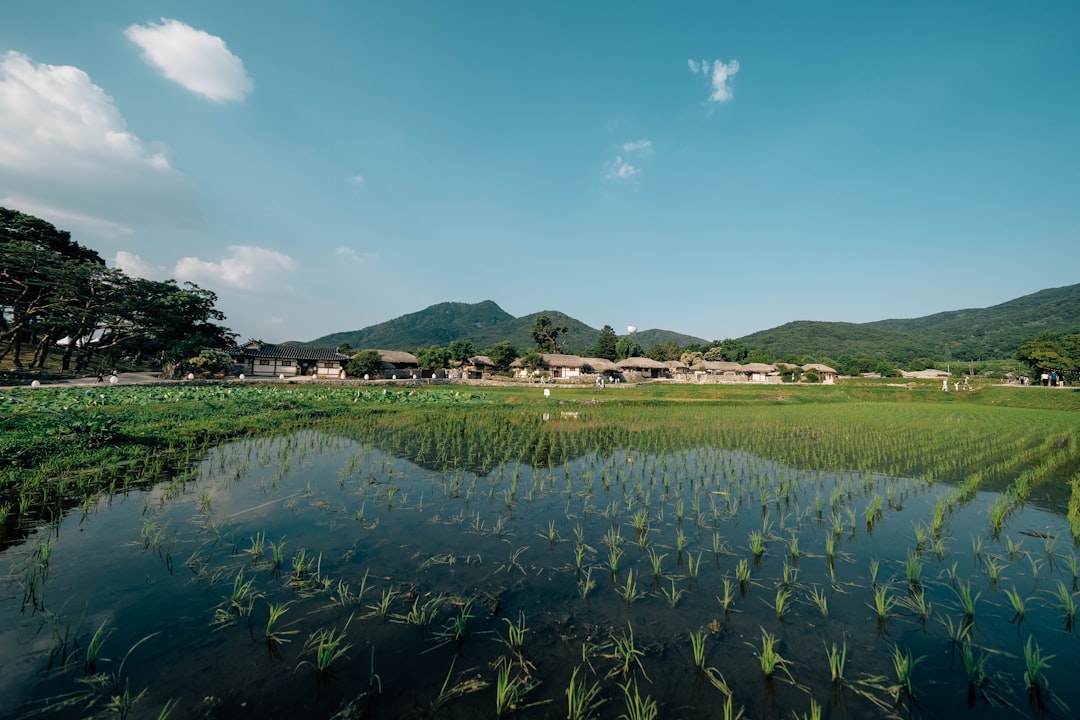
30 minutes west of Andong city by bus: the UNESCO World Heritage village of Hahoe, where the aristocratic Ryu clan has lived continuously since the 14th century. The village sits on a bend of the Nakdong River (ha-hoe means “river that embraces”), surrounded on three sides by water.
The village today: Approximately 150 households still live in Hahoe — it is a working village, not a museum. The residents include both farmers and family members who have returned specifically to maintain the tradition. Visitors walk the village lanes between the traditional hahoetang thatched farmhouses and the more substantial tile-roofed yangban residences.
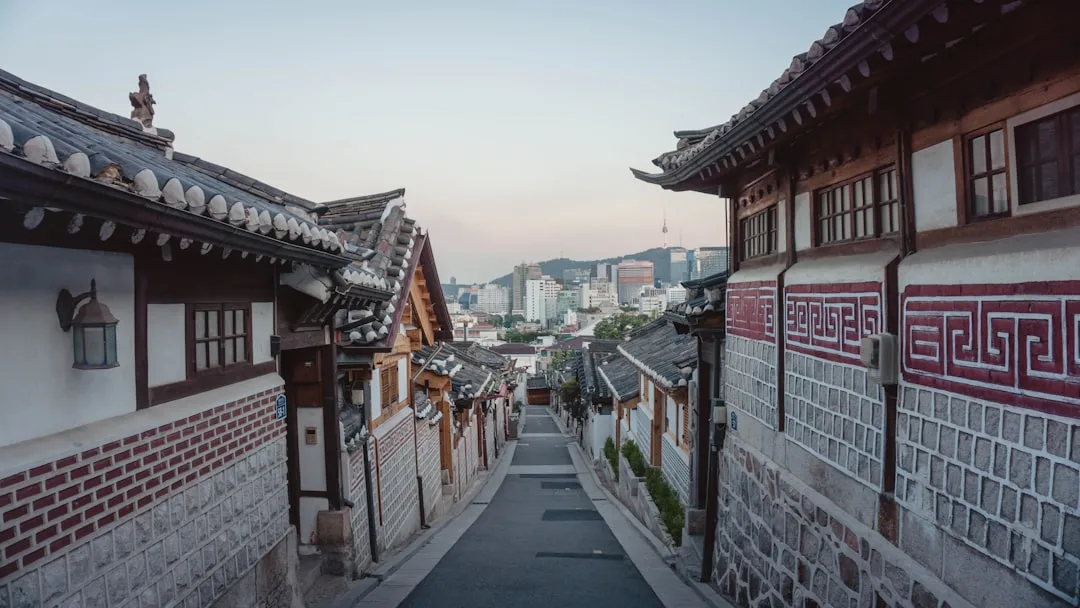
Architectural distinction: The architecture shows the Joseon class hierarchy clearly: the thatched-roof chogajip (farmhouses) have lower gates and simpler interiors; the giwajip (tile-roof houses) of the yangban class have higher walls, wider courtyards, and the formal reception rooms (sarangbang) separated from the women’s quarters (anchae). The spatial organization of a yangban house — the approach, the outer gate, the main gate, the men’s and women’s separate wings, the central courtyard — is readable in the surviving structures.
Byeongsan Seowon: A 25-minute walk from Hahoe village along the riverbank — a Confucian academy founded in 1572, rebuilt in 1613, with one of the best views in the region. The mandaeru front pavilion overlooks the Nakdong River bend and the sandy cliffs (byeong = cliff). The seowon is one of the nine UNESCO World Heritage Confucian academies of Korea.
When to visit: The Andong International Mask Dance Festival (late September–early October) brings performances to both the village and the Andong city area; the Hahoe village performances are the most atmospheric. Autumn foliage (October) coincides with the festival.
Dosan Seowon
40 minutes from Andong city by bus: the Confucian academy founded in 1561 by Yi Hwang (Toegye, 1501–1570) — the most important Korean Confucian philosopher, whose portrait appears on the 1,000-won banknote. Yi Hwang’s thought represented the Korean interpretation of Neo-Confucianism and was influential across East Asia.
The academy consists of two parts: the private section where Yi Hwang studied and taught during his lifetime (preserved and modest), and the public memorial section built after his death to honor him. The distinction reflects Confucian philosophy’s emphasis on genuine practice over official recognition.
The river view from the academy — a wide bend of the Nakdong River with forested hills on both sides — is the landscape Yi Hwang wrote poetry about. The setting is understood as part of the Academy’s meaning: withdrawal to nature as preparation for social responsibility.
Yedan ceremony: Twice yearly (spring and autumn), the ritual ceremony (jeongsa) at Dosan Seowon is performed in the Joseon format — the specific ceremony honoring Yi Hwang with offerings of food, ritual bow sequences, and ancient music. Open to respectful observation.
Andong Maskdance Festival and the Hahoe Masks
The Andong Hahoe Byeolsingut Talnori (Hahoe Village Ritual Mask Dance Play) is one of the oldest existing mask performance traditions in Korea — combining Confucian ritual, Buddhist elements, and satirical comedy in a performance form that developed in medieval Andong.
The masks: The 12 traditional Hahoe masks (a subset of 9 are used in performances) are carved from alder wood and feature exaggerated expressions — the aristocrat mask with a jointed chin that moves, the butcher, the monk, the young bride, the scholar. They are the most famous craft objects from the Andong region and among the most recognized Korean folk art objects internationally.
The comedy in the traditional performance is often directed at the yangban (aristocratic) class — the monks and scholars are satirized, the common people’s perspective vindicated. This social inversion within the framework of a ritual tradition is the specific characteristic of the maskdance.
Andong Mask Dance Festival: Late September–early October in Andong city (not the village) with performances, competitions from national and international mask dance traditions, and market stalls. One of the most significant folk arts festivals in Korea.
Andong Food
Andong jjimdak (안동찜닭): Braised chicken in a soy-based sauce with glass noodles, potatoes, and vegetables — the dish that has spread from Andong to become a nationally popular preparation. The original preparation was developed in the markets of Andong’s old-town alley (Jjimdak Golmok, “Jjimdak Alley”) to use the whole chicken economically. The savory-sweet-spicy balance is specific; versions outside Andong vary. The alley in old Andong still specializes in this dish. ₩20,000–30,000 per pot (2 persons).
Ganjang gejang (간장게장): Raw crab marinated in soy sauce — a preparation specific to this region, served with rice. The raw crab texture and the soy marinade penetration create a “rice thief” effect (the Korean phrase bap-doduk means the dish is so good it steals your rice — you keep adding rice to eat more of it).
Andong soju: Andong’s traditional soju (Andong-ju) is a distilled spirit made from grain, quite different from the industrial soju sold nationally — cleaner, stronger (40–45% alcohol), with a specific character from the distillation process. A small bottle is the standard souvenir purchase.
Andong salted mackerel (ganjang-gejang): The inland-origin salted mackerel — the Andong region was historically served salted fish transported from the coastal markets, and the specific salted mackerel preparation (jaban godeungeo) developed for transport conditions became a regional specialty.
Practical Notes
1-night stay: The minimum to cover Hahoe Village and Dosan Seowon meaningfully. Day 1 — arrive Andong, Hahoe Village afternoon + evening, dinner in Andong (jjimdak). Day 2 — Dosan Seowon morning, bus back to Seoul or onward to Gyeongju.
Combine with Gyeongju: Andong and Gyeongju are 1 hour apart by bus — a natural 4-day southeast Korea cultural circuit: Seoul → Andong (2 nights) → Gyeongju (2 nights) → Busan → Seoul by KTX.
Andong is the Korea that maintained what most of the country modernized away — the Confucian scholarship tradition, the aristocratic village, the ritual theater that mocked the aristocrats. The Hahoe masks and the jjimdak and the Dosan Seowon view of the river are different expressions of the same deep regional character: serious in its traditions, satirical in its comedy, specific in its food. It rewards arriving without a tight schedule.
Plan your trip