Gyeongju: Korea's Ancient Capital
Plan your trip
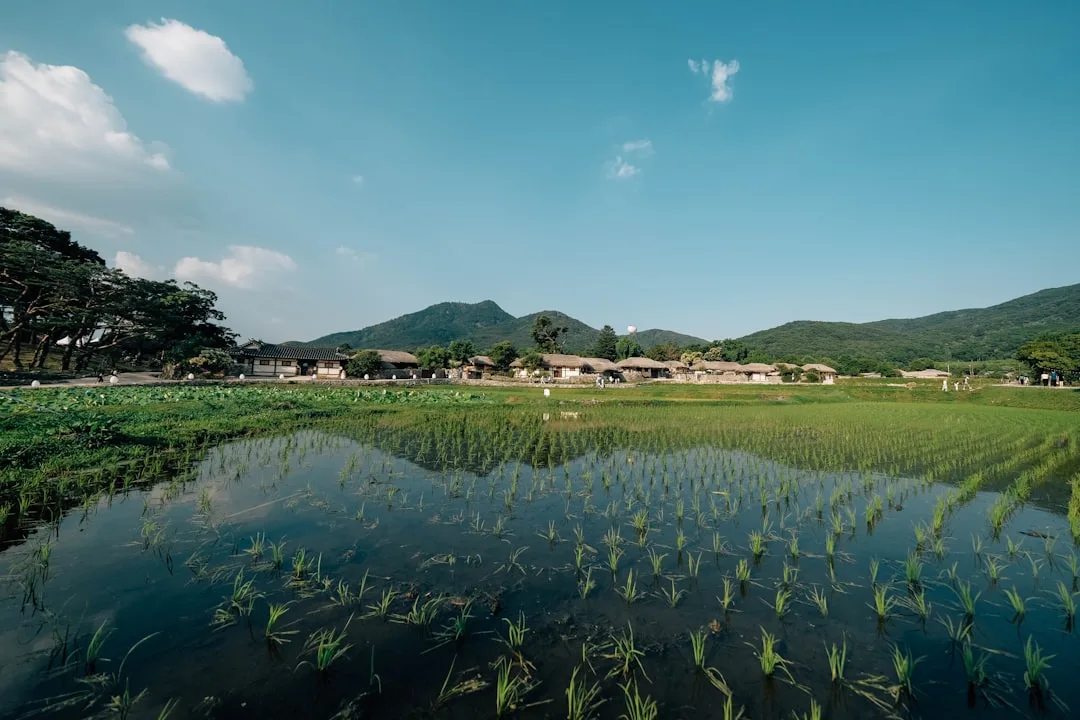
Gyeongju sits in North Gyeongsang Province, 60 km north of Busan, in a wide agricultural plain surrounded by low mountains. The Silla Kingdom — one of the Three Kingdoms of early Korea — made this plain its capital from 57 BC to 935 AD, a span of nearly a thousand years. At its height in the 7th–8th centuries, Gyeongju (then called Seorabeol) had a population estimated at one million, making it one of the largest cities in the world.
What survived that history is extraordinary: royal burial mounds (tumuli) rising from the middle of the modern city, a reconstructed palace pond complex, a 7th-century astronomical observatory, cave temples with gold-covered Buddhist sculptures, and the best-preserved ancient temple complex on the Korean peninsula. Gyeongju has seven UNESCO World Heritage designations — more than any other city in Korea.
Getting There
From Busan: KTX or Mugunghwa train from Busan Station to Singyeongju (20–40 minutes, ₩10,000–14,800). Alternatively, express bus from Busan Central Bus Terminal to Gyeongju (1 hour, ₩4,400). Buses deliver closer to the historic center than the Singyeongju KTX station.
From Seoul: KTX to Singyeongju (2 hours, ₩55,000), or express bus from Seoul to Gyeongju (3.5 hours, ₩25,400). The KTX is faster; the bus arrives at the central bus terminal closer to the historic sites.
At Gyeongju: Most historic sites are within cycling distance from the city center. Bicycles are rented at multiple points (₩5,000–10,000/half-day); the flat terrain makes cycling the best way to move between the burial mounds, Anapji Pond, and Cheomseongdae.
Tumuli Park (Daereungwon)
The most immediately striking sight in Gyeongju: a park in the middle of the city containing 23 royal burial mounds from the Silla period. The mounds — called tumuli (circular earthen mounds with burial chambers inside) — rise from 4 to 22 meters. The largest, Hwangnamdaechong (the North and South mounds), is 23 meters tall and 80 meters in diameter.
From inside the park, the landscape is surreal — urban Korea on all sides, with these enormous smooth green hills occupying a city block. From above (the surrounding streets), the mounds read as landscape features that don’t fit the city around them.
Interior access: One mound, Cheonmachong (“Heavenly Horse Tomb”), is accessible inside — a reconstructed burial chamber shows the layout of royal Silla interment: the wooden inner coffin surrounded by earth and stone, the corroded gold and bronze artifacts (the famous “heavenly horse” painting on a birch bark saddle guard that gave the tomb its name is on display, along with gold crowns, glass vessels, and iron armor). The display effectively conveys how these chambers were organized and what they contained. Admission included with the Tumuli Park entry (₩3,000).
Cheomseongdae Observatory
A 9-meter stone tower built around 632 AD — the oldest surviving astronomical observatory in East Asia. The tower was built during the reign of Queen Seondeok, Korea’s first female ruler, for observing the night sky and calculating the calendar for agricultural planning.
The engineering is precise: 362 stones correspond to the days of the lunar year; the structure is divided into 12 sections corresponding to the months. The interior is hollow but inaccessible (the tower has no door at ground level — entry was from a window higher up on the south face).
The observatory stands alone in an open field near the burial mounds — relatively small in person, but completely intact and 1,400 years old. Free to view from outside; admission to the surrounding park ₩2,000.
Anapji Pond (Donggung Palace and Wolji Pond)
The pleasure garden of the Silla royal palace — a landscaped pond complex built in 674 AD for royal banquets and recreation, with three artificial islands and the surrounding palace buildings visible from the water.
The original palace burned; the reconstructed buildings (three halls of the original twelve) were rebuilt based on archaeological findings. The pond itself is original, partially re-excavated after being silted over for centuries.
Night visit: Anapji is illuminated at night with the reflected palace buildings in the still water — one of the most atmospheric night views in Korea, photographed extensively. The lights operate from sunset to 10pm. Admission ₩3,000.
Artifacts: The excavation of Anapji in 1975 produced the largest single cache of Silla-era artifacts ever found — pottery, roof tiles, wooden objects, and the remains of a Silla-period board game (wiyuk). Most are displayed in the Gyeongju National Museum.
Bulguksa Temple
40 minutes from the city center by bus — the UNESCO World Heritage temple built in 751 during the Silla Kingdom’s peak Buddhist patronage period. The temple complex occupies a hillside with a series of stone bridges and staircases leading to the main hall compounds.
What makes Bulguksa significant: The stone structures (the Cheongungyo and Baegungyo bridges, the Dabo-tap and Seokgatap pagodas) date from the original 751 construction — they are the oldest stone structures in the complex and the ones with national treasure status. The wooden halls themselves were rebuilt in the 20th century after Japanese colonial destruction; the stone elements are original.
Dabo-tap pagoda: The ten-story stone pagoda of extraordinary complexity — different ornamental elements at each level, the only pagoda of this specific design in Korea. It appears on the 10-won coin.
Seokgatap pagoda: The three-story simple stone pagoda — clean, refined, without the elaboration of Dabo-tap. The two pagodas stand side by side in the main courtyard: the complex and the simple as aesthetic counterpoints. Inside Seokgatap, when the pagoda was disassembled for restoration in 1966, a 9th-century wooden box was found containing the oldest existing woodblock-printed texts in the world.
Admission ₩6,000. Allow 1.5 hours.
Seokguram Grotto
20 minutes further up the mountain from Bulguksa by bus — the cave temple containing the main Buddha statue considered the masterpiece of Korean Buddhist sculpture.
The grotto was carved into the granite hillside in 751 (the same year as Bulguksa) as a meditation hall. The main hall, approached through an antechamber with relief carvings of guardians and bodhisattvas, contains the seated granite Shakyamuni Buddha — 3.5 meters tall, the stone face with a expression of such subtle precision that it is considered the finest Buddha sculpture in East Asia.
The grotto faces east toward the sea; at dawn on the equinox the first light enters the chamber and illuminates the Buddha’s face directly — a deliberate astronomical alignment by the construction planners.
Access: The interior is behind glass (humidity control to protect the stone) and accessible from the entrance corridor. The viewing experience is close but through the barrier. Admission ₩6,000, combined Bulguksa+Seokguram ticket available.
Gyeongju National Museum
The museum housing the most significant artifacts from Silla excavations:
Gold crowns: Multiple gold Silla crowns — the thin hammered gold of Korean royal insignia, with comma-shaped jade ornaments (gogok) hanging from tree-branch forms. The combination of the delicate goldwork and the comma jade is the definitive Silla aesthetic object. Several are on display.
Emille Bell (Divine Bell of King Seongdeok): The 3.75-meter bronze bell (771 AD) on display in the museum courtyard — the largest bell in Korea, with the deepest tone. According to legend, a child was sacrificed and its ashes incorporated into the bronze to give the bell its resonance (the bell’s ring was said to sound like a child crying “emille” — “mommy”). The legend is almost certainly false; the bell’s distinctive sound is explained by the specific alloy composition.
Free admission (special exhibitions extra). Allow 2 hours.
Practical Notes
2-day structure: Day 1 — Tumuli Park (morning, 2 hours), Cheomseongdae (30 minutes), Anapji at night (evening). Day 2 — Bulguksa (morning) + Seokguram (morning), Gyeongju National Museum (afternoon).
Combine with Busan: Gyeongju + Busan is the standard southeast Korea 2-city circuit — arrive at Busan airport, train to Gyeongju (2 nights), return to Busan (2 nights), fly home from Busan. Efficient and complete.
When to go: Spring (April, cherry blossoms in the tumuli park area) and autumn (October–November foliage) are peak. Summer is hot and crowded; winter is cold but the crowds drop significantly.
Gyeongju is the answer to the statement “Korea doesn’t have much ancient history to see” — a statement made by people who haven’t been to Gyeongju. The burial mounds in the middle of the city, the cave Buddha whose expression has been studied for 1,300 years, the gold crowns in the museum: this is one of the deepest accumulations of pre-modern history accessible in East Asia. It simply requires leaving Seoul to find it.
Plan your trip