Dar es Salaam: Tanzania's Largest City & Indian Ocean Gateway
Plan your trip
Dar es Salaam (“Haven of Peace” in Arabic) is a city that most visitors pass through rather than linger in — the ferry to Zanzibar departs from here, the flights for southern circuit safaris land here, and the national museum is here. It was Tanzania’s capital until the government moved to Dodoma in 1996, and it remains by far the largest city, most important port, and economic center of the country. Population: approximately 6 million.
The city is not architecturally spectacular and the traffic is significant, but it has a genuine Indian Ocean port character — Swahili, Asian, Arab, and African influences layered in the architecture, food, and street life of a city that has been a trade hub for centuries.
What to See
National Museum and House of Culture
Tanzania’s primary national museum — Tanzanian political history, tribal artifacts, the original Zinj skull (Paranthropus boisei, discovered by Mary Leakey at Olduvai Gorge in 1959), colonial-era photographs, and an ethnographic collection. Not a world-class institution but a necessary context-setter for the country. Open Tuesday–Sunday; entry TZS 10,000.
Kariakoo Market
The largest open-air market in East Africa — an overwhelming grid of stalls covering perhaps 10 city blocks, trading in everything from vegetables to motorcycle parts to traditional medicine. The fresh produce and spice section is the most relevant for visitors; the textiles section has kangas (the printed cotton wraps worn across East Africa) at far better prices than souvenir shops.
Kariakoo is a working market. Go with your bearings established, expect heat and density, and keep valuables secured.
Kivukoni Fish Market
The fish market at the harbor — boats arriving from early morning with Indian Ocean catch. Tuna, kingfish, prawns, octopus, and coral reef fish are unloaded and sold directly. The surrounding restaurants (cooking the catch to order) are where to eat for lunch. The fish and chips at Kivukoni is a Dar es Salaam institution.
The Village Museum
A collection of authentic traditional houses from across Tanzania’s ethnic groups — structures rebuilt to historical specifications, with craftspeople demonstrating traditional skills. Open air; 10 km from the city center on the road to Moshi.
Ocean Road
The historic administrative and residential seafront — the German and British colonial buildings (some converted to government offices, some deteriorating) face the Indian Ocean along Ocean Road and the waterfront. The harbor view toward Zanzibar on a clear morning is the city’s best.
Eating in Dar
Swahili coastal food: Nyama choma (grilled meat), mchuzi (curry with coconut milk), ugali (maize porridge, the staple starch), pilau (spiced rice, Indian Ocean style), and fresh seafood. The Indian Ocean coastline produces extraordinary seafood — prawns, crab, lobster, tuna — served simply with lime, chili, and coconut-based sauces.
Street food: Mishkaki (meat skewers over charcoal), vitumbua (rice flour doughnuts, best in the morning), mandazi (coconut-spiced fried dough). The Msasani and Oyster Bay areas have the most concentrated restaurant scenes; the Old Dar neighborhood has the more authentic street food.
Indian Ocean cuisine: The large South Asian community (descendants of traders and workers brought during the colonial period) supports a parallel food culture — excellent biryani, samosas, and mithai (sweets) in the Indian commercial district.
Getting to Zanzibar
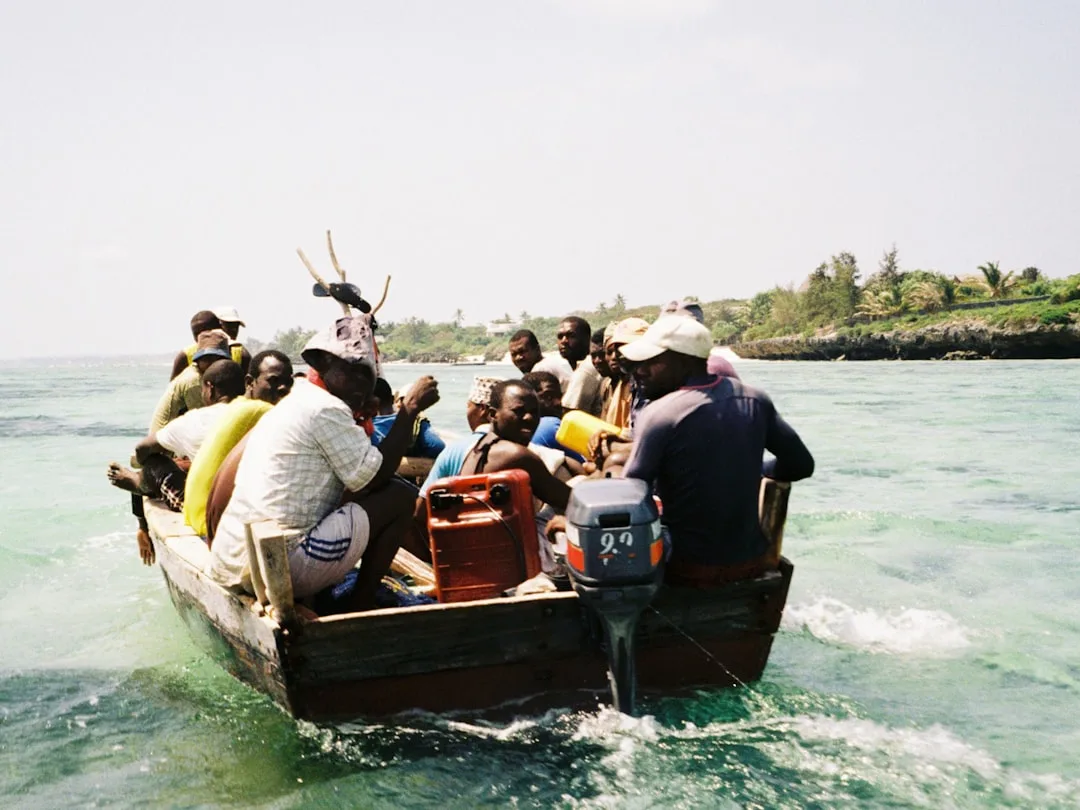
The fast ferry (Azam Marine, Kilimanjaro Fast Ferries) from the Kivukoni ferry terminal crosses to Zanzibar’s Stone Town in 1.5–2 hours. Cost: $35–50 one way. Multiple departures daily (6 AM–4 PM). Book at least a day in advance; the 7 AM and 9 AM ferries fill up.
The crossing is open ocean — the Zanzibar Channel can be rough, especially December–March. Sea sickness is common; take medication if susceptible.
By air: Precision Air and Coastal Aviation fly Dar es Salaam to Zanzibar in 25 minutes (multiple daily). Fares from $50–80 one way. Better option for anxious sailors.
Getting Around Dar
Bajaj (auto-rickshaw): For short urban trips, affordable and maneuverable in traffic. Negotiate fare before departure.
Dala-dala: Shared minibus, the city’s public transport — cheap (TZS 400–600), slow, and local. Useful for understanding the city; not efficient for tourists with limited time.
Grab/Bolt: Ride-hailing apps work well in Dar es Salaam — fair metered pricing, avoids taxi negotiation. Recommended for airport transfers.
Traffic: Dar es Salaam has some of the worst traffic in East Africa. Rush hours (7–9:30 AM, 4:30–8 PM) can double journey times. Plan accordingly.
Practical Notes
Accommodation: Business hotels in the city center (USD 80–200/night) and beach hotels at Msasani and Oyster Bay on the peninsula (USD 120–300/night). Budget guesthouses in the city center from USD 30–60.
Safety: Standard urban precautions — don’t display valuables, use licensed taxis at night, avoid deserted areas after dark. Dar is safer than its East African peer cities by most measures but petty theft exists.
Climate: Tropical year-round — hot (28–35°C) and humid. Long rains March–May; short rains November–December.
Plan your trip