Luxor and Aswan: Egypt's Ancient Cities from Cairo
Plan your trip
Upper Egypt — the ancient heartland 500–900 km south of Cairo along the Nile — contains the highest concentration of monumental ancient sites in the world. Luxor (ancient Thebes, capital of the New Kingdom pharaohs) and Aswan (the ancient southern border of Egypt) together represent a second essential Egypt experience, distinct from the Pyramids and Cairo.
The Valley of the Kings alone contains 63 royal tombs. Karnak Temple is the largest religious complex ever built. The temples of Abu Simbel, carved directly into a Nubian cliff by Ramses II, were relocated block by block in the 1960s to save them from the rising waters of Lake Nasser. None of this is reachable as a day trip from Cairo — but 2–3 days in the south transforms a Cairo visit into a complete Egypt experience.
Getting There
Luxor
By flight (recommended): EgyptAir and Nile Air operate multiple daily flights from Cairo (CAI) to Luxor (LXR) — approximately 1 hour. Fares: $50–100 USD each way if booked in advance; higher last-minute.
By overnight train: Luxury sleeping cars (Watania Sleeping Trains) depart Cairo’s Ramses Station at ~8–10 PM, arriving Luxor at ~6–8 AM. Comfortable compartments with dinner and breakfast service. Price: ~$50–80 USD per person one-way. Book at wataniasleepingtrains.com. This is the most atmospheric way to travel.
By day train: Express trains run from Ramses Station — approximately 10 hours. Economy class: 200–400 EGP; first class: 300–600 EGP. Long but functional.
Aswan
Aswan is 220 km south of Luxor, 880 km from Cairo.
By flight: Cairo to Aswan (ASW) — 1.5 hours. EgyptAir daily.
By overnight train: Cairo to Aswan continues beyond Luxor — approximately 13 hours total.
By Nile cruise between Luxor and Aswan: The classic 4–7 day cruise covers both cities and the temples between them (Edfu, Kom Ombo). A 3-night cruise departs Luxor Monday and Thursday; departs Aswan Monday and Thursday. This is the most iconic Egypt experience for visitors with a week.
Luxor: What to See
Luxor divides into the East Bank (temples built to honor the living and the gods) and the West Bank (tombs built for the dead, built in the desert cliff facing the setting sun).
East Bank
Luxor Temple: Built by Amenhotep III (14th century BC) and expanded by Ramses II. Located in central Luxor along the Nile — dramatically lit at night. The entrance avenue of sphinxes (connected to Karnak by a 3-km boulevard of ram-headed sphinxes, now largely excavated) begins here.
Karnak Temple Complex: 2 km north of Luxor Temple — the largest religious complex ever constructed, built and expanded over 2,000 years by successive pharaohs. The Hypostyle Hall (134 columns, each up to 23 meters tall, carved with reliefs) is one of the most overwhelming architectural experiences in Egypt. Allow 2–3 hours minimum.
West Bank
Valley of the Kings: The royal necropolis where 63 tombs of pharaohs and nobles were carved into the limestone cliffs of the Theban Hills from 1550–1070 BC. The standard entrance ticket includes access to 3 tombs (rotate regularly — check which are open). Tutankhamun’s tomb requires an additional ticket (~300 EGP) — smaller than most but historically unique as the only intact royal tomb found.
Temple of Hatshepsut (Deir el-Bahari): The mortuary temple of Egypt’s most successful female pharaoh, built in three colonnaded terraces against a dramatic cliff face. One of the most architecturally sophisticated buildings in ancient Egypt.
Valley of the Queens and Workers’ Village: The Valley of the Queens contains the tombs of royal wives (including Nefertari, wife of Ramses II — entrance fees are high but the painted reliefs are among the best preserved in Egypt). The Workers’ Village (Deir el-Medina) is where the craftsmen who built the tombs lived — their own tombs are smaller but sometimes more vividly painted.
Colossi of Memnon: Two 18-meter stone statues of Amenhotep III standing alone in an open field — freestanding colossi once flanking the entrance of a now-vanished mortuary temple. Visible from the road between sites.
Aswan: What to See
Aswan is smaller and more relaxed than Luxor — the Nile widens here around granite islands and the landscape becomes more African. The Nubian culture (distinct from Arab Egyptian culture in language, architecture, and tradition) is more visible.
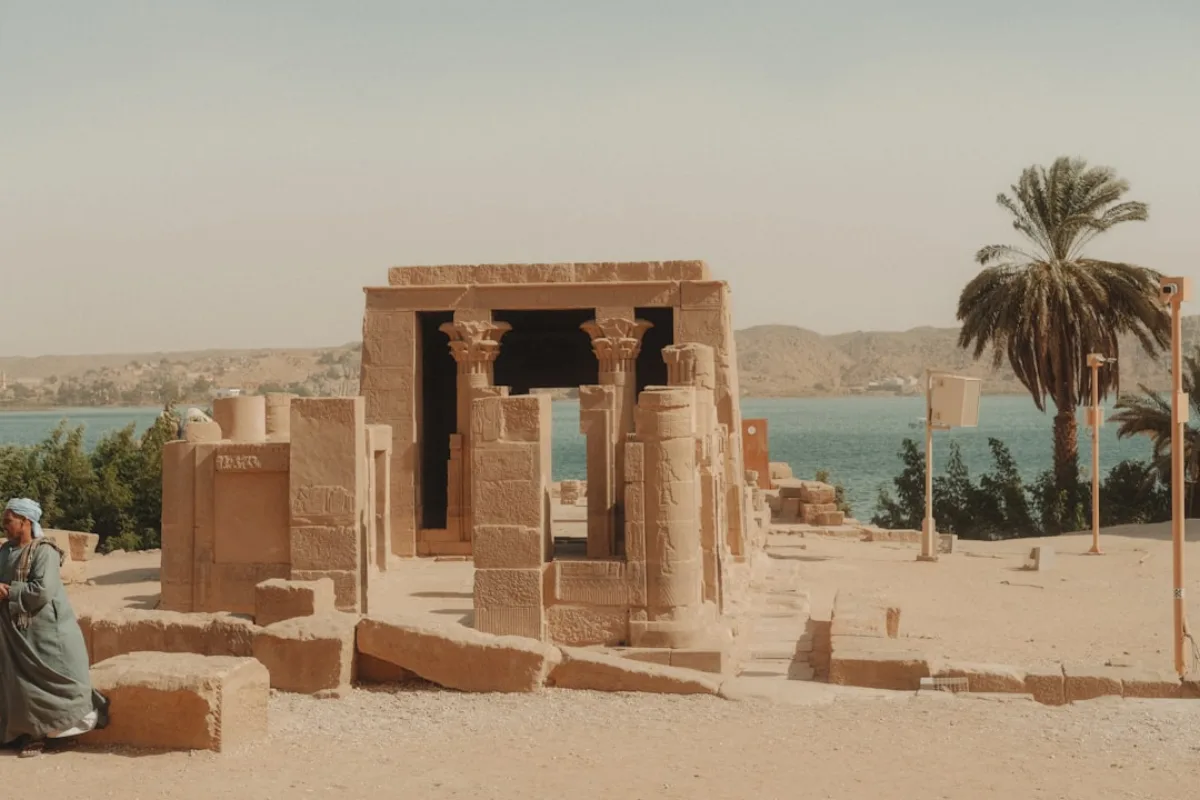
Temple of Philae: The most beautiful temple complex accessible from Aswan — dedicated to Isis, built on an island. Relocated stone by stone in the 1970s when the High Dam flooded its original location. Reached by motorboat from the Aswan dock; the night illumination show is one of the best in Egypt.
High Dam (Sadd el-Ali): Built 1960–1970 with Soviet assistance, the High Dam created Lake Nasser (the world’s largest man-made reservoir) and transformed Egyptian agriculture. The dam itself is a concrete structure worth seeing for its scale and the historical context — the flooding of Nubia it caused displaced 100,000 people and submerged dozens of ancient temples (many were relocated, including Abu Simbel and Philae).
Nubian Villages: The colorful painted houses of Nubian villages on the west bank of the Nile near Aswan are a distinctly different visual environment from the rest of Egypt — ochre, turquoise, and cobalt blue facades with intricate geometric patterns.
Unfinished Obelisk: A massive obelisk abandoned in a granite quarry when a crack appeared — the largest obelisk ever attempted (42 meters, 1,200 tons). Gives the clearest insight into how the ancient Egyptians carved and transported these structures.
Abu Simbel (from Aswan)
3.5 hours south of Aswan by road, on the border with Sudan — the two massive rock-cut temples of Ramses II and his wife Nefertari, relocated to their current hilltop position in a UNESCO-coordinated salvage operation in 1968.
The Great Temple: four 20-meter seated statues of Ramses II at the entrance, followed by carved halls leading to the innermost sanctuary — aligned so that twice a year, on February 22 and October 22 (Ramses’ birthday and coronation day), the rising sun illuminates the four figures in the innermost chamber.
Getting there from Aswan: Organized tour by road (6 AM departure, back by 1 PM, ~$40–60 per person including transport) or short flight (Aswan to Abu Simbel, 45 minutes, ~$80 USD).
How to Combine Luxor and Aswan with Cairo
Minimum practical trip: 3 days (Luxor + Aswan):
- Day 1: Fly Cairo–Luxor. Karnak Temple, Luxor Temple.
- Day 2: West Bank (Valley of the Kings, Hatshepsut Temple). Evening: fly Luxor–Aswan.
- Day 3: Temple of Philae, Unfinished Obelisk. Fly Aswan–Cairo.
Ideal: 5–7 days with a Nile cruise:
- Day 1: Fly Cairo–Aswan.
- Days 2–5: 4-night cruise from Aswan to Luxor, visiting Kom Ombo, Edfu, and West Bank temples.
- Day 6: East Bank Luxor (Karnak).
- Day 7: Fly Luxor–Cairo.
Plan your trip