Greenland as a Coolcation: The Arctic Escape from Summer Heat
Plan your trip
The summer of 2025 recorded the hottest temperatures ever measured in several European cities. Travelers who booked beach holidays in Mediterranean destinations reported heat that made outdoor activity between 10 AM and 5 PM effectively impossible. Meanwhile, visitors to Nuuk, Ilulissat, and the Greenlandic coast spent July in 8–12°C temperatures under 20+ hours of daylight, hiking fjord ridges, watching humpback whales breach from boat decks, and sleeping — or failing to sleep — in the never-dark midnight sun.
This is the coolcation: choosing a cold-climate destination during traditionally warm-season travel. And Greenland is the most extreme version of it available.
The Greenlandic Summer
Temperature reality: July in Nuuk averages 7–10°C. The warmest recorded summer day in Greenlandic history barely exceeds 20°C. The wind from the Labrador Sea adds a chill factor that makes 10°C feel cooler. You will not need sun protection in the Mediterranean sense; you will need a windproof layer in July.
Daylight: Above the Arctic Circle (which Ilulissat is), the sun doesn’t set between late May and late July. In Nuuk (below the Circle), the sun sets briefly — for about 2–3 hours near midsummer — but it never truly gets dark. Hiking at midnight under an orange-pink Arctic sky is a genuinely disorienting and beautiful experience.
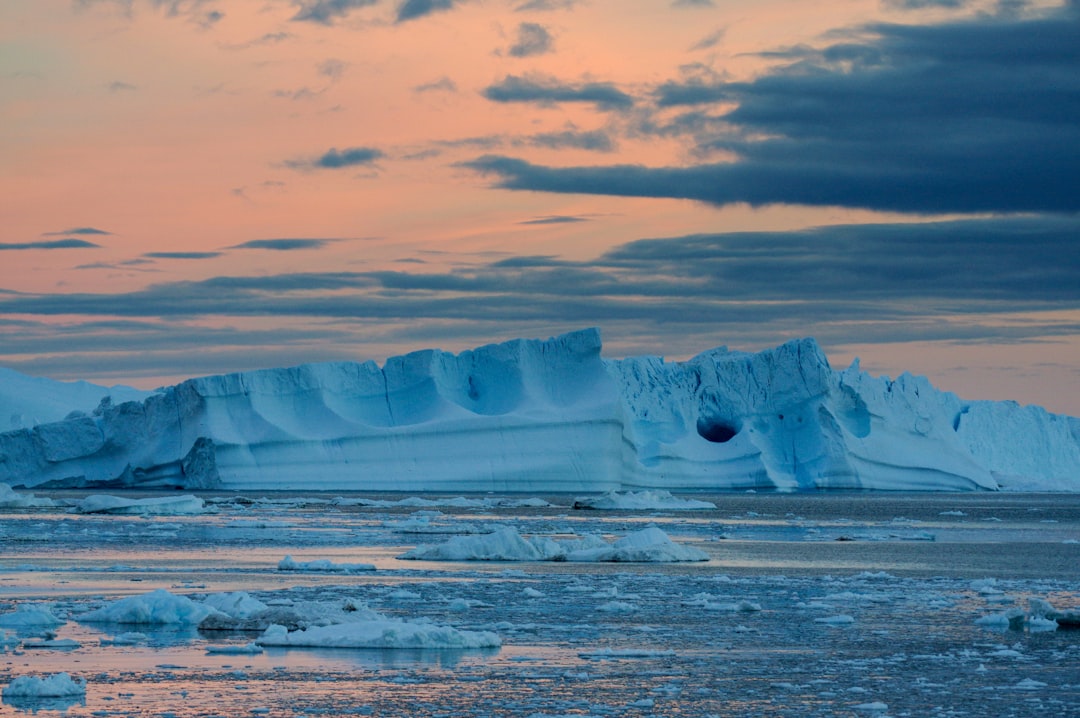
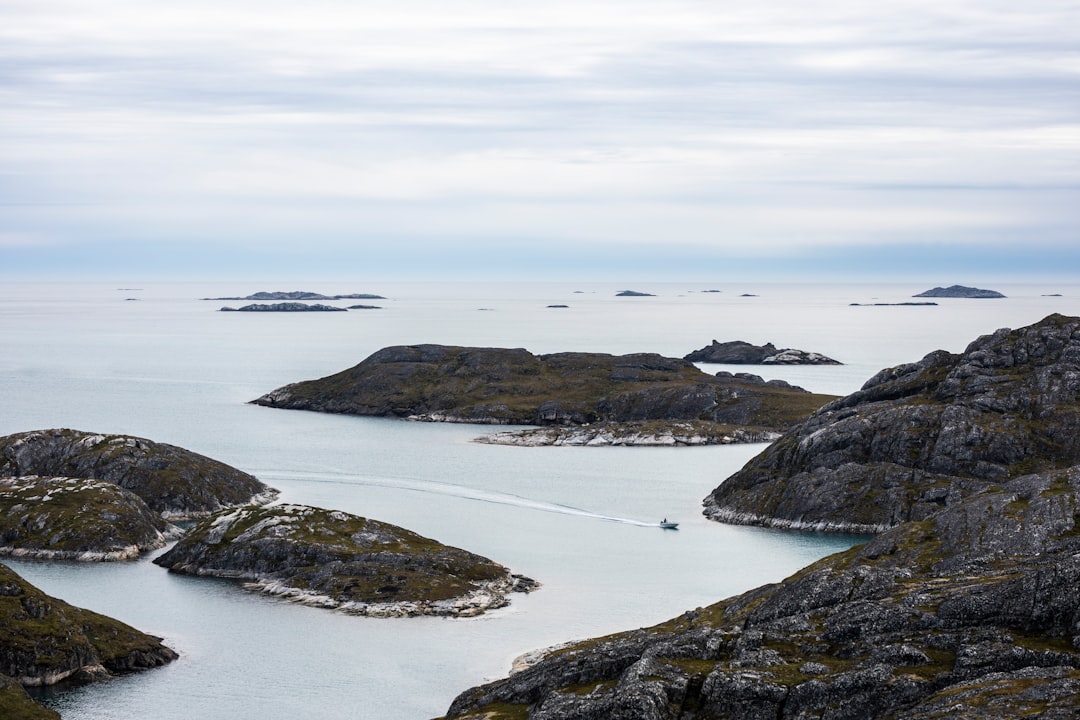
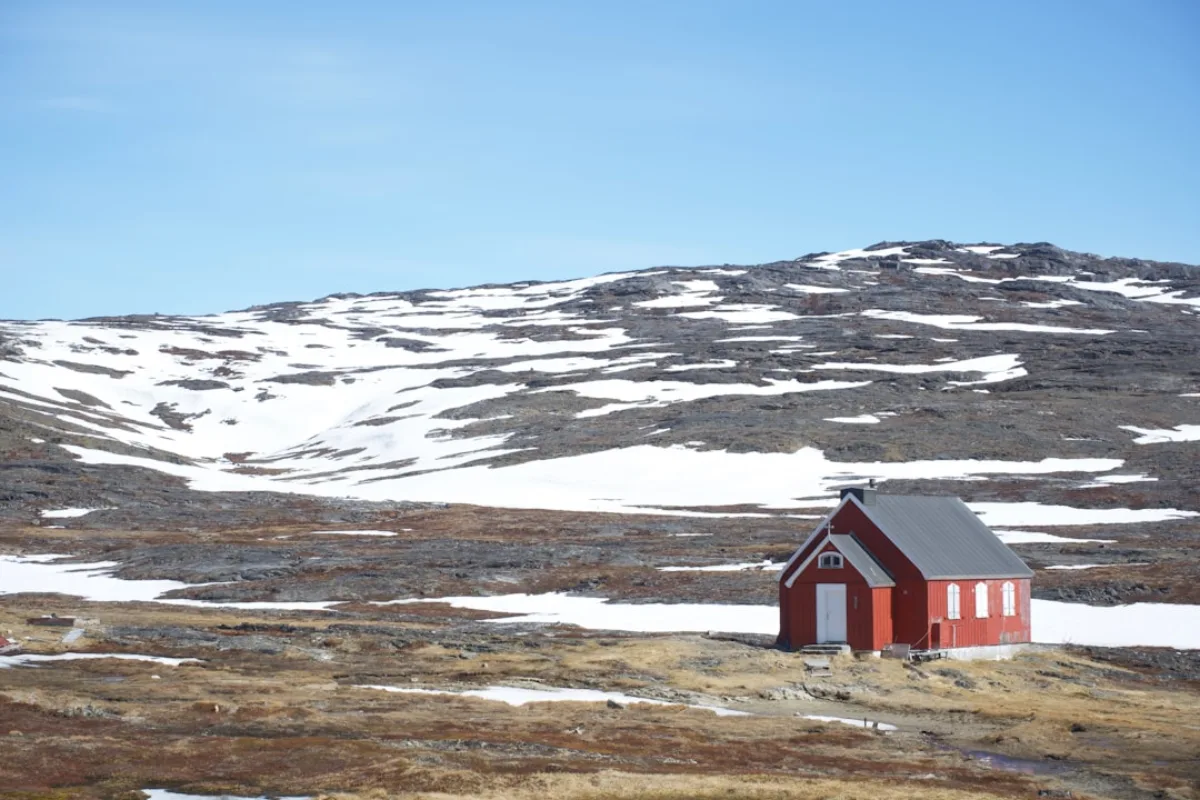
The landscape: Summer Greenland is not the white frozen expanse of winter imagination. The ice-free coastal strip blooms with Arctic wildflowers — purple saxifrage, Arctic poppy, cottongrass. The fjords are clear teal-blue. Icebergs calved from glaciers drift through the water in every shade of white and blue. Reindeer and musk oxen graze near hiking trails. It is, by any measure, one of the most visually extraordinary landscapes accessible to visitors.
The Coolcation Activities
Hiking
The Nuuk and Ilulissat areas have developed trail networks for summer hiking. No technical experience required for most routes; fitness for several hours of uphill terrain is useful.
Nuuk:
- Sermitsiaq trail: The iconic 1,210-meter peak. 5–7 hours round trip. Views of the entire fjord and, on clear days, the Ice Sheet to the east.
- Quassussuaq (Little Sermitsiaq): Shorter version of the same area. 2–3 hours.
- Ukkusissat: Coastal headland walk with fjord views, 1.5 hours.
Ilulissat:
- Icefjord boardwalk: A flat, accessible walk along the edge of the Ilulissat Icefjord to viewing platforms overlooking the icebergs. The Kangia viewpoint at the end of the main trail offers the closest view of icebergs directly at the fjord edge.
- Sermermiut: The ruins of a Thule (ancestral Inuit) settlement at the edge of the icefjord. Archaeological site with information boards; the location against the iceberg backdrop is remarkable.
Whale Watching
Disko Bay (Ilulissat area): One of the world’s most productive whale-watching areas. Humpback whales follow the fish and krill concentrated by the cold nutrient-rich waters around the icefjord. Fin whales, minke whales, and occasionally blue whales are also present. Boat tours from Ilulissat harbor: 3–4 hours, 700–1,500 DKK per person.
Nuuk Fjord: Humpback and minke whales throughout the summer fjord system. Day boat trips from Nuuk harbor.
Iceberg Kayaking
Several operators in both Nuuk and Ilulissat offer guided sea kayaking among icebergs. Kayaking among house-sized ice formations on calm water is an experience that photographs inadequately — the scale is only comprehensible when you’re 10 meters away from an iceberg wall. Half-day and full-day trips available. Prior kayaking experience recommended but not required for guided flat-water trips.
The Ice Sheet
Accessible from Kangerlussuaq, the edge of the Greenland Ice Sheet is 25 km from the small settlement by road. The Ice Sheet covers 1.7 million km² — roughly three times the size of Texas — and is visible from the edge as a flat white horizon extending to infinity. Several operators offer guided walks onto the Ice Sheet edge with crampons and safety briefing.
Practical Planning for a Summer Coolcation
When: June–August for summer activities. The shoulder weeks of late May and early September offer fewer crowds and lower accommodation pressure, with conditions only slightly less optimal.
Where to base: Nuuk for culture + nature combination. Ilulissat for icebergs + whale watching. Kangerlussuaq for Ice Sheet access + northern lights in autumn.
How long: A minimum of 5 days to cover Nuuk properly; 8–10 days to include Ilulissat and varied activities. Greenland is not a 2-day layover destination.
What to pack:
- Waterproof jacket and trousers (wind and rain are constant possibilities)
- Insulating mid-layer (fleece or down)
- Hiking boots (waterproof, ankle support)
- Sun protection (the Arctic sun is intense, especially reflected off water and ice)
- Sunglasses (UV exposure is high)
- Sleep mask (the midnight sun makes sleeping difficult without one)
Budget: Greenland is expensive. A realistic daily budget for accommodation, meals, and one guided activity: 2,500–4,000 DKK (~€330–530). Self-catering guesthouses reduce this significantly.
The Honest Case for It
Greenland demands more — more money, more planning, more physical preparation — than a Mediterranean beach holiday. The reward is proportional: a landscape that most people will never see, a culture (Kalaallisut/Inuit) that is genuinely distinct from anything in Europe or North America, and a scale of nature that recalibrates expectations about what “travel” can mean.
The coolcation framing is accurate as far as it goes. But the better reason to go to Greenland is that it is extraordinary, and that the window of easy access — before the infrastructure of mass tourism arrives — is finite.
Plan your trip