Himeji Castle: Japan's Greatest Feudal Fortress
Plan your trip
Of Japan’s twelve surviving original castle keeps — the wooden, unreconstructed tower buildings that date from before the Meiji era — Himeji’s is the largest, the most complex, and the most completely preserved. Where most famous Japanese castles are concrete reconstructions built in the 1950s–1970s (Osaka, Nagoya, Kumamoto), Himeji’s seven main buildings are original 1609 construction: the white plaster, the wooden frames, the stone base, the defensive systems designed for actual military use.
The comparison between Himeji and a reconstructed castle is the difference between standing in a 400-year-old building and standing in a period-accurate building made last year. Both are visually similar. Only one has the quality of the original.
Getting There
From Osaka (Shin-Osaka): JR Shinkansen (Hikari or Nozomi) to Himeji (40–50 minutes, ¥2,310). The most direct option.
From Kyoto: Shinkansen to Himeji (60 minutes, ¥3,750), or JR Tokaido-Sanyo Line rapid (90 minutes, ¥1,520). JR Pass valid for both.
From Hiroshima: Shinkansen to Himeji (40 minutes, ¥3,580).
From Himeji Station: The castle is directly visible from the station’s north exit, 800 meters away on a straight boulevard. Walk 15 minutes or take a bus.
The Castle Complex
Scale: The main keep (tenshukaku) stands 46.4 meters from ground to roof — five exterior stories, seven interior stories (mezzanines within the larger floors). Three smaller keeps (ko-tenshu) connect to the main keep by covered galleries (watariyagura), forming a compound of seven interconnected buildings on the main fortification.
Construction: The main tower was built (rebuilt on an earlier foundation) in 1609 by the domain lord Honda Tadamasa. The white plaster (shikkui) coating the exterior walls serves both aesthetic and fire-protective purposes — the plaster is several centimeters thick and would resist fire long enough for defenders to retreat. The system worked: the castle survived multiple fires in the surrounding city; the buildings themselves were never touched.
Defensive design: Himeji’s approach to the main keep is a labyrinth. The path from the outer gate to the main keep is never straight — it spirals, doubles back, and forces approaching armies to navigate increasingly narrow passages under fire from above. The stone walls along the path contain multiple ishiotoshi (stone drop openings) and sama (firing holes for guns and arrows). The entire approach is designed as a killing ground for anyone attempting to reach the main keep by force.
The Ishi-beshi (stone-dropping) platforms project from the lower levels of the main tower — the trap-door platforms from which stones, hot water, and other materials would be dropped on attackers at the base of the walls.
The interior: The wooden interior of the main keep is almost completely original. The beams (some 78 cm in diameter, the main pillars extending the full height of the building) show the aging and settlement of 400 years. The floors are polished by generations of foot traffic. The weapons storage areas — the sword racks, the spear racks, the storage hooks — are still in place.
The top floor: The small shrine at the top of the main keep (Okiku no ido — the well associated with the ghost story Banchō Sarayashiki in which a servant was killed and thrown into the castle well) is the terminus. The view from the top windows encompasses the city grid below and the plains extending to the sea in the distance.
Cherry Blossom Season
Himeji Castle is one of Japan’s most famous cherry blossom sites — the castle’s white walls and the approximately 1,000 cherry trees in the castle grounds create the combination that appears on every sakura season promotion for Japan.
When: Late March to early April (varies by year; the standard Kyoto/Osaka bloom dates apply). The trees around the main approach (Himeji-jo Midori no Corridor) and the Sannomaru Plaza bloom simultaneously.
Night illumination: During cherry blossom season, the castle is illuminated at night from below — the white plaster glowing against the dark sky with the cherry branches in the foreground is one of the most reproduced images of Japan. The illumination runs approximately 6pm–10pm during peak bloom.
Crowds: The castle reaches significant crowding during cherry blossom peak (queues for the main keep entrance of 1–3 hours are common). Arriving at opening (9am) or after 4pm reduces the wait significantly.
Koko-en Garden
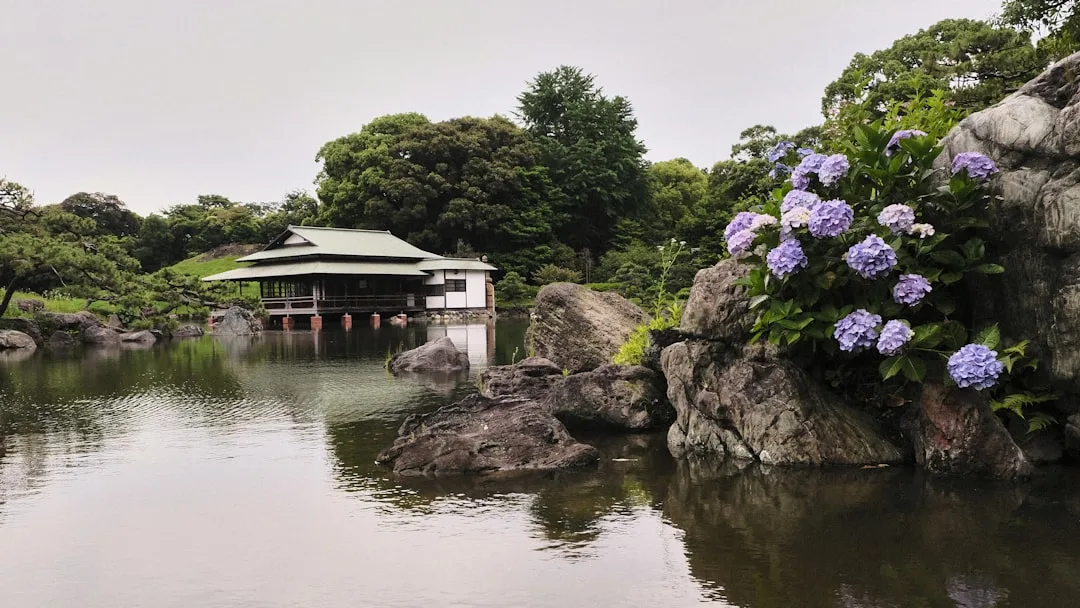
Adjacent to the castle on the west side: a traditional Japanese garden constructed in 1992 on the site of former samurai residences. Nine separate garden sections (niwa) in different styles — tea garden, pond garden, bamboo garden, and others — connected by covered walkways.
Koko-en does not have the historical depth of the castle (it was built in 1992) but the landscape design is skilled and the combination of the castle visible above the garden walls from multiple viewpoints adds to the experience. In autumn, the maple trees in the garden are excellent.
Combined ticket: Castle (¥1,000) + Koko-en (¥310) combined ticket available (¥1,050).
Himeyama Zoological Garden
The zoo immediately west of the castle grounds — unexpectedly good for a municipal zoo associated with a castle district. The zoo has operated since 1911 and contains bears, giraffes, and a hippopotamus. Admission ¥250. Useful if visiting with children who need a break from fortress architecture.
Engyo-ji Temple
45 minutes west of Himeji on Mount Shosha (ropeway from Shoshazan Ropeway station, 15 minutes from Himeji Station by bus): a mountaintop temple complex founded in 966, mostly original Edo-period buildings set in dense cedar forest. Used as a filming location for The Last Samurai (2003) and multiple Japanese period dramas.
The approach from the ropeway through forest to the temple buildings is particularly atmospheric in autumn (October–November) and early spring (before crowds).
Practical Notes
Opening hours: 9am–5pm (last entry 4pm); extended hours during cherry blossom and autumn seasons (until 6pm some days — check the castle website).
Time needed: 1.5–2.5 hours for the castle interior. Additional 45 minutes for Koko-en. Allow 3.5 hours total for a comfortable visit.
Renovations: The castle underwent a 10-year restoration (Heisei restoration, 2000–2015) that cleaned and restored the plaster to its original brilliant white. The white should fade to ivory over the coming decades; the current generation is seeing the castle at unusual whiteness.
Combined with Osaka/Kyoto: Himeji is most efficiently visited as a Shinkansen stop — leave Osaka or Kyoto by 9am, visit the castle, and return in the afternoon. The Shinkansen travel time from Shin-Osaka is 40 minutes each way.
Himeji is the answer to the question Japanese castle visitors don’t always know they’re asking: what would it be like if the actual original building had survived? The answer is this building, these beams, this view from the top floor, this sense of standing inside something that was built for a specific military purpose by specific people in 1609 and is still standing without major intervention. That experience is available at Himeji and nowhere else in Japan at this scale.
Plan your trip