Islamabad Travel Guide: Pakistan's Green Capital
Plan your trip
Islamabad is a planned capital city — purpose-built from 1960 onward on the Pothohar Plateau at the foot of the Margalla Hills, replacing Karachi as the national capital in 1966. Like Astana or Canberra, it has a deliberate spatial quality: wide tree-lined boulevards, a sector grid system, abundant greenery, and a quiet that distinguishes it dramatically from Karachi, Lahore, or the adjacent old city of Rawalpindi (Pindi). It is, by Pakistani standards, an extremely easy city to navigate — clean, organized, and with less of the sensory intensity that defines most of the subcontinent.
Most international visitors to Pakistan pass through Islamabad’s Benazir Bhutto International Airport. It’s worth 2–3 days on its own terms, and it’s the logical northern gateway to the Karakoram Highway and the mountains of Gilgit-Baltistan.
The Faisal Mosque
Shah Faisal Avenue | Free entry | Open to non-Muslim visitors outside prayer times
The national mosque of Pakistan — designed by Turkish architect Vedat Dalokay, completed 1986, funded by Saudi Arabia’s King Faisal (whose name it bears). The architectural concept is unusual: an eight-sided tent-shaped concrete shell instead of the traditional dome, flanked by four 88-meter minarets. The interior accommodates 74,000 worshippers. The surrounding gardens, with the Margalla Hills behind, make it one of the more beautifully sited religious buildings in Asia.
The mosque is visible from much of Islamabad — set against the green hillside, the tent shape and minarets are immediately recognizable as the city’s defining image.
Visiting: Modest dress required. Separate entrances for men and women. The surrounding marble esplanade is accessible at all times; the interior during off-prayer hours. Guides are available on-site (optional, expected tip).
The Margalla Hills
National Park immediately north of Islamabad | Trails accessible from multiple trailheads
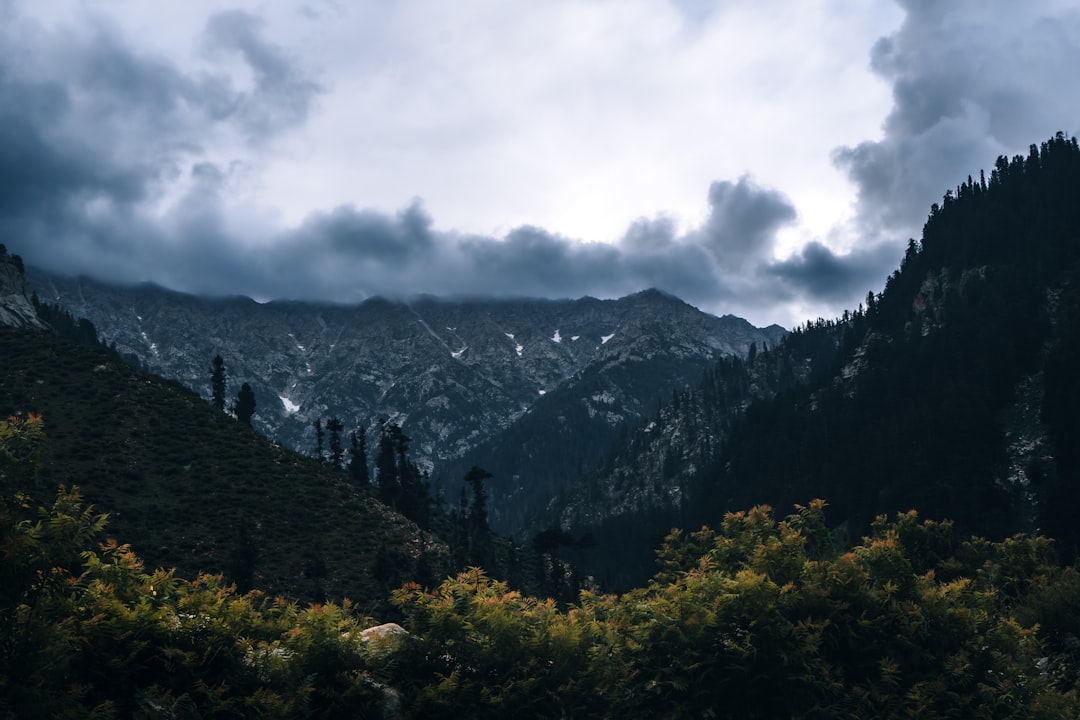
The Margalla Hills form the immediate backdrop to Islamabad — a forested ridge of the Himalayan foothills rising to about 1,600m. A network of hiking trails (Trail 3, Trail 5, Trail 6 being the most used) starts from the northern neighborhoods of the city and climbs through pine and scrub forest to viewpoints over the city and the plains.
Trail 3 (the most popular): A 4 km paved and dirt path from the F-6 Markaz trailhead to the Pir Sohawa road. Largely shaded, suitable for morning walks. Monkeys (rhesus macaques) are present along the trail and at the picnic spots — bold and accustomed to being fed (don’t).
Trail 5: A steeper, more rural trail reaching a ridge viewpoint at 1,200m. The best views over Islamabad are from this ridge in clear conditions.
Daman-e-Koh: A viewpoint and park at 790m — accessible by road (or steep stairs). The classic Islamabad panorama shot. Restaurant and viewpoint facilities operated by PTDC. Evening is crowded with families; morning is quieter and clearer.
Rawalpindi (Pindi)
Adjacent to Islamabad | 20 minutes by Uber/Careem
The original city — a cantonment and trading town that predates Islamabad by centuries. Where Islamabad is planned and modern, Rawalpindi is organic, dense, and chaotic in the specifically South Asian way. The contrast between the two adjacent cities is one of the most stark urban juxtapositions in Pakistan.
Raja Bazaar: The main bazaar of Rawalpindi — a large, multi-section covered and open market selling fabric, spices, electronics, kitchenware, and food. The street food around Raja Bazaar (particularly the nihari and halwa puri breakfast stalls) is excellent.
Liaquat Bagh: A public park associated with two political assassinations (Liaquat Ali Khan, 1951, and Benazir Bhutto, 2007, both killed at events in this park). The site has historical weight disproportionate to its current condition as a public park.
Saddar Bazaar: The British cantonment era commercial center — some colonial-era architecture still visible, shoe shops, tailors, and the chaotic Iqbal Market. More organized than Raja Bazaar.
Pakistan Monument
Shakarparian Hills, Islamabad | Open daily | Entry: free
A star-shaped monument completed 2007, representing Pakistan’s four provinces and three territories. The petals of the star form an open enclosure with historical friezes depicting Pakistan’s history from ancient civilization through independence. The viewpoint from the monument looks over Islamabad toward the Margalla Hills. The Pakistan Monument Museum is below (entry: PKR 50).
Eating
Islamabad dining: The city has a more diverse and internationally-oriented restaurant scene than most Pakistani cities — a function of the diplomatic community, international NGO presence, and the upper-middle-class government-employee population.
F-7 Markaz and F-11 Markaz: The main restaurant concentrations. Burnished-wood cafes, upscale Pakistani restaurants, and international food.
Street food: The dhaba culture is not as developed in Islamabad as in Lahore or Karachi — the city’s planning ethos discourages street vendors. Rawalpindi compensates fully. The breakfast scene (nihari, halwa puri, paratha omelette from street carts) is better in Pindi than Islamabad.
Savour Restaurant (multiple locations): The most prominent upscale Pakistani restaurant chain; reliable quality for traditional dishes in a clean setting. Good for first-night orientation to Pakistani food.
Gateway to the North
Islamabad is the departure point for the Karakoram Highway and all flights to Gilgit-Baltistan:
NATCO Bus (Rawalpindi to Gilgit): Departs from Pir Wadhai Bus Terminal in Rawalpindi. Overnight journey (~18–20 hours); arrive early for tickets. The cheapest way north.
Flights to Gilgit (PJG) and Skardu (KDU): Multiple PIA and smaller carrier flights daily, weather permitting. The flights are spectacular — the approach to Gilgit between the Karakoram peaks, and the Skardu approach through the Indus gorge, are among the world’s most dramatic commercial flight routes. Seat preference: left side southbound, right side northbound for mountain views.
Important: Mountain flights are frequently cancelled due to weather (cloud visibility requirements are strict on these routes). Budget extra days in Islamabad at both ends of a northern Pakistan trip as weather buffer.
Practical Notes
Safety: Islamabad is among Pakistan’s safest cities. The diplomatic enclave security protocols and the cantonment culture produce a low street crime environment. Standard urban awareness applies.
Getting around: Ride-hailing apps (Careem, inDriver) work well throughout the city. The Islamabad Metro Bus serves the main corridor from Rawalpindi through the city. Taxis negotiated on the street require firm price-setting before departure.
Costs: Islamabad is moderately priced by Pakistani standards — somewhat more expensive than other cities due to the professional-class economy. Mid-range hotel: PKR 8,000–20,000/night. Restaurant dinner: PKR 1,500–4,000/person.
Plan your trip