Bangkok Neighborhoods: Where to Stay & How the City Is Built
Plan your trip
Bangkok has no single center — it is a city of districts, each with its own character, transport connections, and function. Understanding the geography before arrival saves significant time: the BTS Skytrain covers two corridors (Sukhumvit and Silom/Sathorn), and being based on or near these lines puts most of the city within 15–30 minutes. Being based off the lines, in the old city or Chinatown, means every journey by road.
Rattanakosin (Old City)
The historic island created by King Rama I in 1782 when he established Bangkok as the new capital. The Chao Phraya river forms the western boundary; the canal (Khlong Rop Krung) forms the eastern boundary. The Grand Palace, Wat Pho, Sanam Luang, the National Museum, and the Democracy Monument are all within walking distance of each other here.
Who stays here: First-time visitors who want to be near the temples; backpackers in the Khao San Road area (Banglamphu, just north of the historic island). The accommodation ranges from backpacker guesthouses (฿300–600/night) to the upscale Arun Residence opposite Wat Arun.
The reality: Khao San Road is simultaneously a useful base and a bubble — a self-contained tourist world that has limited contact with actual Bangkok. The street itself is bars, travel agents, massage parlors, and tailors. Phra Athit Road (along the river, 200 meters north) is the local university neighborhood version — street food, small bars, and Thais.
Silom / Sathorn
Bangkok’s main business district — the skyscraper corridor that runs from the Chao Phraya to the expressway, with the BTS connecting it south to north. Lumphini Park (74 hectares) is at the northern end. Silom Road has banks, offices, and the Patpong night market at its center.
Who stays here: Business travelers, upscale tourists, anyone who wants easy access to the park or the MRT connection to Hua Lamphong (train station). The Banyan Tree, Lebua (Sky Bar), and Dusit Thani are here.
Food: Silom has Soi 20 and Soi 22 for street food at lunch — office workers’ noodle shops and rice plate vendors. In the evenings, the Silom Village complex and Silom Road itself have tourist-oriented Thai restaurants.
Sukhumvit
Bangkok’s longest and most international street — Sukhumvit Road runs east from Asok BTS station for 15 km, with sois (side streets) numbered from Soi 1 to Soi 101. The character changes along the length:
Lower Sukhumvit (Soi 1–21): Japanese restaurants (the highest concentration outside Japan), international hotels, and Nana Plaza (red-light district). Touristy but functional.
Mid Sukhumvit (Soi 21–49): Asok and Phrom Phong — shopping malls (Terminal 21, EmQuartier, Emporium), the most international restaurant selection in Bangkok, and the Benjasiri Park.
Thonglor (Soi 55) and Ekkamai (Soi 63): Bangkok’s current main dining and nightlife destinations for the local middle class and expat community. Independent restaurants, craft cocktail bars, rooftop venues, and the highest density of quality coffee shops in the city.
On Nut and Udomsuk (Soi 77–101): Residential, cheaper accommodation, and genuine local street food markets. Useful for longer stays on a budget.
Chinatown (Yaowarat)
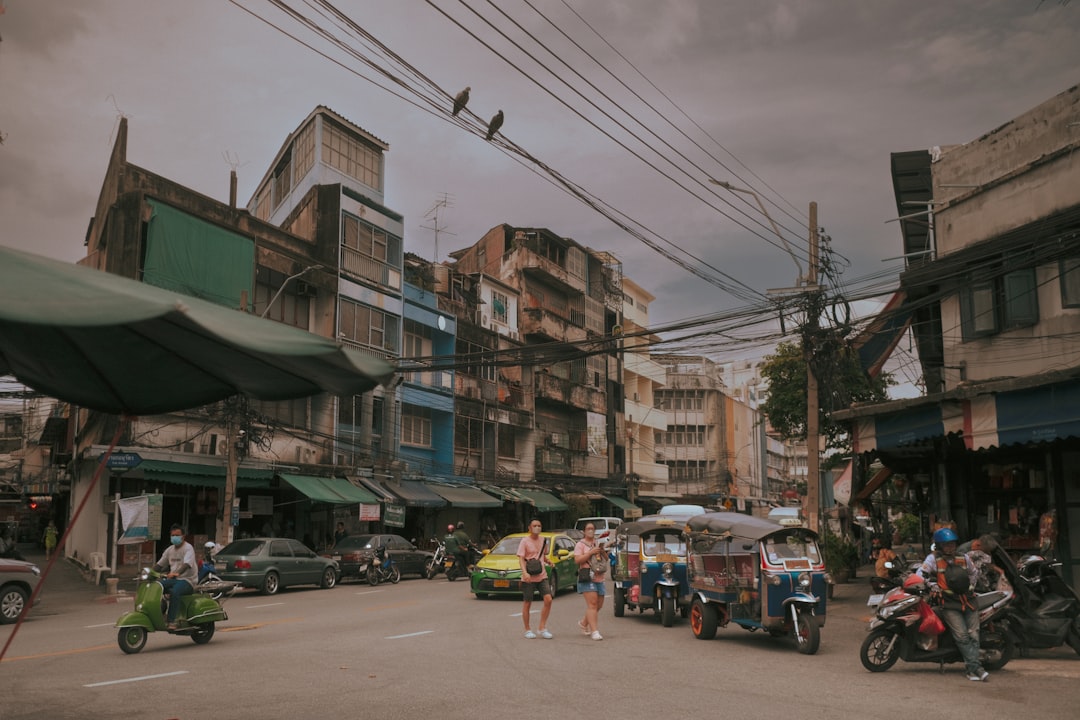
The Chinese quarter, established in the late 18th century — a dense grid of lanes between Yaowarat Road (the main artery) and the river, packed with gold shops, dried goods merchants, herbal medicine suppliers, and the street food that makes it worth the visit.
For food: Yaowarat comes alive after 6 PM — the sidewalk grills, roast duck vendors, and seafood restaurants that spill onto the pavement. The neighborhood around Trok Itsaranuphap (a covered market lane) has some of the most authentic Chinese-Thai street food in the city.
Getting there: MRT to Hua Lamphong; from there it’s a 10-minute walk or ฿60 motorcycle taxi. Alternatively, the Chao Phraya Express Boat to Ratchawong Pier.
Ari
A low-rise residential neighborhood north of Chatuchak, connected by BTS Ari station — the current destination for independent restaurants, specialty coffee, and food concepts that don’t exist elsewhere in Bangkok. Less polished than Thonglor, more locals, lower prices.
The main restaurant street (Soi Ari 1) has Japanese curry, Vietnamese, plant-based Thai, and everything in between. Saturday morning market in the Ari parking lot area.
Dusit / Samsen
North of the old city — the royal administrative district with wide European-inspired boulevards, Vimanmek Teak Mansion (the world’s largest golden teak building, 1901), the Dusit Zoo, and the Ananta Samakhom Throne Hall. Less visited than the old city but genuine; the Samsen neighborhood (running north from the old city along the river) has excellent local restaurants and the best river views in Bangkok that don’t require a hotel rooftop.
Practical Notes
- Best base for first-time visitors: Sukhumvit (Asok–Phrom Phong) for transport and food variety; Rattanakosin for temple access
- Transport: BTS-accessible neighborhoods are dramatically easier to navigate. Chinatown, the old city, and Dusit require road transport — Grab is the easiest solution
- Accommodation pricing: Rattanakosin (backpacker area) ฿300–800/night. Sukhumvit mid-range ฿1,200–2,500. Silom business hotels ฿2,000–5,000
Plan your trip