Ise Jingu: Japan's Most Sacred Shrine
Plan your trip
Ise Jingu is not one shrine but a complex of 125 shrines centered on two grand sanctuaries: the Naiku (Inner Shrine), housing the sacred mirror (Yata no Kagami) — one of Japan’s three Imperial Treasures — and the Geku (Outer Shrine), dedicated to the goddess of food and agriculture. Between the two sanctuaries lies the town of Ise, and the Okage Yokocho — a preserved merchant district that re-creates the Edo-period pilgrimage town atmosphere.
The shrine’s most remarkable practice: the main buildings of both grand sanctuaries are completely demolished and identically rebuilt on an adjacent plot every 20 years. The 20-year cycle (shikinen sengu) has been performed 62 times since the 7th century — the most recent completion was 2013; the next is 2033. At any given time, the cycle is somewhere between these points, and there is always an empty plot next to the occupied buildings, waiting.
Getting There
From Nagoya: 1 hour 30 minutes by Kintetsu Limited Express to Ise-shi Station (¥3,520). The most direct connection.
From Osaka (Namba): 2 hours by Kintetsu Limited Express (¥3,700). The Kintetsu Ise-Shima Limited Express runs direct.
From Kyoto: 2 hours by Kintetsu from Kyoto Station (¥3,940).
JR option: Rapid Mie from Nagoya, 1 hour 40 minutes. JR Pass valid.
At Ise: The Geku (Outer Shrine) is 5 minutes walk from Ise-shi Station. The Naiku (Inner Shrine) is 6 km from Geku — by bus (¥430, 15 minutes), taxi, or the Naiku access road on foot. Most visitors take the bus.
Ise-Kumano-Wakayama Area Pass: Covers the Kintetsu and JR connections from Osaka/Nagoya to Ise and onward to the Kumano Kodo region. Practical for a circuit trip.
The Correct Order
The traditional pilgrimage protocol: Geku first, then Naiku. This is the prescribed order that pilgrims have followed for centuries; visiting Naiku only is acceptable but the complete pilgrimage follows the sequence.
Practical reason: Geku is near the train stations; Naiku requires a bus or taxi. Doing Geku on arrival, then Naiku before departure, fits naturally into the transit logistics.
Geku — The Outer Shrine
The Outer Shrine is dedicated to Toyouke-Omikami, the goddess of food, clothing, and shelter. The shrine serves the food offerings that the outer shrine provides daily to the inner shrine’s deity — a ritual food preparation that has occurred without interruption for 1,500 years.
The approach: From the torii gate to the main sanctuary is a 10-minute walk through forested grounds with river views. The path is gravel; the forest is ancient and managed.
The main sanctuary: Visitors cannot approach the main hall closely — the inner sanctuary is behind wooden fences and can only be glimpsed from the outer worship hall. This restriction applies even to most Japanese visitors; close access to the innermost buildings is limited to priests and the imperial family. The form of the buildings visible through the fences — plain cypress wood, thatched roof, raised on posts — is the specific shimmei-zukuri architectural style found only at Ise. No paint, no lacquer, no decoration; the aesthetic is absolute simplicity.
Free entry. Allow 45 minutes.
Naiku — The Inner Shrine
The Inner Shrine is dedicated to Amaterasu-Omikami, the sun goddess from whom the Nihon Shoki and Kojiki (Japan’s foundation chronicles) trace the imperial lineage. The sacred mirror stored in the innermost building is one of the three regalia of the Japanese emperor; it has never been publicly displayed.
The Uji Bridge: The 101-meter wooden bridge over the Isuzu River, replaced every 20 years along with the shrine buildings, marks the formal entry into the inner shrine grounds. The bridge crossing is considered a transition from the ordinary world; the rhythm of the wood planks underfoot on the approach is specifically Ise.
The main path: Cedar forest, gravel, the river sound. The path rises gently through the forest to the main sanctuary.
The inner sanctuary: Same restriction as Geku — the innermost buildings are not accessible to visitors. The worship hall at the front of the sanctuary complex is where visitors pray. The architecture visible beyond the wooden fence is identical in form to Geku’s, identically rebuilt every 20 years, deliberately perpetuating the construction techniques and forms of 7th-century architecture.
The empty plot: the adjacent plot — where the previous buildings stood before the 2013 reconstruction — is covered in white gravel and marked with a small wooden post. In 2033, the current buildings will be demolished and new ones raised on this plot. The occupied and unoccupied plots exist side by side permanently.
Free entry. Allow 60 minutes.
Okage Yokocho
The reconstructed Edo-period pilgrimage town between the Uji Bridge and the bus stop: 60 shops and restaurants in a layout replicating the commercial district that served the millions of pilgrims who came to Ise during the mass pilgrimage movements (Okage Mairi) of the Edo period.
What’s here: Akafuku mochi — the Ise specialty sweet; a soft mochi with red bean paste arranged in three ridges representing the waves of the Isuzu River, sold since 1707. Eat fresh at the riverside tables. Local Ise-udon — extremely thick, soft udon noodles in a dark soy-based sauce (quite different from standard udon; the softness is deliberate). Tekone-zushi — a pressed sushi with marinated bonito specific to the Ise/Shima fishing tradition.
The shopping street is designed to look like Edo-period Ise, which it does competently. The food is the reason to walk it; the Akafuku is genuinely good.
Meotoiwa — Wedded Rocks
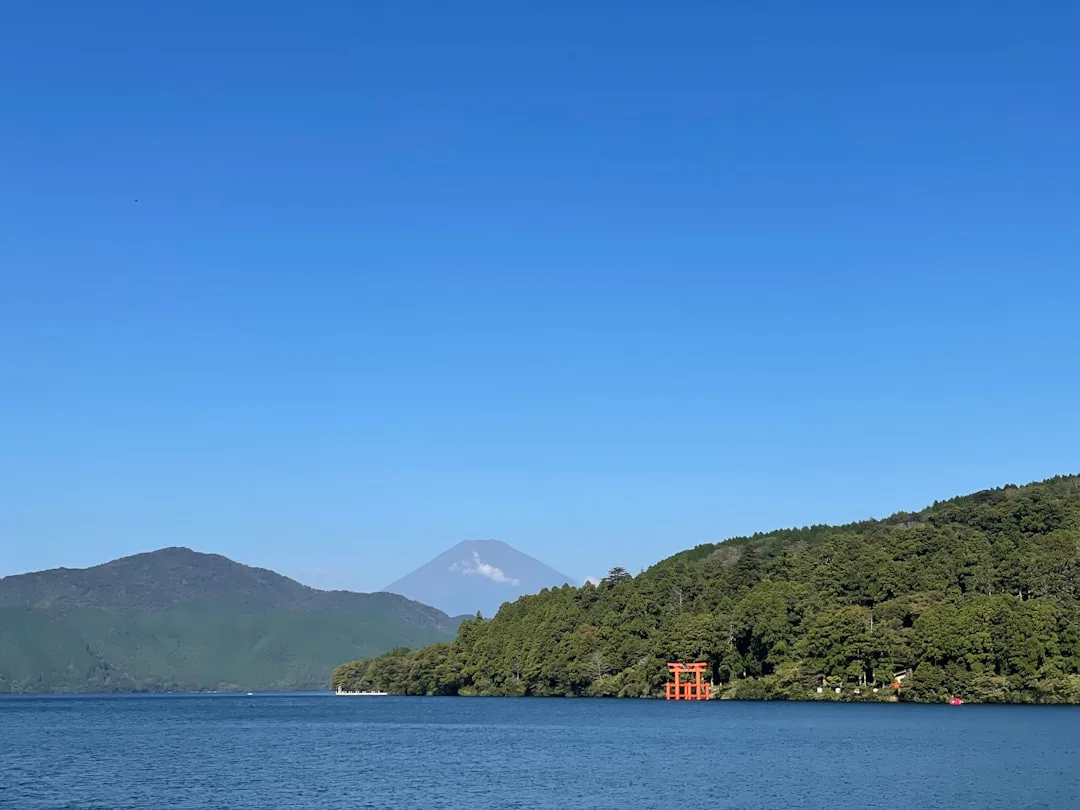
20 minutes from Ise by local train (Kintetsu to Futaminoura): two rocks offshore connected by a thick shimenawa (sacred rope), representing the divine couple Izanagi and Izanami, with Mount Fuji visible behind them on clear winter days. The sacred rope is renewed three times annually in a ceremony. The rocks and the torii gate framed between them represent a specific Shinto aesthetic of natural objects designated as sacred through ritual. Worth 45 minutes on the way to or from Ise.
Practical Notes
Dress and behavior: No specific dress code required. Remove hats before the inner worship halls. Photographs are permitted in the outer grounds but not close to or of the inner sanctuary buildings.
Visiting hours: Both grand shrines are open from before sunrise to shortly after sunset (hours change seasonally). Best time: early morning, before tour buses arrive from Nagoya by 10am.
The empty plots: The specific experience of standing next to the empty plot knowing it will be occupied in 2033 — and that the current buildings will be gone then — is the thing that makes Ise unlike any other shrine in Japan. The impermanence is not a metaphor; it is the architectural program.
Combine with: Ise Jingu and Koyasan together form the most significant Shinto-Buddhist pilgrimage circuit in Japan (connected historically by the Iseji route of the Kumano Kodo). Three days covers both with time for the route connection.
Ise asks very little of visitors — entry is free, the path is clear, the atmosphere does the work. What it asks is attention to what you’re looking at: buildings with no decorative purpose beyond the precision of their construction, rebuilt to exact specifications every 20 years for over a millennium, housing objects that have never been seen. The simplicity is the point, and it takes a few minutes of standing in front of the fence to understand what kind of simplicity it is.
Plan your trip