Photography in Japan: The Best Spots and When to Visit Them
Plan your trip
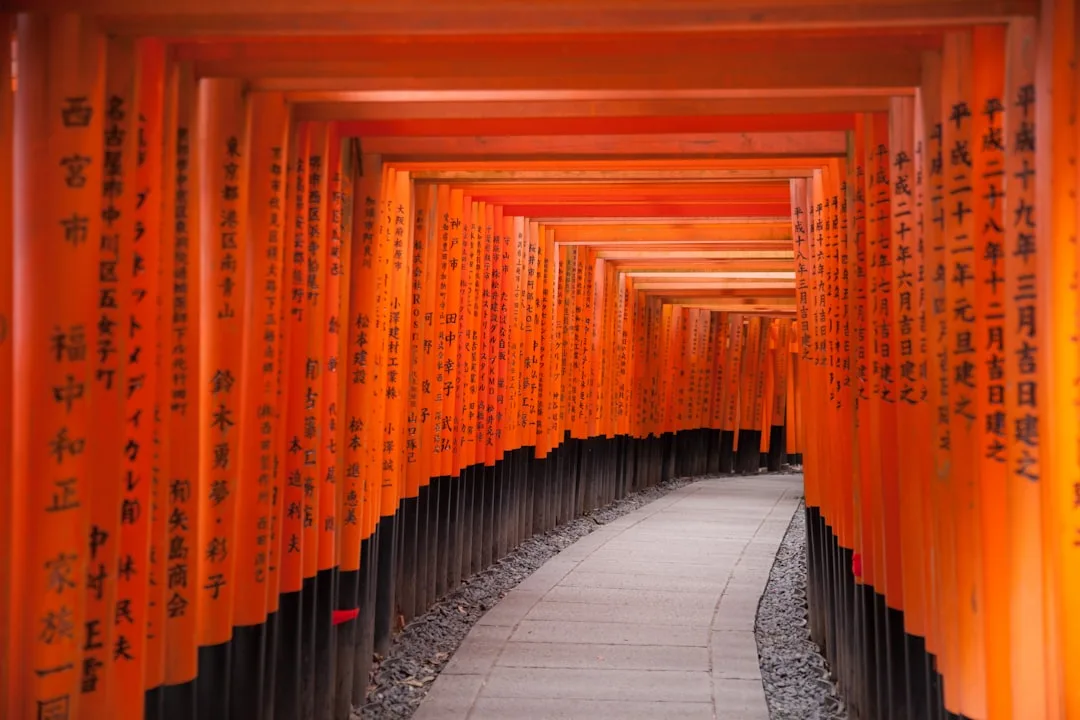
The problem with photographing Japan isn’t a lack of material — it’s that the best-known shots have been taken so many times that replicating them adds nothing. The Fushimi Inari torii gates at noon are not a photo you need more of. But the same location at dawn, in light rain, in autumn mist with barely five other people — that’s a different image entirely.
This guide is about timing, access, and finding the less-replicated version of scenes that deserve to be photographed.
Tokyo
Shinjuku at Night
The neon of Kabukicho and the Golden Gai alley system are at their most photogenic between 9pm and midnight. The Golden Gai’s narrow alleys with cramped bar fronts, red lanterns, and handwritten signs photograph best at focal lengths of 35-50mm that compress the alley slightly. The key is to arrive after the crowds thin (10pm weeknights) but before the bars close.
The view from Shinjuku West Exit looking toward the skyscraper cluster with the street-level chaos below it — people, bicycles, taxis, scaffolding, all under the towers — is the Tokyo image that captures the scale.
Yanaka Cemetery and District
Yanaka Ginza in the early morning before 8am is Tokyo’s most atmospheric photographic location for a certain kind of image: old Japan, low buildings, cats, slow life. The cemetery adjacent to it has tree-lined paths with lanterns and old gravestone markers that photograph well in soft light and near-silence.
TeamLab Venues
Legitimate art photography locations inside a building — the LED light installations at teamLab Borderless (now in Azabudai Hills) and teamLab Planets (Toyosu) allow personal photography. Long exposures with a small tripod (check venue policy) produce different images from the hand-held tourist photos; the reflection pools in particular reward deliberate exposure.
Shibuya Crossing from Above
The crossing itself is less interesting photographically than the view from above. Shibuya Sky (¥2,000, rooftop) or the Starbucks on the second floor of Qfront building (free, with purchase) give slightly different perspectives on the crossing. The Starbucks angle is tighter and therefore stronger compositionally; the rooftop view shows the full scale. Both work at evening rush hour (5-7pm).
Kyoto
Fushimi Inari — Dawn or Dusk, Not Midday
The 10,000-torii trail at Fushimi Inari photographs cleanest in low-angle morning light. Arrive by 6am in summer, 6:30am in other seasons. The first kilometer up from the shrine entrance is the most crowded; the upper sections (above Yotsutsuji junction, 20-30 minutes in) see a fraction of the visitors. Early morning in the upper sections provides the compression effect of the torii gates in soft light with no people — the version that doesn’t exist in most Instagram accounts.
Evening is workable in the first section if you want lantern light illuminating the gates; the upper trail is dark after 7pm without supplementary lighting.
Bamboo Grove (Arashiyama) — 5:30am
The Sagano Bamboo Grove at Arashiyama is approximately 200 meters of walking path between bamboo stalks. At 10am it’s photographed every 3 seconds by queuing tourists. At 5:30am, it is empty. The morning light through the bamboo canopy is different from any other time of day — green and directional. A 20-minute walk from the nearest accommodation.
Ninenzaka and Sannenzaka — Rain or Mist
The stone-paved lanes leading up to Kiyomizudera are photogenic in the right conditions. Overcast or light rain photographs better than direct sun — the stones reflect, the lanterns have more color contrast, the atmosphere reads as what it is (a preserved historical streetscape) rather than as what heavy sunlight makes it (a busy tourist corridor).
Early morning is also effective but the shop fronts are closed, which removes some of the character.
Philosopher’s Path — Spring and Autumn
The canal-side walk lined with cherry trees is Kyoto’s most seasonal photographic location. Peak sakura (late March to early April) is the obvious timing. Less obvious: early November when the maples begin to turn produces images with the canal, the stone path, the fallen leaves, and the sense of a place taken seriously over time.
Gion Hanamachi
The streets around Shirakawa-cho in Gion are the closest remaining setting to traditional Kyoto. Photography here requires restraint: geisha and maiko have been harassed by photographers with some frequency, and the neighborhood has posted signs asking visitors not to photograph residents without permission. Landscape shots of the canal, willow trees, and stone-paved streets are unproblematic. People photography requires judgment.
Nara
Deer and Temple Complex
Nara’s deer work photographically best in early morning when they’re active and moving. By 10am they settle into more static positions. The approach to Todai-ji with deer in the foreground and the massive Nandaimon Gate beyond is a natural composition. A telephoto allows the deer to fill the frame while the gate structure forms a recognizable backdrop.
Kasuga Taisha’s stone lanterns photograph well in overcast light or early evening — the moss on the lanterns needs detail lighting, not direct sun.
Hiroshima and Miyajima
The Torii at Tide Transition
The most compelling photography of Itsukushima Shrine’s torii happens during the hour of transition from high to low tide or vice versa. The gate surrounded by water slowly reveals its barnacled lower posts as the tide recedes; the reflections become increasingly complex. A tripod and 30-second long exposures in the near-dark after sunset produce the most distinctive images.
The shrine’s interior corridors at dusk, with lanterns lit and few visitors remaining, photograph differently from the exterior — tighter, more intimate, the vermilion wood against darkening water.
Peace Memorial Park — Reflective Architecture
The A-Bomb Dome is Japan’s most photographed monument for serious reasons. Photography here is approached differently than a scenic location — the composition works best when it communicates the dome’s situation rather than its appearance. The arch framing of the Memorial Cenotaph with the dome in the background through the arch, and the reflection pool between, is the deliberate viewing axis that the park’s design created.
Seasonal Photography Calendar
| Month | What to Photograph |
|---|---|
| February | Snow in Hokkaido; plum blossoms in Tokyo/Kyoto; ice sculptures (Sapporo) |
| Late March–April | Sakura — Tokyo parks, Kyoto canal, Hirosaki Castle in Tohoku |
| Late April–May | Wisteria (Ashikaga Flower Park); fresh green rice paddies |
| June–July | Hydrangea — Kamakura’s Meigetsu-in; Hakone’s Hakoneyama |
| August | Fireworks (hanabi); Obon lantern festivals; sunflower fields in Hokkaido |
| October–November | Autumn foliage — Kyoto, Nikko, Tohoku mountain parks |
| December–January | City illuminations; snow landscapes; Shinjuku at Christmas |
Technical Notes
Equipment: A mirrorless system with a 24-70mm equivalent and a 70-200mm covers 90% of Japan travel photography. A compact wide-angle lens for interiors. A small tripod or Gorillapod for long exposures is worth carrying.
Permissions: Most public spaces allow photography. Temple interiors vary — many prohibit photography of the main deity statue. Look for signs; when in doubt, ask. Gardens and shrine grounds are usually open to photography. People photography requires judgment and courtesy regardless of what’s legally permitted.
Crowds and timing: The rule applies across Japan — early morning and late evening are when the iconic locations are at their most photographic. The two hours after dawn and the hour before dusk are where the work happens.
Seasonal accommodation logic: For cherry blossom photography, staying near Maruyama Park (Kyoto), Shinjuku Gyoen (Tokyo), or Hirosaki Castle (Tohoku) is worth the higher spring-season hotel prices — proximity means first access in the morning before the crowds arrive.
Plan your trip