Kamakura: Great Buddha, Sea Views, and Temple Circuits
Plan your trip
Kamakura was Japan’s political center from 1185 to 1333 — the seat of the Kamakura shogunate, the military government that effectively ruled while the emperor remained ceremonial in Kyoto. The temples and shrines built during those 150 years reflect a different aesthetic from Kyoto: more austere, more influenced by the Zen sects that were arriving from China, and built into the terrain rather than on open ground. The wooded hills behind the town are threaded with hiking trails connecting temples in ways that have remained mostly unchanged.
The Great Buddha (Kotoku-in Daibutsu) is the draw that most people come for, and it does not disappoint. But the circuit of temples and the coastal path make Kamakura a full day rather than a morning.
One hour from Tokyo by JR Yokosuka Line from Tokyo Station.
Getting There and Around
From Tokyo: JR Yokosuka Line direct from Tokyo Station (55 minutes, ¥940) or from Shinjuku via Shonan-Shinjuku Line (65 minutes). Both covered by JR Pass.
Enoshima–Kamakura Pass: Odakyu sells a day pass (¥1,520 from Shinjuku) covering the train to Kamakura and the Enoshima Electric Railway (Enoden) within the area. Worth it if you’re doing the coastal route.
Enoden (Enoshima Electric Railway): The single-track streetcar connecting Kamakura Station to Hase (for the Great Buddha and Hasedera) and continuing along the coast to Enoshima. Hop-on hop-off between stops. ¥260 per ride or covered by the day pass.
Walking: Kamakura is compact. Kamakura Station to the Great Buddha via Hasedera is 30 minutes on foot or 5 minutes by Enoden. The eastern temple circuit (Engaku-ji, Kencho-ji) is 15 minutes walk from Kita-Kamakura Station (one stop north of Kamakura).
Great Buddha (Kotoku-in)
The Kamakura Daibutsu: a bronze seated Amitabha Buddha 11.4 meters tall, cast in 1252. Originally housed inside a large wooden hall; the hall was destroyed by earthquakes and typhoons in the 14th and 15th centuries and never rebuilt, leaving the statue exposed to the elements since 1498. The weathered bronze, the scale, and the open sky above it create something that indoor Buddha statues don’t have.
The statue is hollow — you can enter through doors in the sides (¥20) and stand inside the cast bronze. The interior shows the construction method: visible joints between the sections, bracing brackets, and a sense of the engineering problem that making this thing involved.
Admission ¥300. Open 8am–5:30pm. Arrive early — by 10am tour groups have arrived and the approach path is crowded. The garden around the statue has small subsidiary structures, lotus ponds in season, and a good angle looking up at the Buddha’s face from the side.
Hasedera
The hillside temple 10 minutes walk from the Great Buddha, containing the second significant statue in Kamakura: a 9.18-meter gilded wooden Kannon (goddess of mercy), one of the tallest wooden statues in Japan.
The temple grounds are multi-level, carved into the hill: the Amida-do hall at the base, the Kannon-do with the main statue above it, and a garden terrace with views over Sagami Bay and, on clear days, Enoshima Island. In June, the temple grounds are covered in hydrangeas — one of the best hydrangea viewing spots in the Kanto region.
The cave complex adjacent to the main buildings contains carved Jizo statues in niches along a candlelit passage — slightly claustrophobic and worth doing. Admission ¥400.
Zeniarai Benten Shrine
Tucked into a narrow valley 20 minutes walk from Kamakura Station, through a low tunnel cut into the hillside rock. The shrine is built around a natural cave spring where worshippers wash coins — the tradition holds that money washed in the spring water will multiply. The cave is dense with incense smoke, offerings, and locals taking the coin-washing seriously.
The path through the tunnel entrance, the compact shrine in the cliff, the smoky cave interior: this is one of the more atmospheric small sites in Kamakura and consistently less crowded than the main attractions.
The Zen Temple Circuit — Kita-Kamakura
Get off at Kita-Kamakura Station (one stop before Kamakura from Tokyo) and walk south through the valley, hitting the temples in sequence.
Engaku-ji: One of Japan’s five great Zen temples, founded 1282. A large complex spread across the forested hillside: the San-mon gate, the main hall, the bell (the largest in Kamakura, cast 1301), and the separate sharidens (relic halls) at the upper level. The atmosphere on a quiet weekday morning — moss, cedar, wooden architecture — is what Zen gardens are trying to distill. Admission ¥500.
Tokei-ji: The small temple historically known as the “Divorce Temple” — from the medieval period until the Meiji era, women could achieve legal divorce by taking refuge inside this Buddhist nunnery for three years, after which they were legally free. The temple is now a museum and garden rather than an active nunnery, but the history is specific and worth understanding. Admission ¥200.
Jochi-ji: Another of Kamakura’s five great Zen temples. Smaller and less visited than Engaku-ji, with a garden compound that rewards slower movement. Admission ¥200.
Kencho-ji: The most important of the five great Zen temples, founded 1253, and the oldest Zen training monastery in Japan still in use. The complex is extensive: seven consecutive gates leading to the main hall, with a dragon ceiling painting in the meditation hall. The path behind the complex climbs to a hilltop with views of both the mountains and Sagami Bay. Admission ¥500.
Tsurugaoka Hachimangu
The main shrine of Kamakura, dedicated to Hachiman (the god of war and patron deity of the Minamoto clan who established the shogunate). A wide approach boulevard lined with cherry trees leads from the sea to the shrine’s main hall on the hill — the layout was designed to be impressive from a distance, and it is.
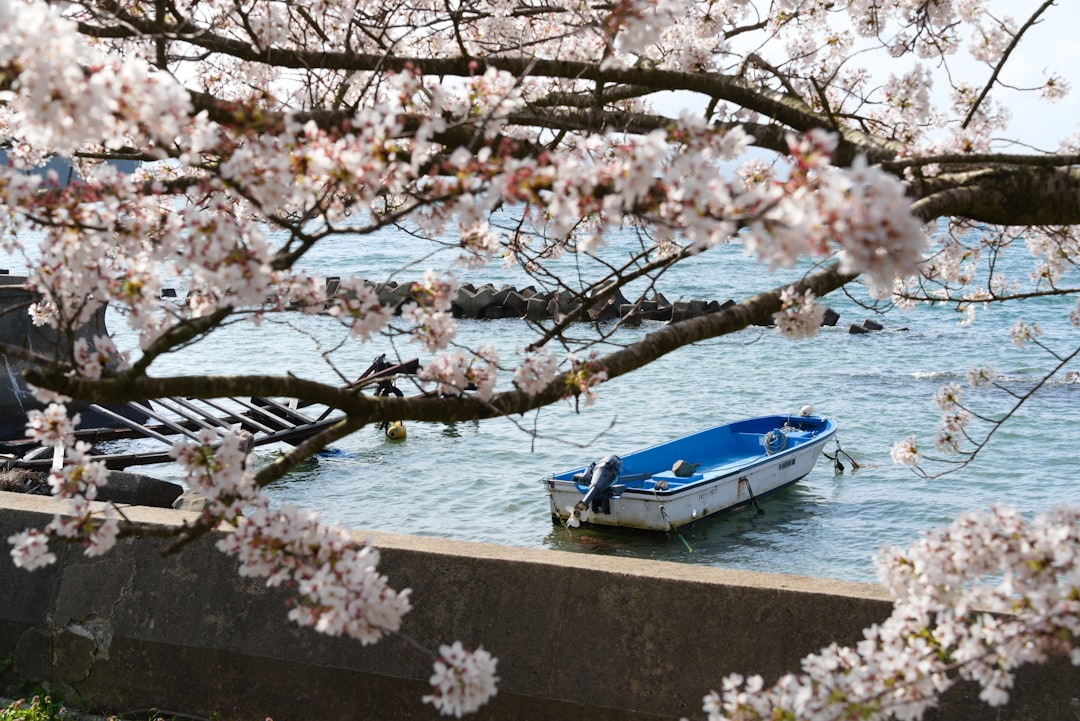
The approach, called Wakamiya-oji, divides into an upper and lower section separated by a lotus pond. In cherry blossom season the whole boulevard is canopied in pink. A large ancient ginkgo tree (now dead from storm damage) stood at the base of the main stairs for centuries; its stump remains as a landmark.
Free entry to the main precinct. Admission ¥200 for the treasure museum.
The Coastal Path
The stretch of coast between Kamakura and Enoshima Island (7 km, walkable in 1.5 hours or faster by Enoden) passes through small beach towns — Yuigahama, Zaimokuza, Inamuragasaki. The Enoden line runs along this coast, surfacing from the hills to run through residential streets at close range.
Inamuragasaki: The rocky headland between Kamakura and Enoshima with the best views along the coast. Sunset views of Enoshima with Fuji behind it, from the coastal rocks, on a clear winter afternoon, are among the better ones available in the Kanto area.
Enoshima Island: The small island at the end of the coastal route, connected by a pedestrian bridge. A Shinto shrine, sea caves, observation tower, and abundant tourist commerce. Worth an hour if you’re at this end of the coast; not worth a special trip from Kamakura center.
Practical Notes
Full day structure: Kita-Kamakura Station → Engaku-ji → walk south through the valley temples → Kamakura Station for lunch → Enoden to Hase → Great Buddha → Hasedera → coastal walk to Inamuragasaki → Enoden back to Kamakura.
Crowds: Kamakura is extremely popular on weekends, particularly during cherry blossom season. Weekdays are significantly calmer. The Great Buddha has queues from about 10am on; arrive at 8am opening if you want it mostly to yourself.
Food: Shiraiko (whitebait) is the local seafood specialty — on rice bowls, toast, and in pasta at the restaurants near Yuigahama beach. Kamakura is a good lunch town: the streets around the station have independent cafés and Japanese restaurants at various price points.
Kamakura is the day trip from Tokyo that rewards actually moving through it — the circuit from the Zen valley temples to the Great Buddha to the coast covers ground that keeps changing character. Treat it as a walking day rather than a monument checklist and it gives back considerably more.
Plan your trip