Shinto and Buddhism in Japan: What You're Actually Looking At
Plan your trip
Most visitors to Japan encounter shrines and temples daily — they are woven into the urban fabric in ways that are constant and unavoidable. A torii gate at the end of a shopping street. A small Buddhist altar in a restaurant. An incense burner in the middle of a temple complex. The question of what these things mean and how to interact with them appropriately is worth understanding not as a courtesy exercise but because it changes what you see.
The Basics: Shrine vs Temple
The most important practical distinction:
Shinto shrine (jinja, taisha, jingu): A Shinto sacred site, dedicated to a kami (spirit or deity). Identified by:
- A torii gate at the entrance (typically vermilion or unpainted wood)
- Shimenawa (sacred straw rope) marking sacred boundaries
- Komainu (lion-dog guardian statues) at the gate
- Haiden (worship hall) and honden (main hall where the kami resides)
- Temizuya (water basin for ritual hand-washing at the entrance)
Buddhist temple (tera, ji, in): A Buddhist sacred site. Identified by:
- A sanmon (main gate) with nio guardian figures (muscular, fierce-looking guardians)
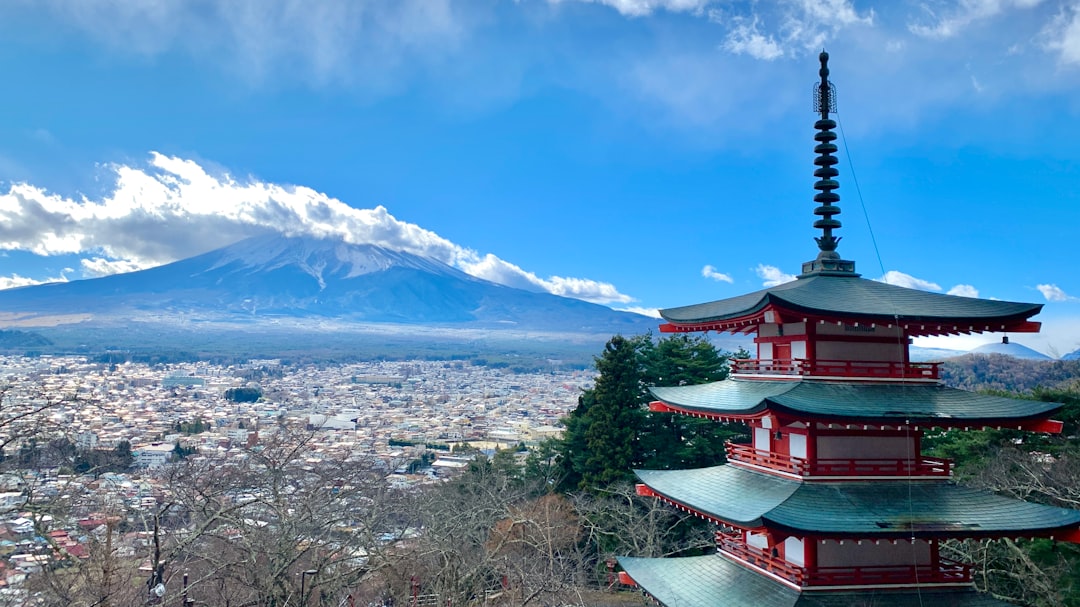
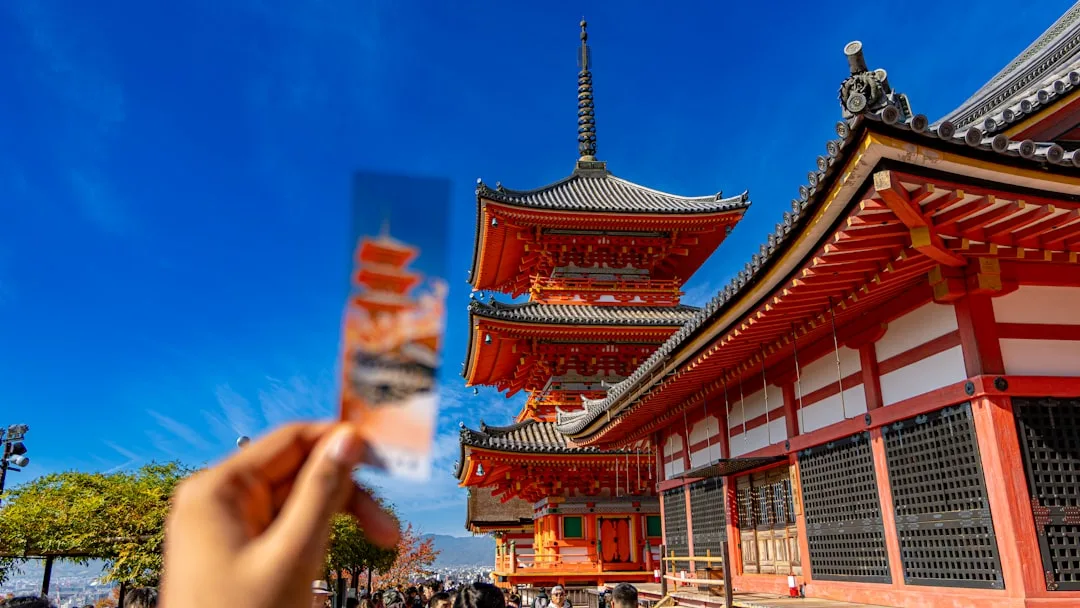
- A pagoda (to) — multi-story structure containing relics
- Incense burner (ko-ro) in the main courtyard
- A hondo or kondo (main hall containing the primary Buddha statue)
- Garan — the assembly of main buildings in a specific spatial arrangement
Mixed sites: Many sacred sites in Japan contain both Shinto and Buddhist elements — a result of shinbutsu-shūgō, the thousand-year-long syncretism of the two traditions. The Meiji government forcibly separated them in 1868, but the separation was incomplete; many sites still show both traditions simultaneously.
Shinto: Japan’s Indigenous Religion
Shinto has no founder, no sacred text, and no formal theology in the Western sense. It is a system of practice — ritual, seasonal, place-based — organized around the concept of kami: spirits or presences that inhabit natural and extraordinary things (mountains, rivers, large rocks, ancient trees, weather phenomena) and that can be invoked, appeased, and communicated with through ritual.
What kami are: Not gods in the monotheistic sense — kami are not omnipotent, not moral judges, not universal. They are specific presences associated with specific places and phenomena. Japan has 8 million kami by one traditional count. Amaterasu (the sun goddess, enshrined at Ise Jingu) is the most important; Inari (the kami of rice, business, and foxes) has over 30,000 shrines nationwide.
The function of Shinto practice: Maintaining musubi — the connection between the human world and the kami world through ritual purity and action. This includes purification (harae), offerings (shinsen), prayer (norito), and seasonal festivals (matsuri). The emphasis is on this-world concerns: good harvest, safe travel, healthy children, business success, protection from disasters.
Why Shinto is everywhere: Because it is place-specific and non-exclusive. There is no conflict between visiting a Buddhist temple in the morning and a Shinto shrine in the afternoon. Most Japanese do both regularly without considering themselves practitioners of either religion in the Western sense.
Buddhism in Japan
Buddhism arrived in Japan from Korea and China in the 6th century and underwent significant transformation in Japanese soil over 1,400 years. Japanese Buddhism is not a single tradition but a collection of schools with distinct practices:
Zen Buddhism (Rinzai and Soto schools): The meditation-centered tradition most associated internationally with Japanese Buddhism. Emphasizes direct experience over doctrinal study; the koan (paradoxical question used as a meditation object) and zazen (sitting meditation) are the central practices. Associated aesthetically with rock gardens, minimalist architecture, and the artistic traditions (sumi-e ink painting, calligraphy, and Noh theater) that Zen supported from the 14th century onward.
Pure Land Buddhism (Jodo-shu, Jodo Shinshu): The largest school in Japan by adherents. Centers on devotion to Amida Buddha and the practice of nembutsu (chanting “Namu Amida Butsu” — “I take refuge in Amida Buddha”). The promise of rebirth in Amida’s Pure Land (a paradise) through faith and practice. Strongly associated with funerary ritual and the ancestor veneration that shapes Japanese family religious practice.
Shingon Buddhism: Esoteric Buddhism founded in Japan by Kukai (Kobo Daishi) after his training in Tang China. Centers on mandalas, mantras, and ritual fire ceremonies (goma). Associated with Koyasan and mountain pilgrimage traditions.
Tendai Buddhism: The eclectic school that preceded Shingon and from which Zen and Pure Land schools emerged. Center is Enryaku-ji on Mount Hiei above Kyoto.
How to Visit a Shinto Shrine
-
Pass through the torii gate: Bow slightly before entering. The torii marks the transition from the ordinary world to sacred space.
-
Purify at the temizuya: The water basin near the entrance. The sequence: ladle water over the left hand, then the right hand, then cup the left hand, pour water into it, rinse your mouth, and pour the remaining water over the left hand again while tilting the ladle upright so the water rinses the handle. Some sites have simplified this ritual during flu seasons.
-
Approach the haiden (worship hall): Toss a coin into the offering box (saisen-bako) — any denomination, ¥5 coins (go-en = “good relationship”) are traditional for their wordplay.
-
Ring the bell if one hangs before the hall: Pull the rope or shake the bell to alert the kami.
-
Bow twice, clap twice, bow once: The standard sequence — two deep bows, two sharp claps (hands at chest level, right hand slightly lower), one final bow. (Exception: Izumo Taisha uses four claps.)
-
Prayer: Silent, specific prayer about your actual situation. The kami are interested in concrete requests, not abstract spiritual aspiration.
How to Visit a Buddhist Temple
-
Purify with incense smoke: At the large incense burner in the main courtyard, waft smoke toward you (toward areas that need healing or attention). The smoke is believed to have purifying properties.
-
Approach the main hall: Drop a coin into the offering tray.
-
Bow with hands pressed together (gassho): The Buddhist greeting and prayer gesture. Unlike the Shinto clapping, Buddhist prayer is silent with palms together.
-
No clapping: The clapping of Shinto prayer is not used at Buddhist temples.
Key Vocabulary
Kami (神): Shinto spirit/deity — specific, place-based, numerous. Not “god” in the monotheistic sense.
Buddha (仏/ぶつ): Refers to the awakened being (Gautama Buddha and the many Buddhas of Mahayana tradition), not to kami. The Japanese Buddhas include Amida (Amitabha), Kannon (Guanyin/Avalokitesvara), Jizo (Ksitigarbha), and Fudo-Myo-o (Acala).
Torii (鳥居): The gate marking the entrance to Shinto space. Not found at Buddhist temples (unless at a mixed site). The form has symbolic reading: the horizontal beams represent the boundary between the human and divine.
Shimenawa (注連縄): The sacred straw rope that marks Shinto sacred space — around trees, rocks, shrine buildings, or the famous large version at Izumo Taisha.
Goshuin (御朱印): The handwritten stamp-and-calligraphy collected from both shrines and temples. Available at both; the visual distinction between shrine goshuin (seal-centric) and temple goshuin (often including Sanskrit characters) reflects the distinction between the traditions.
Ema (絵馬): Wooden votive tablets on which visitors write wishes and hang on racks at shrines and temples. The word means “picture horse” — originally live horses were offered to kami; wooden tablets with horse paintings replaced the animals.
Omikuji (おみくじ): Fortune slips drawn from boxes at shrines. A random paper tells your fortune (from daikichi — great luck — to kyo — bad luck). If the fortune is bad, tie it to the designated rack near the shrine to leave the bad luck behind.
The Syncretism
For most of Japan’s history, these two traditions were not separate. Buddhist priests managed Shinto shrines; Shinto kami were considered to be Buddha natures in disguise (honji suijaku theory). The great pilgrimage routes — Kumano Kodo, Dewa Sanzan, Shikoku 88 temples — all combine Shinto and Buddhist sacred sites.
The Meiji government’s forced separation (shinbutsu bunri, 1868) artificially divided what had been integrated. Many Buddhist temples adjacent to shrines were demolished; Buddhist objects were removed from shrine complexes. The landscape you walk through today is partly the result of that separation and partly the result of its incomplete execution — many sites still show the layered syncretism.
Visiting Japan’s sacred sites with this framework changes the experience from “old buildings” to readable culture. The incense smoke at the temple courtyard, the bow before the torii, the coin in the offering box — these are acts that have specific meaning within a specific system. Understanding the system doesn’t require adopting it. It requires noticing it, which is worth doing.
Plan your trip