Autumn Foliage in South Korea: When and Where to Go
Plan your trip
Korean autumn foliage (단풍, danpung — literally “maple leaf”) is a seasonal event taken as seriously as Japan’s koyo. The national conversation about foliage peaks, crowds, and optimal viewing windows runs in newspapers and weather apps from late September. The national park system implements crowd-control measures at peak sites. Hotels near major viewing locations book out months in advance.
The foliage season runs approximately 6–8 weeks — starting at high elevations in late September and descending to valley floors and city parks through October and into November. The progression is predictable enough that a foliage forecast map (단풍예보) is published by Korea’s national weather service each autumn.
The Foliage Calendar
The progression follows elevation and geography:
| Period | Location | What to See |
|---|---|---|
| Late September | Seoraksan summits, Hallasan (Jeju) | First color on the highest peaks |
| Early October | Seoraksan valley, Jirisan upper slopes | Peak at major mountain parks |
| Mid October | Naejangsan, Maisan, inner mountain valleys | Peak in southwest mountains |
| Late October | Gyeongju plains, Seoul parks, coastal areas | City-level foliage peak |
| Early November | Jeju lowlands, south coast | The final wave of the season |
Top Foliage Destinations
Seoraksan National Park (설악산)
The most celebrated autumn destination in Korea. Seoraksan’s granite peaks — Ulsanbawi’s six spires, the Cheonbuldong Valley walls, the Daecheongbong ridge — are covered in mixed deciduous forest that turns red, orange, and yellow in early October, creating the composition of granite and fire that defines Korean mountain autumn photography.
Peak timing: October 10–20 is typically the densest foliage period in the valley. Ulsanbawi summit has color from early October; the valley floor from mid-month.
Crowds: The most extreme of any foliage destination in Korea. The Seorakdong entrance implements limited-entry ticketing on peak October weekends. Arriving before 7am is the only strategy that avoids significant queuing. Midweek visits in the second week of October are the best compromise.
Best viewpoint: From the Ulsanbawi trail fixed staircase section — looking south over the valley and out to the East Sea with the orange forest filling the granite.
Naejangsan National Park (내장산) — South Jeolla
If Seoraksan is the dramatic mountain foliage, Naejangsan is the intimate valley foliage — Korea’s most concentrated tunnel of autumn leaves. The approach to Naejang Temple (내장사) follows a 108-step path between lines of maple trees whose canopies meet overhead, creating a red tunnel effect in mid-October.
Why Naejangsan: The tree species composition — 78% deciduous including Korean maple, Korean beech, and zelkova — produces earlier and more saturated reds than most Korean mountain parks.
Peak timing: October 20 – November 5, typically 1–2 weeks later than Seoraksan.
Access: From Jeonju (40 minutes by bus) or from Gwangju (1 hour). The region is in Jeollabuk-do (North Jeolla), making it combinable with a Jeonju visit.
Naejang Cable Car: From the temple area to a ridge viewpoint — provides an overview of the valley’s foliage bowl.
Jirisan National Park (지리산) — South Gyeongsang/Jeolla
Korea’s largest national park (483 km²) and the most serious mountain for hikers. The autumn foliage on Jirisan is less concentrated than Naejangsan but more expansive — the views from the main ridgeline (Nogodan to Cheonwangbong) show thousands of hectares of forest turning simultaneously.
For hikers: The 2-day Jirisan ridge traverse (Nogodan to Cheonwangbong, staying at the Rotary mountain hut) in early October is one of Korea’s great hiking experiences. The ridge walk at elevation with autumn color below and clear skies above is exceptional.
For day visitors: Piagol Valley, accessible from Gurye, is the most photogenic valley in Jirisan for day-trip foliage — a narrow gorge with the river reflecting the turning forest.
Peak timing: October 10–25 depending on elevation.
Gyeongju (경주)
The ancient Silla capital has a different foliage character than the mountain parks — it’s urban and archaeological. The foliage here drapes over burial mounds, temple roofs, and the paths around UNESCO heritage sites rather than mountain ridges.
Best spots:
- Tumuli Park: The large royal burial mounds, surrounded by deciduous trees, in October have orange leaves framing the dome shapes.
- Anapji Pond (Donggung and Wolji): The reconstructed Silla garden with autumn reflection in the evening lighting.
- Bulguksa Temple approach: The road and forested path leading to the temple has a reliable maple corridor.
Why Gyeongju: The combination of historical depth and autumn color makes it a different experience from pure mountain foliage. The crowds are lower than Seoraksan.
Peak timing: Late October, 1–2 weeks after the mountain peaks.
Seoul Parks
The city doesn’t match the mountain parks in drama, but the urban foliage has its own appeal — walking through a familiar neighborhood as it changes color.
Best Seoul locations:
- Bukhansan National Park (north edge of Seoul): The granite peaks of Baegundae (836m) above Seoul have October foliage; hiking trails are accessible from the northern districts (Dobongsan Station or Bukhansan Ui Station).
- Namsan Park: The forested slopes of Namsan turn reliably in late October; the combination of the N Seoul Tower, the city view, and the autumn color is strongest from the Bugaksan-side trail.
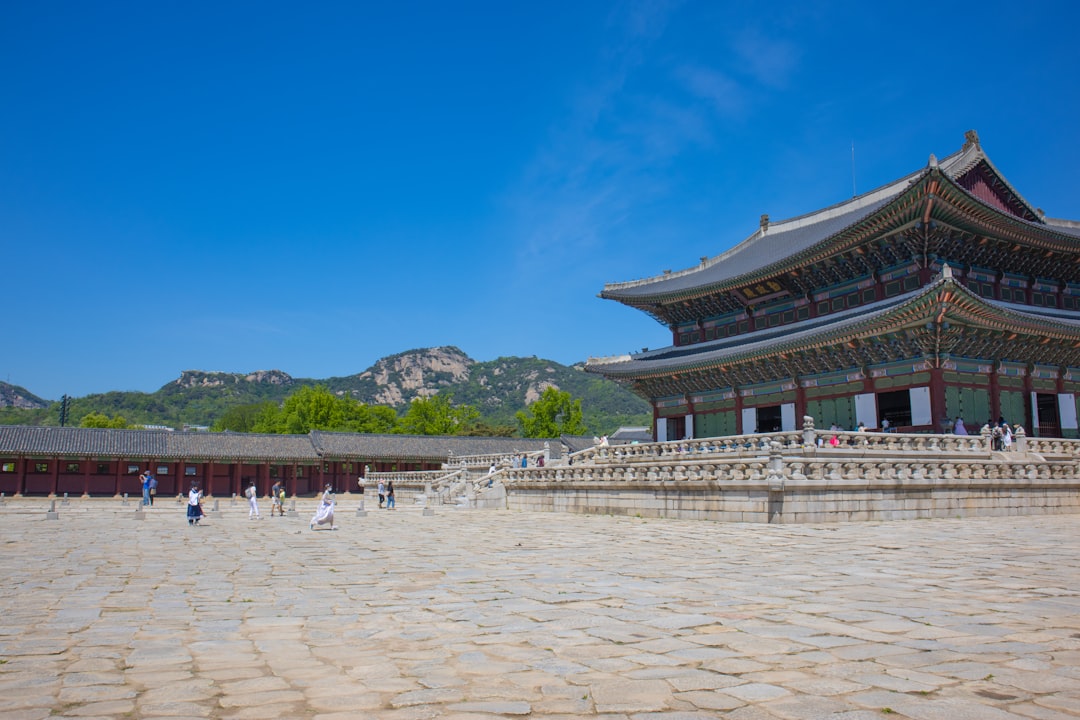
- Gyeongbokgung Palace: The ginkgo trees along the approach road to the palace turn gold in late October. Gyeongbokgung’s western garden (Gyeonghoeru Pond) with autumn trees reflected in the still water.
- Seoul Forest (Seongsu): The mixed forest adjacent to the Han River is conveniently located and less crowded than the palace or mountain options.
Peak timing: October 25 – November 10 in the city.
Foliage Viewing Strategies
Book Accommodation Early
The main foliage destinations — Sokcho (for Seoraksan), Naejangsan, Jeonju — sell out accommodation on peak October weekends 1–2 months in advance. For the core October 10–20 Seoraksan window, booking 6–8 weeks ahead is not excessive.
Midweek Advantage
Crowd levels at foliage sites on weekdays are significantly lower. If the schedule allows, choosing Tuesday–Thursday over Friday–Sunday reduces queuing, photography interference, and transport congestion substantially.
Early Morning Arrival
The light at sunrise is both practically and aesthetically superior for foliage photography and hiking. The golden hour before 9am at Seoraksan or Naejangsan produces the best conditions and avoids the crowd surge that follows from midmorning.
The Weather Factor
Korean autumn can be partly cloudy or hazy. The foliage is most photogenic on clear days with low humidity (common in October but not guaranteed). Checking forecasts and adjusting timing by 1–2 days can significantly affect the experience.
Chuseok (추석)
Korea’s harvest festival — Chuseok — falls on the 15th day of the 8th lunar month, typically in September or early October. The 3-day holiday period involves massive domestic travel as families return to hometowns for ancestral rites.
For foliage travelers: If Chuseok falls in early October, it overlaps with the beginning of foliage season and creates extreme transport congestion. Train tickets for the Chuseok travel window sell out immediately; book far in advance if traveling during this period.
Practical Notes
Foliage forecast app: The Korean weather service (KMA) publishes an interactive danpung forecast map available through the weather.go.kr website. Korean weather apps (케이웨더, 날씨) include foliage predictions.
National park entry: Seoraksan implements limited-entry digital ticketing on peak foliage weekends. Book through the KNPS website (knps.or.kr) in advance.
Trail availability: Some high-altitude trails in Jirisan and Seoraksan close from November for winter restoration. Check the national park website before planning summit routes in late October.
Dress for mountain cold: Morning temperatures at Seoraksan and Jirisan in October can be 3–8°C. Layers are necessary even when Seoul is comfortable.
Plan your trip