Kibune and Kurama: Kyoto's Mountain Escape
Plan your trip
The Kibune-Kurama ridge is the defining geography of northern Kyoto’s mountain culture. The two villages — Kibune on the west slope, Kurama on the east — sit in narrow river valleys, accessible from Kyoto by the Eizan Electric Railway (a single-track mountain line from Demachiyanagi in north Kyoto). They’re 4km apart over the ridge, connected by a hiking trail that crosses at 510m elevation through old cedar forest.
The combination makes a natural route: take the train to Kibune, hike over the ridge to Kurama-dera temple and down through Kurama village, soak in the onsen, and take the train back. The full circuit takes 4–5 hours.
Kibune (貴船)
A village of 20-odd houses in a narrow valley beside the Kibune River. The primary attractions are the Kibune Shrine and, in summer, the kawadoko riverside dining.
Kifune Shrine (貴船神社)
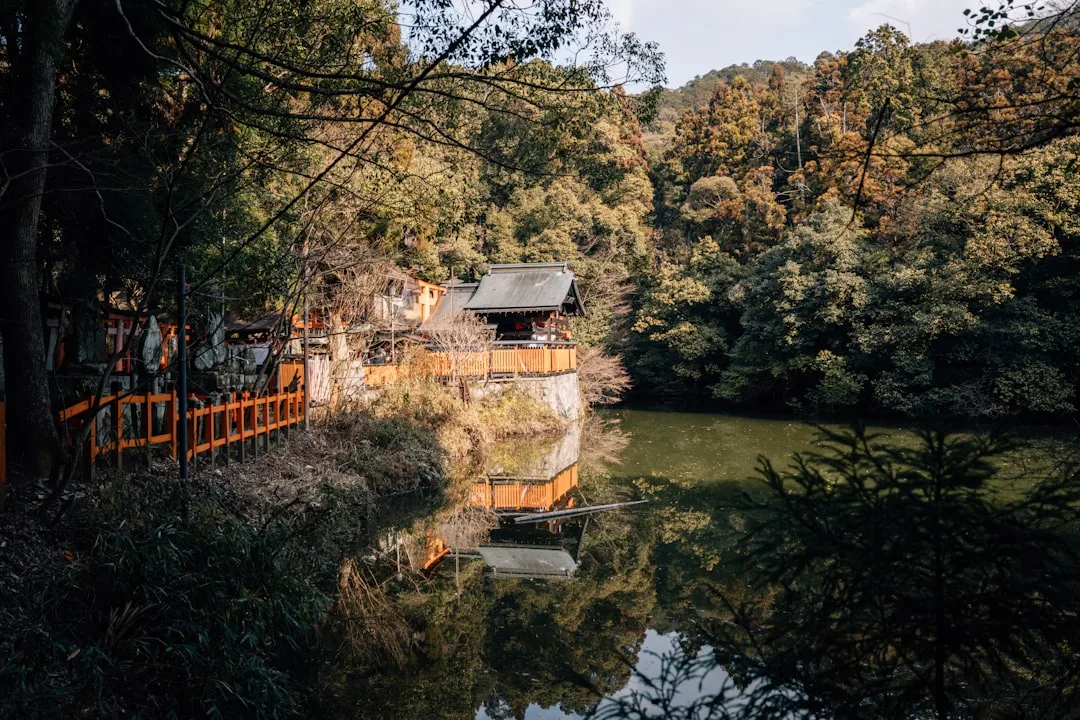
A water deity shrine — Kibune means “divine boat of yellow.” The approach path is lined with stone lanterns; in winter, the snow-covered lantern path with the orange torii gate is one of the iconic Kyoto winter images. The main shrine dates from at least the 8th century; the mountain setting and the association with rain, water, and safe passage give it a different character from the Kyoto city shrines.
Water fortune (mizuura omikuji): A fortune-telling paper that appears blank until placed in water — the characters emerge in the stream. A novelty specific to Kibune.
Access: Kibune-guchi Station (Eizan Kibune Line), then a 2km walk or bus up the valley to the shrine.
Kawadoko — River Dining (川床)
From June through September, the restaurants along the Kibune River install platforms built over the water — kawadoko (川床) — and serve multi-course kaiseki meals on platforms suspended 60–90cm above the cold mountain stream. The temperature above the running water is 5–8°C cooler than Kyoto city below; this is the reason Kyoto residents have been coming to Kibune to eat in summer since the Heian period.
The experience is specific: sitting above a fast-moving mountain stream, watching the water pass below, eating a course meal of yudofu, river trout, and seasonal vegetables. The sound of the water and the cool air are part of the meal.
Reservations: Required for all kawadoko restaurants, typically 1–2 weeks in advance for summer weekends, 2+ days for weekdays. Budget ¥6,000–15,000 per person for a full course.
Restaurants: The main Kibune river has approximately 15 kawadoko restaurants. Mizuyoshi and Hiroya are long-established; Raftei is newer and more contemporary in cooking style.
Season: June 1 – September 30 (precise dates vary slightly by restaurant and weather). Outside this period, the same restaurants serve indoors.
The Kibune–Kurama Trail
The hiking trail over the ridge connecting the two valleys is the logical way to move from Kibune to Kurama. The trail begins at the Kibune Shrine, climbs through cedar forest to the ridge (510m), then descends through the Kurama-dera temple complex to Kurama village.
Distance: 4km
Time: 2–2.5 hours (including the Kurama-dera temple)
Difficulty: Moderate — the climb from Kibune is steep; the descent through Kurama-dera is a series of steps on a maintained path
Condition: The trail is well-maintained; appropriate for regular walking shoes. Wet conditions make the cedar-root sections slippery.
The descent through Kurama-dera: The trail from the ridge enters the Kurama-dera temple complex and descends through the outer temple precincts (gate admission ¥500 from either direction). The path passes the Okuno-in inner sanctuary on the ridge before descending to the main temple, then continues down stairs to Kurama village.
Kurama (鞍馬)
The village at the base of the Kurama-dera descent — a small settlement on the Kurama River, with a few restaurants, the mountain train station, and the onsen.
Kurama-dera (鞍馬寺)
A Tendai temple complex climbing the eastern slope of Kurama Mountain. Founded in 770, the temple has a mythology that goes significantly beyond ordinary Tendai Buddhism: the Mao-son — a deity associated with the cosmos and spiritual evolution — is enshrined here, and Kurama is embedded in Japanese esoteric tradition as a place of supernatural power.
More practically: the temple buildings on the ridge — Okuno-in, Honden, and the surrounding forest — have a quality of genuine remoteness and mystical atmosphere that the urban Kyoto temples can’t replicate. The cedars are ancient; the mountain air at the ridge is clear and cold even in summer.
The cable car: A small funicular runs from the base to the middle level of the temple complex (¥200 each way). The hiking path is more satisfying, but the cable car is useful for those who’ve already hiked over from Kibune.
Admission: ¥500 (includes temple complex and cable car boarding area).
Kurama Onsen (鞍馬温泉)
An outdoor hot spring bath at the base of the mountain, 10 minutes’ walk from Kurama Station. The rotenburo (outdoor bath) uses the spring water from the mountain — slightly sulfuric, reputedly effective for muscle recovery. After the ridge hike, soaking in the outdoor bath with a mountain view is the natural conclusion.
Day use: ¥1,100 for outdoor bath access (towel rental extra).
Getting There
Eizan Electric Railway from Demachiyanagi Station (Kyoto — end of Keihan Eizan Line):
- To Kurama-guchi (for Kibune) or Kurama: 30 minutes. ¥430 each way.
- The Eizan Kibune Line branches from the main Eizan Line at Ninose for Kibune, or continues to Kurama.
- The Kibune-Kurama Free Ticket (¥1,200) covers unlimited Eizan Railway rides for the day — worth it for the full circuit.
Practical routing:
- Best: Train to Kibune-guchi, bus up to Kibune Shrine, hike to Kurama-dera, descend to Kurama onsen, train back from Kurama.
- Alternative: Train to Kurama, hike up and over to Kibune, bus down to Kibune-guchi, train back.
- The first option (Kibune → Kurama) is generally easier (the Kibune side climb is more gradual than the Kurama side).
Seasonal Highlights
Summer: The kawadoko dining season. The cool mountain air and river temperature make June–August the peak reason to visit Kibune specifically. Book restaurants weeks in advance.
Autumn (October–November): The maple trees in both valleys turn, with the Kibune lantern-lit path and the Kurama-dera stairs both having excellent foliage. Less crowded than the main Kyoto foliage sites.
Winter: The Kibune snow lantern path (when snowfall occurs, typically December–February) is one of Kyoto’s most atmospheric images. The onsen in Kurama in winter cold is particularly appealing.
Spring (March–April): Cherry blossom and fresh mountain green; less visited than autumn.
Practical Notes
Kawadoko reservation timing: For June–August weekends, book at least 2 weeks in advance. Restaurant websites or Japanese travel agencies with English booking can arrange this.
Day-trip length: The full Kibune-hike-Kurama circuit requires a full day (depart Kyoto by 9am, return by 5–6pm). If skipping the hike and using only one village, a half-day is sufficient.
Footwear: Proper walking shoes for the ridge hike. The trail can be muddy.
Combination with Ohara: Ohara and Kibune-Kurama are in the same general northern mountain zone but not easily combined by public transport in a single day without very early starts. Plan separate days.
Plan your trip