Onsen Etiquette: How to Bathe in Japan (Including the Tattoo Question)
Plan your trip
The rules of onsen bathing exist for practical reasons: a shared hot spring pool is a communal hygiene space, and the protocols that govern it — the washing before entering, the towel folding, the silence — are functions of that reality. They are not difficult, and once understood they become the context for one of the most genuinely restorative experiences Japan offers.
This guide covers public bath etiquette (at standalone sento and onsen facilities), ryokan bathing, and the tattoo situation in detail.
The Basics of Japanese Bathing Culture
Onsen vs sento:
- Onsen (温泉): Natural hot spring water, geothermally heated. The water contains dissolved minerals (sulfur, iron, sodium chloride, carbonate) that vary by location and produce different skin and therapeutic effects. Legally regulated in Japan — a facility can only call itself onsen if the water meets specific mineral content or temperature standards.
- Sento (銭湯): Public bathhouse using heated tap water (not spring water). The bathing format is the same; the water does not have the mineral content of onsen. Found in every Japanese city as neighborhood bathing facilities; price is regulated (¥500–600 in Tokyo).
Both use the same bathing protocol.
Step by Step: How to Use an Onsen
1. Pay and receive your towel At the entrance, pay (¥500–1,500 at public facilities; included in ryokan rates) and receive a tenugui (small thin cotton towel). Large towels are usually available for purchase or rental.
2. Enter the changing room (datsui-jo) Onsen are gender-separated. Men’s (otoko/dan) and women’s (onna/jo) entrances are separate; often indicated by color (dark curtain = men, light curtain = women) or kanji. Remove your shoes at the entrance and place them in the shoe locker.
In the changing room: undress completely. Everything. Swimwear is not worn in Japanese onsen (with some specific mixed-gender exceptions). Place your belongings in the basket or locker.
3. Wash before entering the bath This is the most important rule. The shared bath is not for washing — it is for soaking in clean water. Everyone who enters has washed first.
At the kakeyu (washing area): sit on the small stool at a shower station, use the soap and shampoo provided, wash your entire body thoroughly. Rinse completely. Shampoo and conditioner are provided at most facilities.
4. Enter the bath Carry your small towel (folded or on your head — not in the water). Lower yourself slowly into the hot water. The temperature is typically 40–43°C; some baths are hotter (45°C+). Give yourself time to adjust.
5. Do not put your towel in the water The standard practice: fold the small towel and place it on your head, or on the edge of the bath. Never submerge it.
6. Do not swim, splash, or talk loudly The bath is for soaking, not exercise. Conversation at normal indoor volume is fine; loud voices, running, or splashing are not.
7. Rinse and dry before returning to the changing room After bathing, rinse at the shower station again. Use your towel to dry off before walking back to the changing room.
8. Hydrate after bathing Hot spring bathing is dehydrating. Most onsen facilities have vending machines with water, sports drinks, and famously, cold milk (gyunyu) — drinking cold milk immediately after onsen bathing is a specific Japanese tradition.
Ryokan Onsen Protocol
The private onsen baths at ryokan follow the same rules but in a more relaxed context — particularly if you have a private bath reserved by the hour (kashikiri-buro).
Reservation system: Many ryokan allow the shared onsen baths to be reserved for private use during certain hours. Ask at check-in; there is usually no additional charge.
Order of bathing: At ryokan with shared baths and a kaiseki dinner schedule, bathing before dinner (5–6pm) is common; evening bathing after dinner (9–11pm) is also available. Morning bathing before breakfast is the most peaceful — the bath is often freshly changed overnight.
Yukata: Ryokan provide yukata (light cotton kimono) and tanzen (quilted outer robe for winter) for use throughout the property including walking to and from the bath.
The Tattoo Question
Many onsen in Japan prohibit entry to guests with tattoos. This is the single most-asked question by foreign visitors, and it requires a nuanced answer.
Why the prohibition exists: The tattoo ban originated from the practice of excluding yakuza (organized crime members), who traditionally wore full-body tattoos as a mark of membership. The ban was a practical proxy for excluding criminals from shared bathing facilities. The historical rationale no longer applies in most cases (yakuza associations with tattooing have changed; most tattooed onsen visitors are foreign tourists), but the rule persists in many establishments as a policy decision.
Current situation (2025): The landscape is changing:
- Many urban onsen and tourist-focused facilities now allow tattoos under specific conditions (covered with waterproof tape/patches, confined to a size limit, full tattoos allowed in private baths but not shared baths).
- Some facilities distinguish between visitors with tattoos and tattooed Japanese customers, which has generated significant controversy.
- Rural and traditional onsen — particularly those associated with older clientele — more consistently enforce prohibitions.
- Large resort onsen facilities and modern super-sento (large entertainment onsen complexes) are more likely to have explicit policies available in English.
Before you go: Check the specific facility’s policy before visiting. The establishment’s website, or a direct inquiry (by phone or email, with translation app assistance) will give the definitive answer.
Options with tattoos:
- Kashikiri-buro (private reserved bath): Most ryokan and many public facilities offer private bath rental by the hour. Tattoos are generally allowed in private baths even when prohibited in shared baths.
- Tattoo-friendly facilities: Japan Onsen Association member facilities with explicit tattoo-welcome policies exist and are increasing. The tourism board publishes lists; travel apps like Relux and Jalan allow filtering by tattoo policy.
- Cover with tape: Some facilities allow entry with tattoos fully covered by waterproof bandage patches. Provide your own (swimming waterproof patches, available at pharmacies); the facility will usually verify coverage.
Outdoor Onsen (Roten-buro)
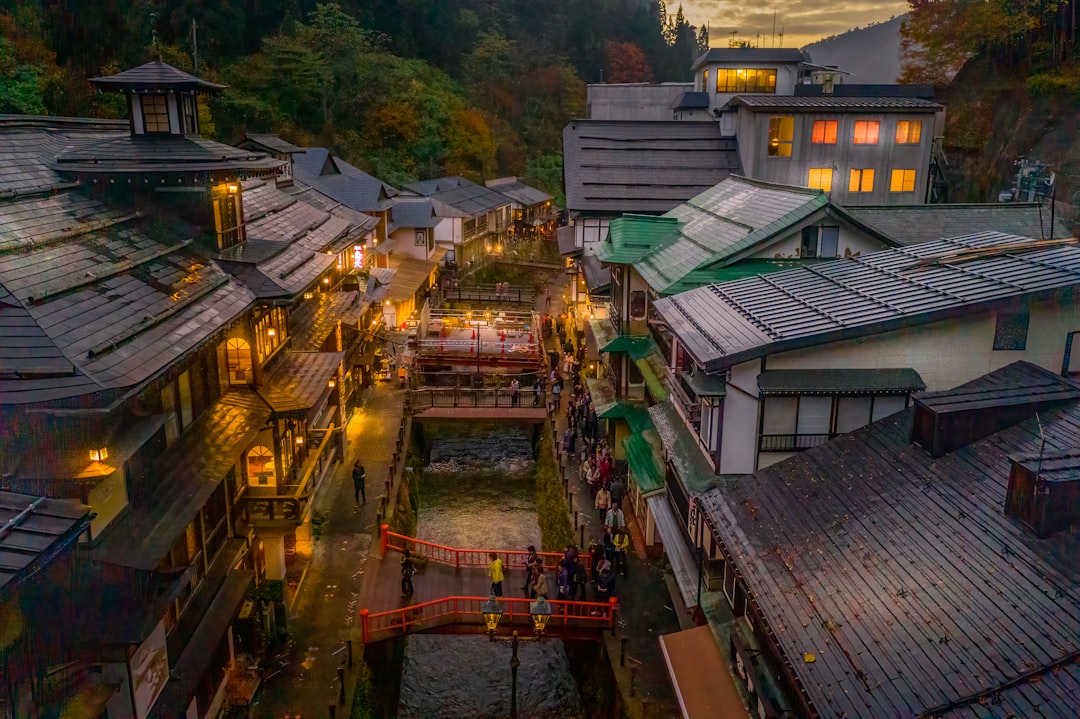
The open-air bath — one of the most distinctive onsen experiences. The same rules apply as indoor baths; the additional element is the natural setting, which at the best outdoor baths means soaking in hot mineral water while looking at mountains, forest, snow, or ocean.
Best outdoor bath contexts:
- Mountain ryokan in winter (bath in snow, body in 42°C water)
- Cliff-face baths with ocean views (Atami, Kinugawa, Kinosaki)
- Forest baths under cedar canopy (Nikko-Yunishigawa, Dewa Sanzan area)
Temperature: Outdoor baths are typically slightly cooler than indoor baths to account for air temperature; in summer they may be cooler than body temperature (cold spring baths exist as a specific category).
Different Onsen Water Types
The mineral content changes the bathing experience and skin feel:
Sulfur onsen (ryuosan-sen): The classic “rotten egg” smell; white or cloudy water; associated with skin softening. Noboribetsu (Hokkaido), Kusatsu (Gunma), Beppu (Oita).
Iron onsen (tetsu-sen): Orange or brown water from iron content; associated with anemia treatment. Arima Onsen (Hyogo, “Kinsen” — golden spring).
Sodium chloride (shokuenka-sen): Salt water; associated with warming effects that persist after bathing. Common in coastal regions.
Carbonate (tansansuiso-sen): High CO2 content; small bubbles adhere to the skin; associated with cardiovascular benefits. Rare and considered particularly therapeutic.
Hydrogen carbonate (juutanso-sen): “Bijin no yu” (beautiful woman’s spring) — bicarbonate water that removes dead skin cells, leaving skin very smooth. Associated with Kyushu onsen.
Sento — The Neighborhood Bathhouse
If onsen are the rural hot spring experience, sento are the urban version. Tokyo has several hundred still-operating sento — neighborhood bathhouses that have served local communities for 70–100 years. The price is regulated (¥500–600 in Tokyo) and the experience is genuinely local: elderly neighborhood residents, young families, salaryman after work.
Finding sento: The Tokyo Sento Guide (Tokyo Sento Buro) and the Sento Map apps list operating sento by neighborhood. The Japanese Sento Association website has an English-language finder.
Recommended experience: The Sento Meguri (bathhouse circuit) is a specific sub-genre of Tokyo neighborhood exploration — choosing a different sento in a different neighborhood each evening during a trip, sampling the specific water, the neighborhood regulars, and the specific aesthetic of each building.
The onsen experience requires nothing except understanding the format, washing thoroughly, and getting into hot water. Do this once and the protocols become automatic. The quality of the experience — the specific mineral-heavy water, the temperature, the absence of urgency, the fact that everyone around you is doing the same thing — is not easily replicated anywhere else in the world.
Plan your trip