How to Stay in a Ryokan: What to Expect and What to Do
Plan your trip
A ryokan (旅館) is a traditional Japanese inn. The definition covers a spectrum from a simple family-run guesthouse with a shared bath to a mountain estate where dinner is a 12-course kaiseki sequence and the outdoor bath has a direct view of Fuji. What all ryokan share is a specific hospitality philosophy — omotenashi — that is anticipatory rather than responsive. The staff work to accommodate needs before they are expressed, which requires a level of attentiveness that doesn’t exist in Western hotel culture.
The experience is organized around the onsen, the meal, and the futon — in that order of ritual importance. Understanding the sequence makes it substantially more enjoyable.
Choosing a Ryokan
Budget range:
-
¥8,000–15,000/person (with two meals): Budget ryokan, often family-run, shared baths. Quality varies significantly. Shared bath not en-suite. A genuine ryokan experience at accessible cost.
-
¥15,000–30,000/person: The main range. Private or semi-private bath access, good quality kaiseki, serious hospitality. This is the standard recommendation for a first ryokan stay.
-
¥30,000–80,000+/person: High-end and luxury properties. In-room private outdoor baths (roto-buro), multiple-course kaiseki by serious chefs, architectural properties in scenic locations. The Kai and Hoshino resort chains occupy this tier; independent properties like Beniya Mukayu (Kaga Onsen), Nishimuraya Honkan (Kinosaki), and Asaba (Shuzenji) are in this category.
Key factors to look for:
Onsen quality: Is the bath fed by natural hot spring water (genuine onsen), or heated tap water (sent-ō style)? The mineral content matters. Check the ryokan’s listed izumi-shitsu (spring composition).
Private outdoor bath: An in-room outdoor bath (roto-buro attached to your room) is the premium experience. Separate from the shared communal bath; you use it on your schedule.
Views: Fuji-facing rooms at Hakone properties, lake-view rooms at Nikko or Chuzenji, garden-facing rooms at Kyoto machiya ryokan. Often the same price — ask at booking.
Meals: Ryokan rates almost always quote per person with two meals (dinner + breakfast) included. This is standard. Verify that meals are included; occasionally properties offer room-only rates.
Arriving
Check-in: Usually between 2pm and 6pm. Call ahead if you’re arriving outside this window. Shoes come off at the entrance genkan (vestibule); you’ll be given slippers for indoor use.
Welcome: You’ll be shown to a common room or your room and served yōkan (sweet bean jelly) and green tea — the welcome sweet, intended to be eaten slowly. This is not rushed. Accept it as the transition from travel mode to ryokan mode.
Your room: Traditional rooms have tatami floors, low tables with cushions (zabuton), a tokonoma alcove with a hanging scroll and seasonal flower arrangement, and a futon stored in a closet. The futon is laid out by the staff after dinner (while you are bathing or in the common areas) — this is standard.
Yukata: In your room you’ll find a yukata (light cotton robe) and a tanzen (warmer outer robe for winter). Put them on. Wear them for the rest of the stay — to the bath, to dinner (at many ryokan), to breakfast, for the evening walk if there is one. The yukata is the wardrobe of the ryokan, and wearing it signals that you’ve understood the pace.
The Onsen
Timing: Most ryokan have two bath periods — a daytime/evening window and an early morning window. Check the schedule at reception. The communal baths have separate men’s and women’s sides that sometimes switch overnight (so the room you used at 8pm is the opposite gender’s room at 6am). Some ryokan rotate; some don’t.
Before entering: The washing station sequence is the same as any onsen — sit at a shower station, wash completely, rinse, then enter the bath. Do not enter without washing first.
Best time: Early morning (6–7am), before breakfast. The combination of the cool air (especially in mountain locations in autumn or winter), the steaming water, and the quiet before other guests are up is the canonical ryokan bath experience. If there is an outdoor bath and it’s cold outside, this is when to use it.
Frequency: Bathing morning and evening is the typical rhythm. The minerals in the water are cumulative — two or three baths over a stay have a different effect than one.
Dinner (Kaiseki)
Ryokan dinner is kaiseki — the sequential small-course format of Japanese haute cuisine, oriented around seasonal ingredients. The sequence typically runs 8–12 courses over 90 minutes to 2 hours.
What to expect: You’ll be seated at a low table in your room or a private dining room, and the courses arrive one at a time. The standard sequence: sakizuke (amuse), hassun (seasonal platter), soup, sashimi, yakimono (grilled dish), simmered dish, rice and pickles, dessert. The precise content varies by season and by chef.
Dining room vs in-room: Higher-end ryokan serve dinner in private dining rooms; budget and mid-range often serve in your room. Both are correct; the in-room version has a specific intimacy that the dining room doesn’t.
Drinks: Sake is the natural pairing. The ryokan’s sake selection usually emphasizes regional sake — Hakone ryokan will have Kanagawa sake, Kinosaki ryokan will have Hyogo sake. Ask the staff for recommendations. Beer is also available; the price is what it is.
Dietary needs: Ryokan can accommodate vegetarian and seafood-allergy diets with advance notice (minimum 48–72 hours). Buddhist vegetarian cuisine (shojin ryori) is available at temple lodges specifically. Inform the ryokan at booking.
Breakfast
Ryokan breakfast is a formal event: a tray with grilled fish, tamagoyaki (rolled omelette), pickles, miso soup, rice, tofu, seaweed, and assorted small dishes. It arrives at a set time (usually between 7:30am and 9am) and takes 30–45 minutes to eat properly.
This is not the meal to rush. Eating a full traditional ryokan breakfast slowly, after an early morning bath, in a room that looks out onto a garden or mountain or steam, is one of the more complete experiences that a ryokan stay provides. Budget time for it.
Checkout
Standard checkout is by 10am or 11am. Payment is usually settled at checkout; some properties accept credit cards, some prefer cash — confirm at booking. There is typically no tipping.
Where to Stay — By Region
Hakone: The highest concentration of accessible ryokan near Tokyo. For views and outdoor baths: Gora Kadan (garden, former imperial summer villa, ¥45,000+), Hakone Suishoen (forested hillside, ¥20,000+), Yusen (traditional, ¥15,000+).
Kinosaki Onsen: The sotoyu (seven public baths) system means the ryokan itself handles sleeping and meals while the public baths provide the bathing variety. Most ryokan here are mid-range (¥15,000–25,000). Nishimuraya Honkan is the landmark property.
Nikko / Chuzenji: Nikko Kanaya Hotel (1873, Western-style with Japanese bath — a historical anomaly worth knowing) and various onsen ryokan in the Yumoto area.
Kyoto (machiya ryokan): Staying in a converted traditional townhouse is a different experience from mountain ryokan — urban, quiet, garden-focused. Tawaraya is the most prestigious in Japan (1712, famous guests, ¥80,000+/night); Hiiragiya (1818) is at a similar level; the machiya rental options for self-catering are a more accessible version of the same aesthetic.
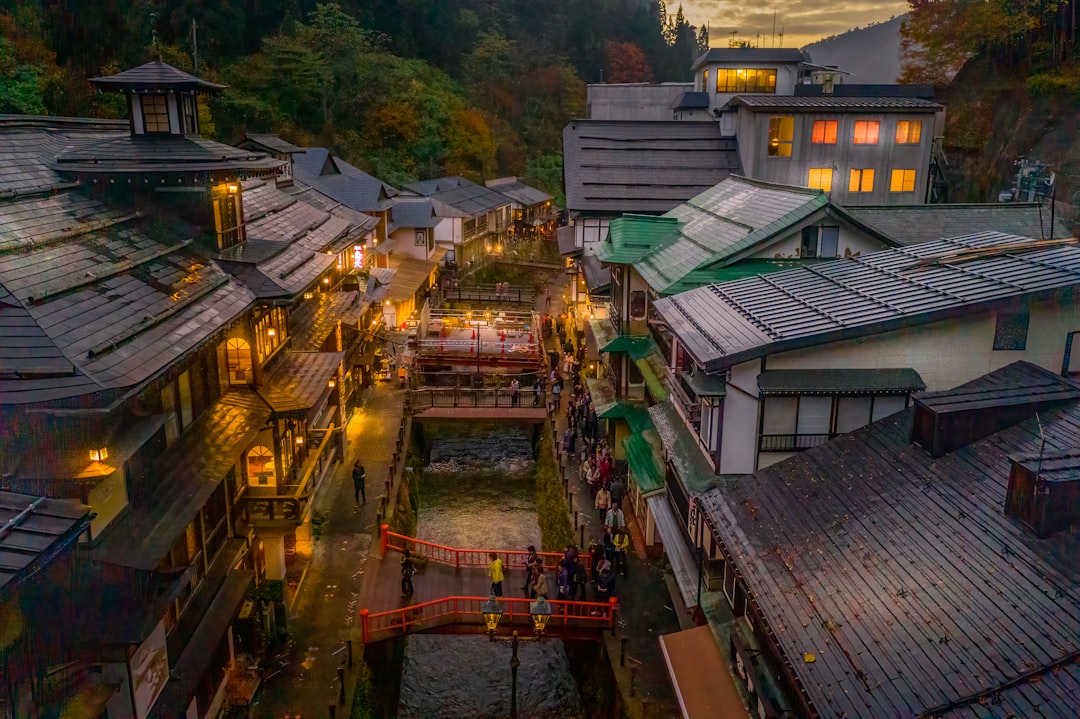
Ginzan Onsen: All 20 ryokan at this one location; the setting (Taisho-era buildings along a mountain stream, snow in winter) does the work. The higher-end properties (¥30,000+) have private outdoor baths; budget options (¥12,000–18,000) use the shared baths.
Kaga Onsen (Kanazawa area): Beniya Mukayu — a modern ryokan with a contemporary aesthetic and spring water quality from the deep Yamashiro spring. One of the most acclaimed properties in Japan for combination of design and onsen quality.
First-Timer Checklist
- Book with two meals included
- Request a room with private outdoor bath if budget allows
- Inform the ryokan of dietary restrictions at booking
- Arrive by 5pm for the full dinner experience
- Put on the yukata immediately
- Bath before dinner and again before breakfast
- Eat breakfast slowly and completely
- Checkout by 10am
The ryokan works because it removes decisions. The clothes are provided, the meals are decided, the bathing schedule is suggested, the pace is set. That abdication of control, which sounds limiting, is actually the service — being organized so thoroughly that the only thing left to do is be present. That is the thing a ryokan does that no other accommodation does as well.
Plan your trip