South Korea 10-Day Itinerary: Seoul, Busan & Gyeongju
Plan your trip
Ten days is the right amount of time for South Korea. Not because there isn’t more to see — there is — but because ten days gives you enough time to slow down without feeling like you’re rushing through a checklist. You’ll do Seoul properly, see a completely different side of the country in Busan, and understand something about Korean history in Gyeongju that no amount of reading prepares you for.
This itinerary is built for people who want to experience the country, not check it off.
Before You Arrive
Getting to South Korea: Incheon International Airport (ICN) is one of the best-connected airports in Asia. Direct flights from most major cities. From the airport to central Seoul, take the AREX (Airport Rail Express) — 43 minutes to Seoul Station, runs every 5–10 minutes. Skip the taxi unless you have very heavy luggage.
eSIM: Buy one before you board or immediately at the airport. Korea has excellent LTE coverage everywhere. Recommended providers: Airalo, KT (at the airport), or SK Telecom. A 10-day data-only eSIM costs about $15–20.
T-Money Card: Buy one at the airport convenience store (GS25 or CU). Load it with ₩50,000–70,000. You’ll use it for metro, buses, and taxis in Seoul. Costs ₩3,000 for the card itself.
Currency: Korea runs on cash more than you’d expect for such a tech-forward country. Most restaurants and markets prefer cash. ATMs in convenience stores (7-Eleven, CU, GS25) accept foreign cards reliably. Withdraw ₩200,000–300,000 at a time.
Days 1–2: Seoul — Land, Eat, Orient
Day 1: Arrival + Gangnam-gu Evening
Arrive, check in, resist the urge to immediately sightsee. You’re jet-lagged and the city will be there tomorrow.
If you arrive with energy: take the metro to Garosu-gil in Gangnam — a leafy street lined with independent cafés, clothing boutiques, and restaurants. It’s one of Seoul’s more pleasant introductions. Dinner at any of the Korean BBQ restaurants along the main drag.
Where to stay in Seoul: Hongdae neighborhood if you want nightlife and a young energy. Myeongdong for central access to everything. Insadong for a more traditional feel. Avoid Gangnam for accommodation unless price-matched — it’s inconvenient for most sights.
Day 2: Gyeongbokgung → Bukchon → Insadong
Start at Gyeongbokgung Palace at 9am — before the tour groups arrive. The palace complex is enormous; the main throne hall, the floating pavilion (Gyeonghoeru), and the National Folk Museum are all inside the grounds. Budget 2 hours.
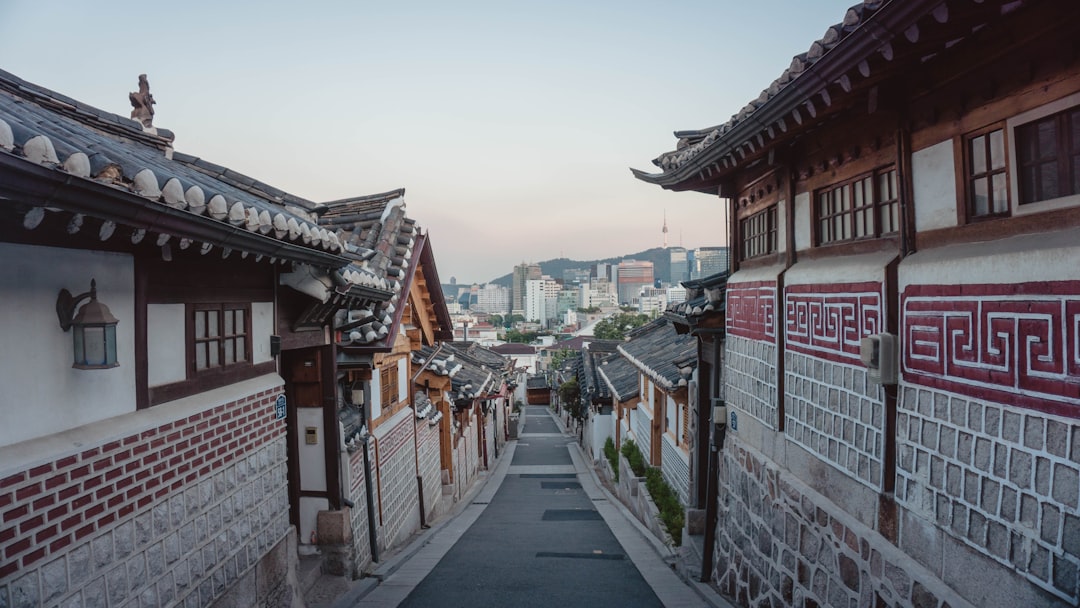
Directly adjacent is Bukchon Hanok Village — a residential neighborhood of traditional Korean houses (hanok) on a hillside between two palaces. The famous photo point (a narrow lane with hanok roofs curving downhill) is on Bukchon-ro 11-gil. It’ll be busy; go early.
A note on Bukchon: people actually live here. There are signs in the neighborhood asking visitors to walk quietly and not photograph into windows. The village has become strained by tourism. Be respectful — this is someone’s home, not a set.
Walk south through Bukchon to Insadong for lunch. This area has the highest concentration of traditional teahouses in Seoul. Sanchon restaurant (vegetarian Buddhist cuisine, ₩20,000 lunch set) is worth the price. Afterward, browse the gallery streets and antique shops.
Afternoon: Changdeokgung Palace and the Secret Garden (Huwon). The garden tour is separate from the main palace and requires advance booking — do this before you arrive. The 1-hour tour through centuries-old pavilions, lotus ponds, and ancient trees is one of the most serene experiences Seoul offers.
Evening: Dongdaemun Design Plaza (DDP) after dark. The Zaha Hadid–designed building is more spectacular at night when lit up. The surrounding market district operates until 5am.
Days 3–4: Seoul — Depth, Not Width
Day 3: Jongno-gu History + Han River Evening
Cheonggyecheon Stream — a 5.8km urban stream restored from an elevated highway in 2005. Walk the length of it in the morning. In summer, people wade in it. It runs from City Hall district east to the Dongdaemun area.
Gwangjang Market for lunch. One of Seoul’s oldest covered markets. The front section sells fabric; push through to the food stalls in the back. Bindaetteok (mung bean pancakes), mayak gimbap (small seaweed rice rolls), and fresh bibimbap. Eat at the counter of whichever stall has the most grandmothers behind it.
Afternoon: Jogyesa Temple — the head temple of Korean Buddhism, improbably located in the middle of the city. Free to enter. The 500-year-old white zelkova trees in the courtyard are remarkable.
Evening: take the metro to Yeouido and rent a bike along the Han River park (available 24 hours from bike-share stations). The Han River at sunset, with the city on both sides, is a different kind of Seoul — not the neon and density, but the space. Convenience store fried chicken and beer by the water is a well-established Korean pastime.
Day 4: Itaewon + Namsan Tower
Itaewon has changed significantly in recent years — partly due to the October 2022 tragedy, partly due to gentrification. It remains one of the most culturally diverse neighborhoods in Seoul, with excellent international restaurants, craft beer bars, and LGBTQ+ venues. The Leeum Samsung Museum of Art is nearby — one of the best private art collections in Asia.
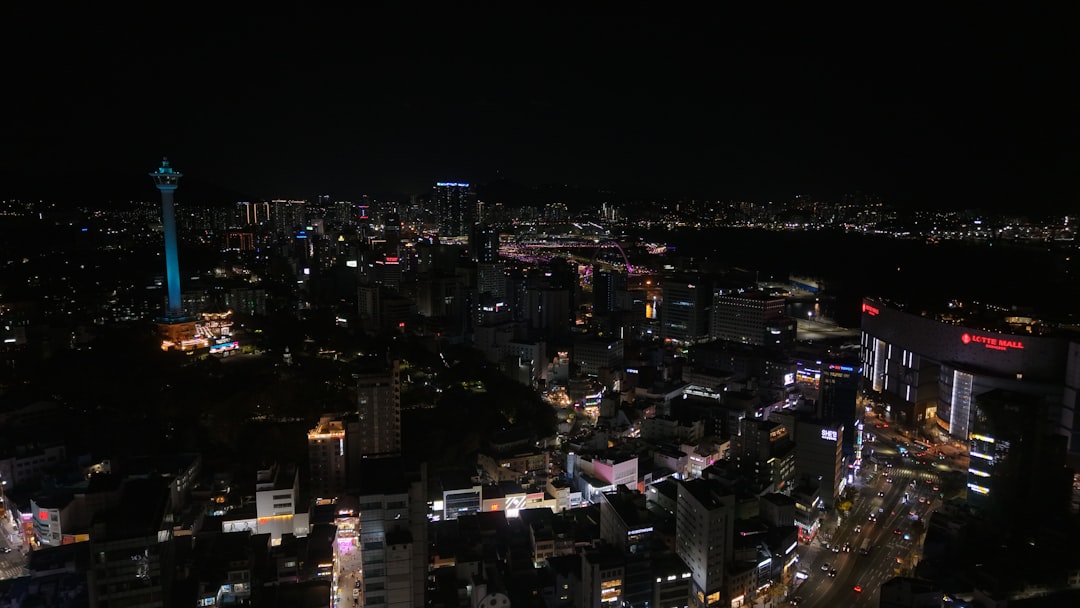
Namsan Tower (N Seoul Tower): take the cable car up, walk the observation deck, see the locks on the fence (a cliché, but a cheerful one). The view over Seoul is worth it on a clear day. Avoid the overpriced restaurant; eat at the base instead.
Evening: Hongdae for nightlife. The area around Hongik University has the densest concentration of clubs, live music venues, and street performers in Seoul. The energy peaks after midnight. If that’s not your scene, the cafés and cocktail bars in adjacent Yeonnam-dong are excellent and quieter.
Day 5: Day Trip to the DMZ
This is optional but strongly recommended if you have historical curiosity.
The Korean Demilitarized Zone is the most heavily fortified border in the world. Visiting it is logistically simple from Seoul (organized tours depart from most hotels and major stations), and the experience is unlike anything else in travel.
What you’ll see: the Third Infiltration Tunnel (dug by North Korea and discovered in 1978), the Dora Observatory overlooking North Korean territory, and the Joint Security Area if your tour includes it (JSA tours require advance booking and are sometimes suspended).
What you won’t see: propaganda. The tour guides are professional and factual. The experience is sobering and clarifying — the conflict that ended in armistice (not a peace treaty) in 1953 is still, technically, ongoing.
Tours run ₩50,000–90,000 including transport from Seoul.
Days 6–7: Busan — The Other Korea
Getting There
KTX high-speed train from Seoul Station to Busan Station: 2 hours 40 minutes. Runs every 30 minutes. Book in advance on the Korail website or app; tickets sell quickly on weekends. Full fare is around ₩59,800 one-way; covered by the Korea Rail Pass if you have one.
Day 6: Gamcheon + Jagalchi + Gwangalli
Gamcheon Culture Village — built into a hillside above the city, densely packed pastel houses connected by narrow staircases. Originally a shantytown for refugees during the Korean War; gradually transformed by local artists into one of Busan’s most photographed neighborhoods. Get there before 10am.
Jagalchi Fish Market — the largest fish market in Korea and one of the most atmospheric places to eat in the country. The covered market on the waterfront sells live seafood from tanks; the restaurants upstairs will prepare what you buy immediately, or serve their own menu. Lunch here is mandatory.
Walk along BIFF Square (Busan International Film Festival square) in Nampodong — food stalls, street snacks, the city’s old cinema district.
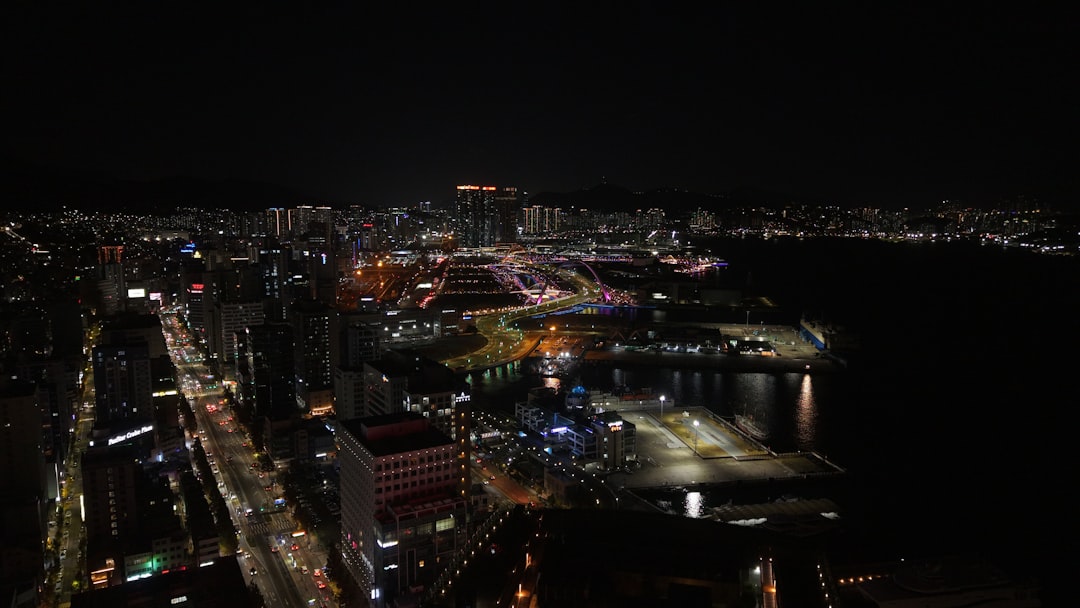
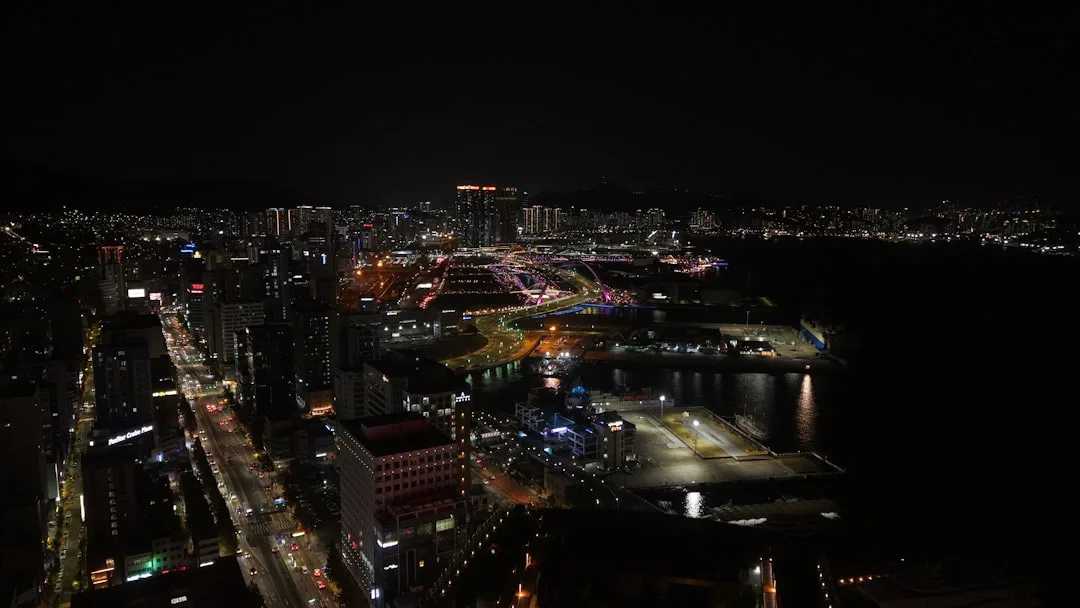
Evening: Gwangalli Beach and the Diamond Bridge lit up at night. Infinitely more manageable than Haeundae (Busan’s famous beach), with restaurants and bars along the esplanade.
Day 7: Haedong Yonggungsa + Haeundae
Haedong Yonggungsa Temple — the most visually extraordinary Buddhist temple in Korea, built on a rocky promontory directly above the sea. Unlike most Korean temples (set in mountain forests), this one is battered by salt wind and waves. Arrive at sunrise if you can.
Haeundae Beach — Korea’s most famous beach. In August it’s sardine-packed; in April or October it’s pleasant. The beach itself is fine. The real draw is the Haeundae market area behind it — raw seafood, grilled fish on sticks, haemuljeon (seafood pancakes) at the market stalls.
Afternoon: Beomeosa Temple in the mountains north of Busan. A proper mountain temple, quiet and formal. The forest trail from the bus stop to the gate is 20 minutes uphill and worth every step.
Days 8–9: Gyeongju — 1,000 Years of Silla
Gyeongju was the capital of the Silla Kingdom for a thousand years (57 BCE–935 CE). Driving through the city, you’ll see burial mounds — grassy tumuli that turn out, when you stop and look, to contain the remains of kings — rising casually out of residential neighborhoods. There are 155 registered tumuli in the city. The whole place is, in effect, an open-air museum.
Getting to Gyeongju
KTX from Busan to Singyeongju Station: 18 minutes. Then local bus or taxi to the historic center (10–15 minutes). Or bus directly from Busan: 1 hour.
Gyeongju is better with a rental car or bicycle — the major sites are spread over a wide area. Bicycle rentals are available near Bomun Lake and in the city center.
Day 8: Tumuli Park + Anapji Pond + Cheomseongdae
Tumuli Park (Daereungwon) — the main burial mound complex. Walk among the grassy mounds in the early morning mist; it’s an experience that’s hard to make sound compelling until you’re actually there. The Cheonmachong tumulus is open to enter — you walk inside the burial chamber and see the artifacts (replicas; originals are in the National Museum).
Cheomseongdae — the oldest surviving astronomical observatory in Asia, built in 647 CE. It looks like a stone cylinder. It is, somehow, still standing.
Anapji Pond (Donggung Palace and Wolji Pond) — the site of a Silla royal pleasure garden. The reconstructed pavilions reflect in the still water. Go at night; the illuminated reflection is one of the best photo opportunities in Gyeongju.
Day 9: Bulguksa + Seokguram
Bulguksa Temple — a UNESCO World Heritage site and considered the finest example of Silla Buddhist architecture. Built in 774 CE and carefully restored. The approach through the pine forest, the stone staircases, the main hall with its twin pagodas — all of it is as carefully composed as a formal garden.
Seokguram Grotto — 3km uphill from Bulguksa, reachable by shuttle bus or a 45-minute walk. An 8th-century granite grotto housing a seated Buddha, sealed in glass for preservation. The craftsmanship is staggering — the proportions are perfect. UNESCO called it one of the outstanding masterpieces of Buddhist art in the world.
Come back to Bulguksa for sunset. The light through the pine trees is different from the morning.
Day 10: Return to Seoul + Departure
KTX from Singyeongju (or Gyeongju) to Seoul: ~2 hours. Allow 3 hours before your flight from Incheon (the AREX takes another 43 minutes from Seoul Station).
If you have time before your train: Gyeongju National Museum is worth 2 hours. The gold crowns, bells, and swords excavated from the tumuli are here — the real things, not replicas. The museum is well-organized and the collection is one of the most historically significant in Asia.
Budget Overview
| Category | Budget/day (₩) | Mid-range/day (₩) |
|---|---|---|
| Accommodation | 40,000–60,000 | 80,000–150,000 |
| Food | 30,000–50,000 | 60,000–100,000 |
| Transport | 10,000–20,000 | 20,000–40,000 |
| Activities | 10,000–20,000 | 20,000–50,000 |
| Total/day | ~100,000–150,000 | ~180,000–340,000 |
At current exchange rates (~1,350 KRW/USD), that’s roughly $75–110/day on a budget or $130–250/day mid-range. Korea is meaningfully cheaper than Japan for comparable travel.
Korea rewards slowing down. The itinerary above is full but not frantic — if something’s not resonating, drop it. The country will still be there.
Plan your trip