Japan Rail Pass 2026: Is It Worth It? (Honest Cost Breakdown)
Plan your trip
Every Japan traveler ends up staring at the JR Pass website trying to decide whether to spend $465 before they’ve even landed. The forum advice is contradictory. The official site is confusing. And once you’re in Japan, you can’t buy it anymore (well, you can, but at a much higher price).
Let’s make this simple.
What the JR Pass Actually Is
The Japan Rail Pass is an unlimited-use ticket for most JR (Japan Railways) trains, including most Shinkansen bullet trains. You buy it before leaving your country, activate it at the airport when you land, and use it for the duration — 7, 14 or 21 days.
What it covers:
- All Shinkansen routes except the Nozomi and Mizuho (the two fastest) — you use the slightly slower Hikari, which is still extremely fast
- All JR local and express trains
- JR buses on certain routes
- JR ferries to Miyajima island (near Hiroshima)
What it doesn’t cover:
- Subway systems in Tokyo, Osaka, Kyoto
- Private rail lines (including some scenic routes)
- The Nozomi/Mizuho Shinkansen
- Most overnight sleeper trains (limited exceptions)
The Math: Routes That Make It Worth It
14-day JR Pass: ¥70,000 (~$465 at 150 JPY/USD)
| Route (each way) | Individual ticket cost |
|---|---|
| Tokyo → Kyoto (Hikari) | ¥13,850 |
| Kyoto → Osaka | ¥570 |
| Osaka → Hiroshima | ¥10,440 |
| Hiroshima → Tokyo | ¥19,440 |
| Tokyo → Kanazawa | ¥14,120 |
| Tokyo → Nikko (JR portion) | ¥2,700 |
Scenario A — Classic route (Tokyo → Kyoto → Osaka → Hiroshima → Tokyo): Round trip value: ¥13,850 + ¥570 + ¥10,440 + ¥19,440 = ¥44,300 JR Pass cost: ¥70,000 Verdict: Not worth it.
Scenario B — Classic + Kanazawa (our recommended 2-week itinerary): Add ¥14,120 (Tokyo → Kanazawa) + ¥14,120 (Kanazawa → Tokyo): total ¥72,540 JR Pass cost: ¥70,000 Verdict: Break-even, and every additional JR trip is free.
Scenario C — Extended route (Tokyo → Kyoto → Hiroshima → Kanazawa → Tokyo + day trips): Value easily exceeds ¥90,000–¥110,000 Verdict: Clearly worth it.
When to Skip the JR Pass
If you’re spending most of your trip in one city (say, 10 days in Tokyo and Kyoto only), don’t buy the pass. Buy individual Shinkansen tickets — they’re cheaper for point-to-point travel.
Also: if you’re traveling with a regional pass (like the Kyushu Rail Pass or Hokuriku Arch Pass), check whether it covers your specific routes more cheaply.
The Hokuriku Arch Pass is particularly interesting for our recommended itinerary — it covers Tokyo–Kanazawa–Osaka for ¥24,500 and is valid 7 days. Compare it against the 14-day JR Pass for your specific route.
How to Buy It
- Buy before leaving your country — from the JR Pass official site or authorized agents (JTB, BIJ, etc.)
- You’ll receive a voucher — exchange it for the physical pass at JR offices in major airports or stations
- Show your non-Japanese passport — only foreign tourists can buy it
- Activate on the first day you want to use it (not necessarily arrival day — useful if you’re spending day 1 in Tokyo using the subway)
Important for 2026: JR Pass prices increased significantly in 2023 and the break-even point has shifted. Always run your specific route math before buying.
The Shinkansen Experience Itself
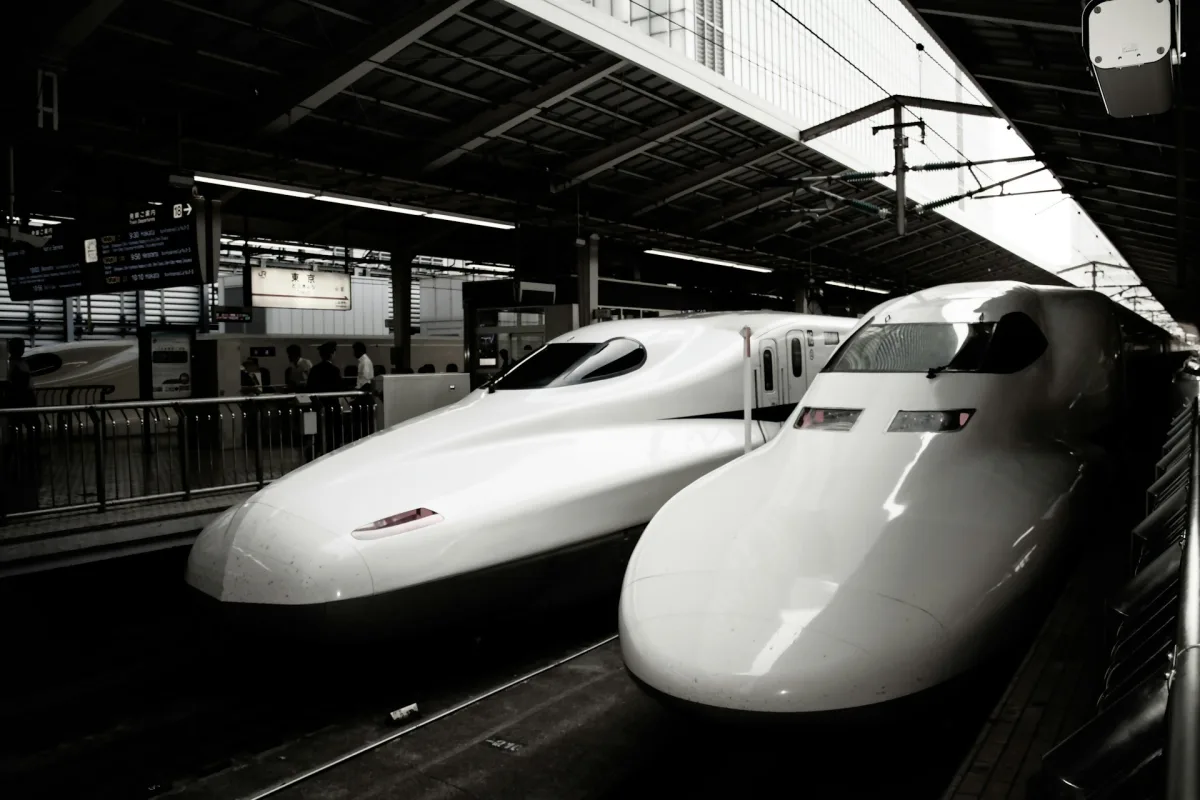
All of this is moot if you don’t understand what you’re actually getting. The Shinkansen is not just a fast train.
It departs to the second. Not approximately — to the second. If the schedule says 14:32, the doors close at 14:31:30 and the train moves at 14:32:00. The average delay across Japan’s Shinkansen network is less than one minute.
The seats are wider than most business class airplane seats. The bento boxes sold on board are genuinely good. The moment when a Japanese countryside town or rice field or glimpse of Fuji flashes past at 285km/h and is gone before you can say anything — that’s part of it too.
Take a window seat. Look up from your phone.
Quick Reference: Do I Need a JR Pass?
Yes, if:
- Your itinerary includes 3+ long-distance Shinkansen routes
- You’re visiting multiple regions (Kanto + Kansai + possibly Tohoku or Kyushu)
- You want flexibility to take trains without worrying about cost
No, if:
- You’re staying in 1–2 cities
- Your longest trip is Tokyo → Kyoto and back
- You prefer to travel slowly and aren’t doing day trips by train
When in doubt, list every JR train ride you plan to take, price each individually, and compare.
Plan your trip